6. Sustainability is Stagnation
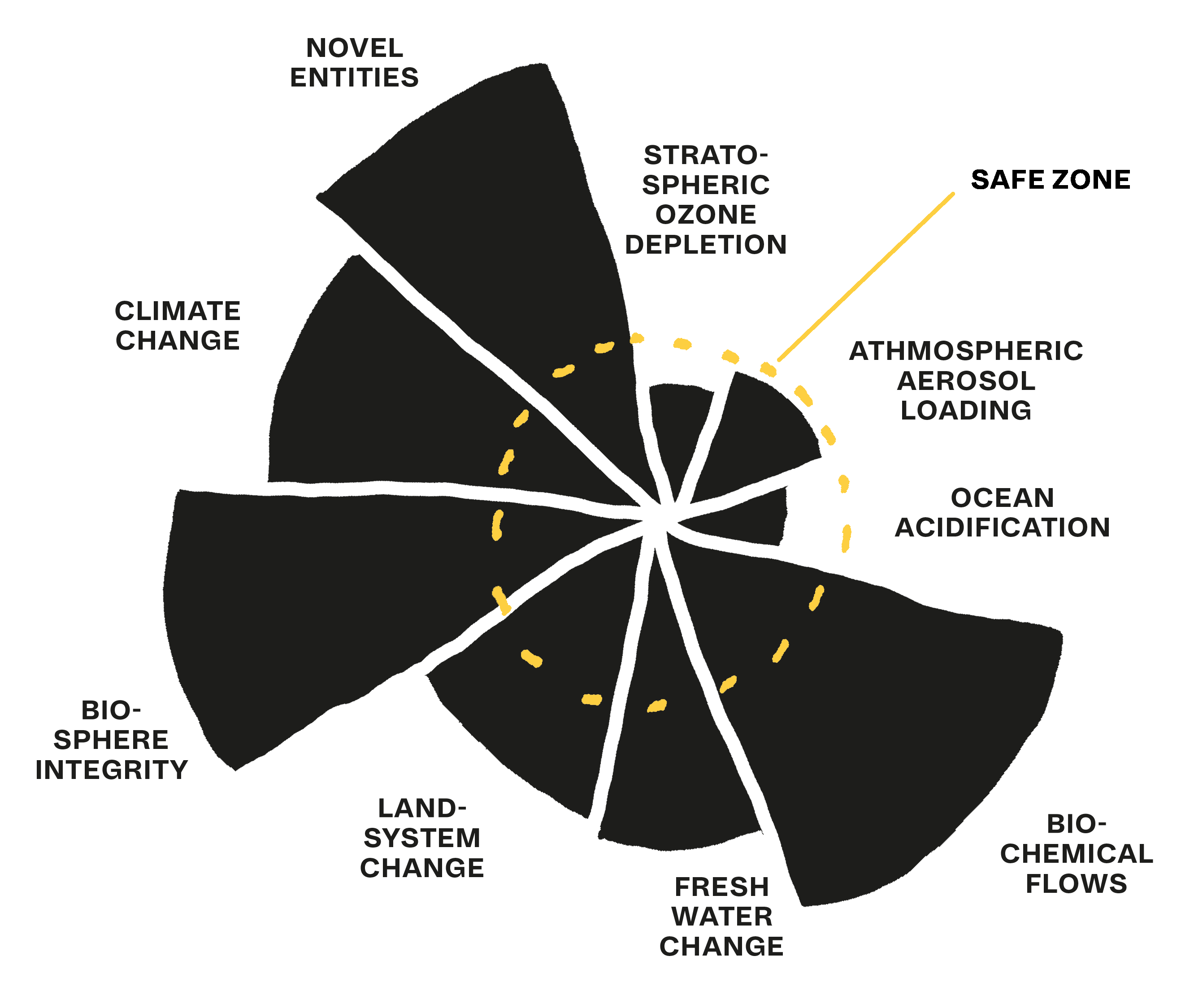
The planetary boundaries 2023. The concept by Stockholm Resilience Centre
Azote for Stockholm Resilience Centre, based on analysis in Richardson et al. 2023.
Sustainability (by definition) is stagnation, sustaining current conditions and practices. As the year is coming to an end, 2024 is well on the track of being the first year on record when the global average temperature surpasses the 1.5-degree Celsius increase
Copernicus Climate Change Service, 9.12.2024.
sustainable = able to continue over a period of time
regenerative = relating to the improvement of a place or system.
We need to recognize the world as we’ve inherited it, and learn ways of living with it while turning current harmful processes into regenerative ones. Due to the interlinkages between the different facets of the environmental crisis, architects need to consider and address questions traditionally considered to lay outside of the field of architecture, such as effects on the natural environment, pollution, and human rights in construction and the supply chain. Regenerative architecture can provide solutions that have a positive impact reaching far beyond the construction site itself.
Shifting to regenerative practices requires us to question the processes of architecture and construction from inception to execution and maintenance. We need to redefine the role that architecture can play in a transforming world.