Nordic climate action initiatives
The following sections illustrate how selected scalable Nordic climate action cases align with the various global stocktake (GST) decision targets detailed in section 28 of the 2023 GST decision and identifies the sector(s) each case addresses. A more detailed analysis of each case is provided in the main project report.
Carbon pricing in the Nordics (Cross-Nordic)
Sector: Heating & Electricity, Industry, Transport | Addressed GST |
|---|---|
 | a, b, c) Renewable energy, Phase-down of unabated coal power, Zero & Low-carbon fuels Carbon pricing has contributed to phasing out coal-based power in the Nordics (this also accounts for the EU), largely replacing coal with renewables. Implemented in other regions and with global coherence, carbon pricing would have a significant potential to accelerate efforts towards phasing down coal power, triple renewable energy capacity, and phasing in net zero energy systems well before or by around mid-century. g) Reduce road transport emissions Implemented in the transport sector, carbon pricing contributes to reducing emissions from transport, although experience shows that reducing transport related emissions also requires complementary policies such as emission standards and blending obligation. |
Sector: Heating & Electricity, Industry, Transport

Addressed GST
a, b, c) Renewable energy, Phase-down of unabated coal power, Zero & Low-carbon fuels
Carbon pricing has contributed to phasing out coal-based power in the Nordics (this also accounts for the EU), largely replacing coal with renewables. Implemented in other regions and with global coherence, carbon pricing would have a significant potential to accelerate efforts towards phasing down coal power, triple renewable energy capacity, and phasing in net zero energy systems well before or by around mid-century.
a, b, c) Renewable energy, Phase-down of unabated coal power, Zero & Low-carbon fuels
Carbon pricing has contributed to phasing out coal-based power in the Nordics (this also accounts for the EU), largely replacing coal with renewables. Implemented in other regions and with global coherence, carbon pricing would have a significant potential to accelerate efforts towards phasing down coal power, triple renewable energy capacity, and phasing in net zero energy systems well before or by around mid-century.
g) Reduce road transport emissions
Implemented in the transport sector, carbon pricing contributes to reducing emissions from transport, although experience shows that reducing transport related emissions also requires complementary policies such as emission standards and blending obligation.
Implemented in the transport sector, carbon pricing contributes to reducing emissions from transport, although experience shows that reducing transport related emissions also requires complementary policies such as emission standards and blending obligation.
District Heating: A solution with potential for rapidly decarbonizing heating (Cross-Nordic)
Sector: Heating & Electricity, Waste management | Addressed GST |
|---|---|
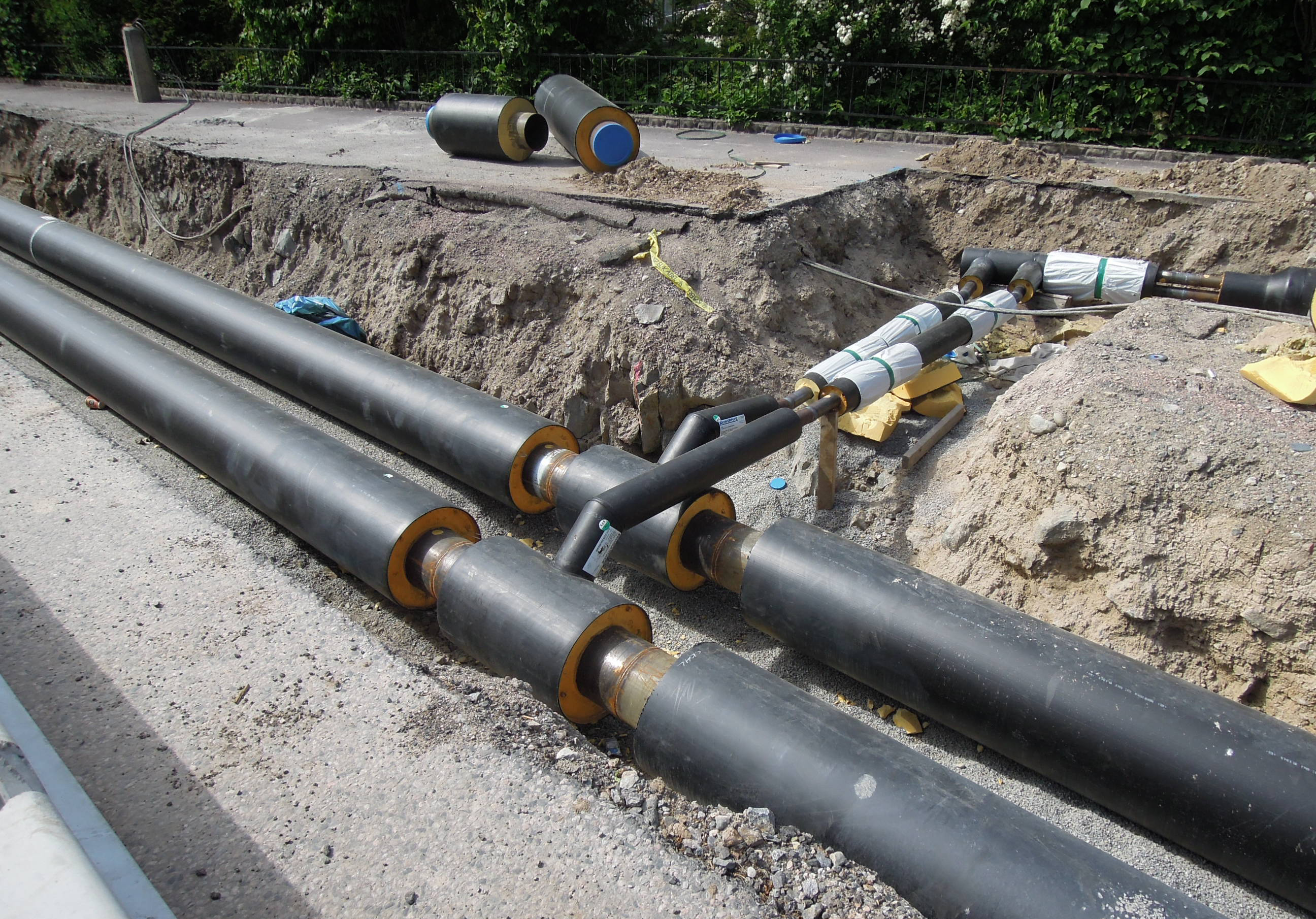 | a) Renewable energy District heating (DH) can accelerate renewable energy usage in the heating sector in an energy efficient way. c) Zero & low-carbon fuels By shifting DH production from fossil fuels to renewable energy, Nordic countries are accelerating the transition to net-zero emission energy systems. d) Transitioning from fossil fuel energy systems DH supports a just and orderly transition away from fossil fuels by providing an efficient, scalable solution for renewable heat in the residential, service- and industrial sectors. e) Accelerate zero- and low-emission technologies DH accelerates the deployment of zero-emission technologies by incorporating renewable energy in the heating sector, which significantly reduces emissions.a, b, c) Renewable energy, Phase-down of unabated coal power, Zero & Low-carbon fuels Carbon pricing has contributed to phasing out coal-based power in the Nordics (this also accounts for the EU), largely replacing coal with renewables. Implemented in other regions and with global coherence, carbon pricing would have a significant potential to accelerate efforts towards phasing down coal power, triple renewable energy capacity, and phasing in net zero energy systems well before or by around mid-century. g) Reduce road transport emissions Implemented in the transport sector, carbon pricing contributes to reducing emissions from transport, although experience shows that reducing transport related emissions also requires complementary policies such as emission standards and blending obligation. |
Sector: Heating & Electricity, Waste management
![District_heating_pipelines_Västerås_1 (1)[41].jpg](img/1731066944880.jpg)
Addressed GST
a) Renewable energy
District heating (DH) can accelerate renewable energy usage in the heating sector in an energy efficient way.
District heating (DH) can accelerate renewable energy usage in the heating sector in an energy efficient way.
c) Zero & low-carbon fuels
By shifting DH production from fossil fuels to renewable energy, Nordic countries are accelerating the transition to net-zero emission energy systems.
By shifting DH production from fossil fuels to renewable energy, Nordic countries are accelerating the transition to net-zero emission energy systems.
d) Transitioning from fossil fuel energy systems
DH supports a just and orderly transition away from fossil fuels by providing an efficient, scalable solution for renewable heat in the residential, service- and industrial sectors.
DH supports a just and orderly transition away from fossil fuels by providing an efficient, scalable solution for renewable heat in the residential, service- and industrial sectors.
e) Accelerate zero- and low-emission technologies
DH accelerates the deployment of zero-emission technologies by incorporating renewable energy in the heating sector, which significantly reduces emissions.
DH accelerates the deployment of zero-emission technologies by incorporating renewable energy in the heating sector, which significantly reduces emissions.
g) Reduce road transport emissions
Implemented in the transport sector, carbon pricing contributes to reducing emissions from transport, although experience shows that reducing transport related emissions also requires complementary policies such as emission standards and blending obligation.
Implemented in the transport sector, carbon pricing contributes to reducing emissions from transport, although experience shows that reducing transport related emissions also requires complementary policies such as emission standards and blending obligation.
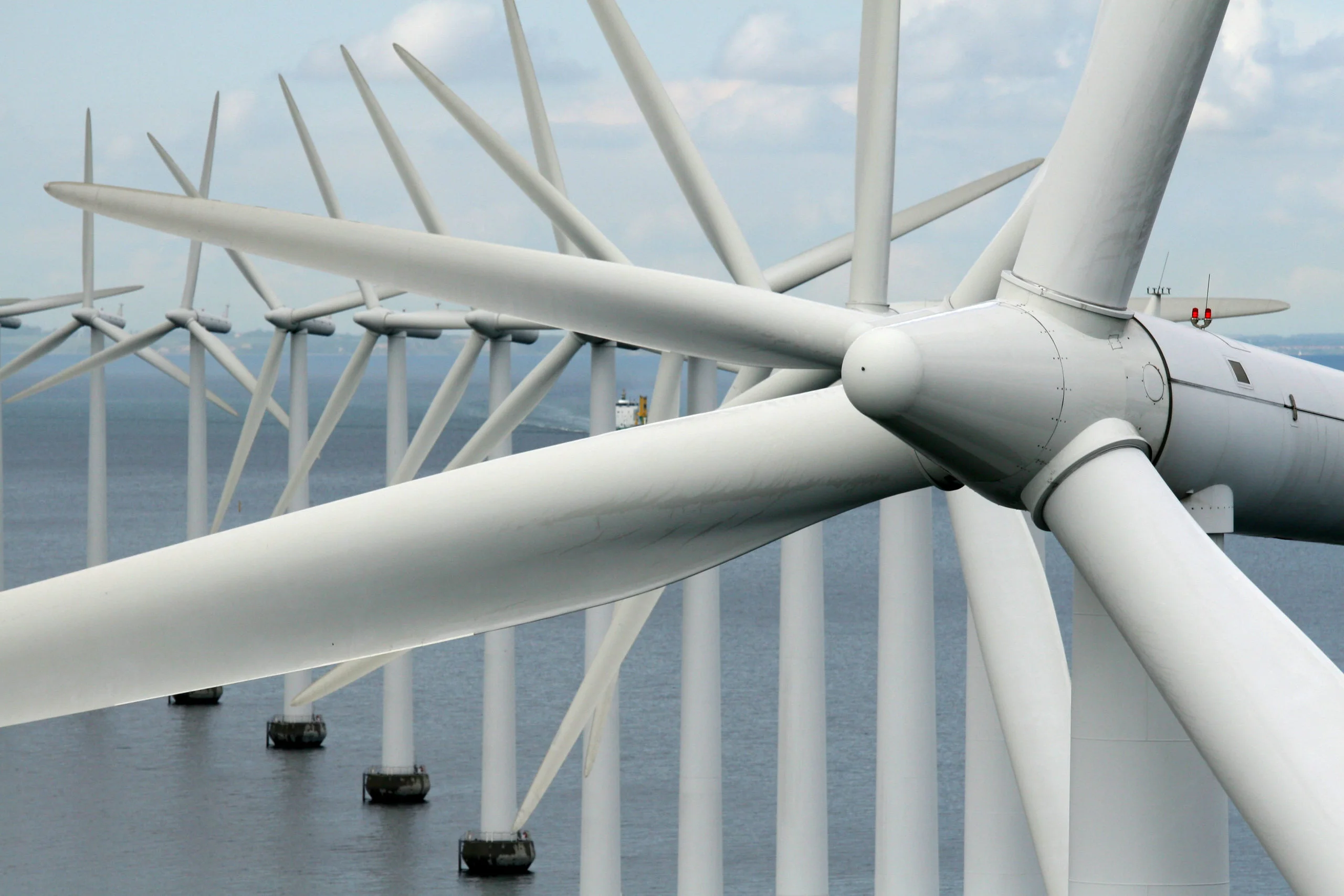
Wind Energy: A pioneer in green transition and community engagement
Sector: Renewable energy | Addressed GST |
|---|---|
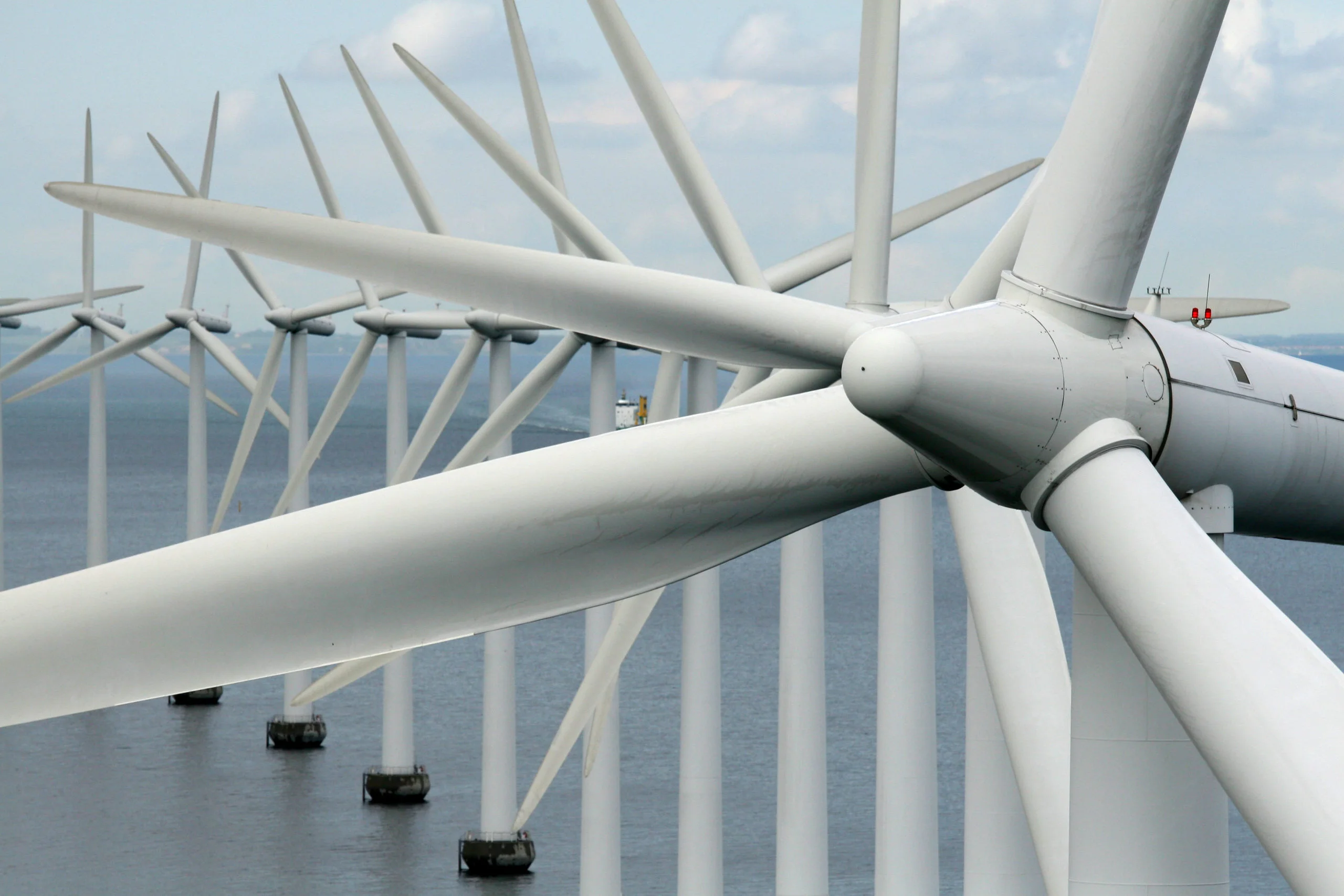  | a) Renewable energy Denmark's wind energy sector plays a crucial role in ensuring universal access to affordable, reliable, and sustainable energy. The country has demonstrated how renewable energy can be economically viable, paving the way for a global transition to sustainable energy sources. b) Phase-down of unabated coal power The Danish wind energy industry fosters global collaboration through knowledge sharing and partnerships, such as the Indo-Danish Centre of Excellence for Offshore Wind and Renewable Energy. These partnerships help transfer technological innovations and best practices to other countries, supporting global efforts to scale up renewable energy. c) Zero & Low-carbon fuels The wind energy sector significantly reduces greenhouse gas emissions through its large-scale use of wind power. With over 46 per cent of Denmark's electricity from wind energy and plans to reach 70 per cent by 2030, it contributes directly to global climate goals under the Paris Agreement. d) Transitioning from fossil fuel energy systems The energy sector promotes a fair transition from fossil fuels by implementing community ownership models and inclusive polices. This approach does not only accelerate wind energy deployment, but also ensures local benefits, supporting the global goal of achieving net zero emissions by 2050. e) Accelerate zero- and low-emission technologies By actively strengthening global partnerships for sustainable development by sharing its community ownership model and policy frameworks internationally. These efforts contribute to the creation of inclusive, sustainable, and resilient energy systems worldwide, aligning with global efforts to meet sustainable development and climate goals. |
Sector: Renewable energy
Addressed GST
a) Renewable energy
Denmark's wind energy sector plays a crucial role in ensuring universal access to affordable, reliable, and sustainable energy. The country has demonstrated how renewable energy can be economically viable, paving the way for a global transition to sustainable energy sources.
Denmark's wind energy sector plays a crucial role in ensuring universal access to affordable, reliable, and sustainable energy. The country has demonstrated how renewable energy can be economically viable, paving the way for a global transition to sustainable energy sources.
b) Phase-down of unabated coal power
The Danish wind energy industry fosters global collaboration through knowledge sharing and partnerships, such as the Indo-Danish Centre of Excellence for Offshore Wind and Renewable Energy. These partnerships help transfer technological innovations and best practices to other countries, supporting global efforts to scale up renewable energy.
The Danish wind energy industry fosters global collaboration through knowledge sharing and partnerships, such as the Indo-Danish Centre of Excellence for Offshore Wind and Renewable Energy. These partnerships help transfer technological innovations and best practices to other countries, supporting global efforts to scale up renewable energy.
c) Zero & Low-carbon fuels
The wind energy sector significantly reduces greenhouse gas emissions through its large-scale use of wind power. With over 46 per cent of Denmark's electricity from wind energy and plans to reach 70 per cent by 2030, it contributes directly to global climate goals under the Paris Agreement.
The wind energy sector significantly reduces greenhouse gas emissions through its large-scale use of wind power. With over 46 per cent of Denmark's electricity from wind energy and plans to reach 70 per cent by 2030, it contributes directly to global climate goals under the Paris Agreement.
d) Transitioning from fossil fuel energy systems
The energy sector promotes a fair transition from fossil fuels by implementing community ownership models and inclusive polices. This approach does not only accelerate wind energy deployment, but also ensures local benefits, supporting the global goal of achieving net zero emissions by 2050.
The energy sector promotes a fair transition from fossil fuels by implementing community ownership models and inclusive polices. This approach does not only accelerate wind energy deployment, but also ensures local benefits, supporting the global goal of achieving net zero emissions by 2050.
e) Accelerate zero- and low-emission technologies
By actively strengthening global partnerships for sustainable development by sharing its community ownership model and policy frameworks internationally. These efforts contribute to the creation of inclusive, sustainable, and resilient energy systems worldwide, aligning with global efforts to meet sustainable development and climate goals.
By actively strengthening global partnerships for sustainable development by sharing its community ownership model and policy frameworks internationally. These efforts contribute to the creation of inclusive, sustainable, and resilient energy systems worldwide, aligning with global efforts to meet sustainable development and climate goals.
e) Accelerate zero- and low-emission technologies
By actively strengthening global partnerships for sustainable development by sharing its community ownership model and policy frameworks internationally. These efforts contribute to the creation of inclusive, sustainable, and resilient energy systems worldwide, aligning with global efforts to meet sustainable development and climate goals.
By actively strengthening global partnerships for sustainable development by sharing its community ownership model and policy frameworks internationally. These efforts contribute to the creation of inclusive, sustainable, and resilient energy systems worldwide, aligning with global efforts to meet sustainable development and climate goals.
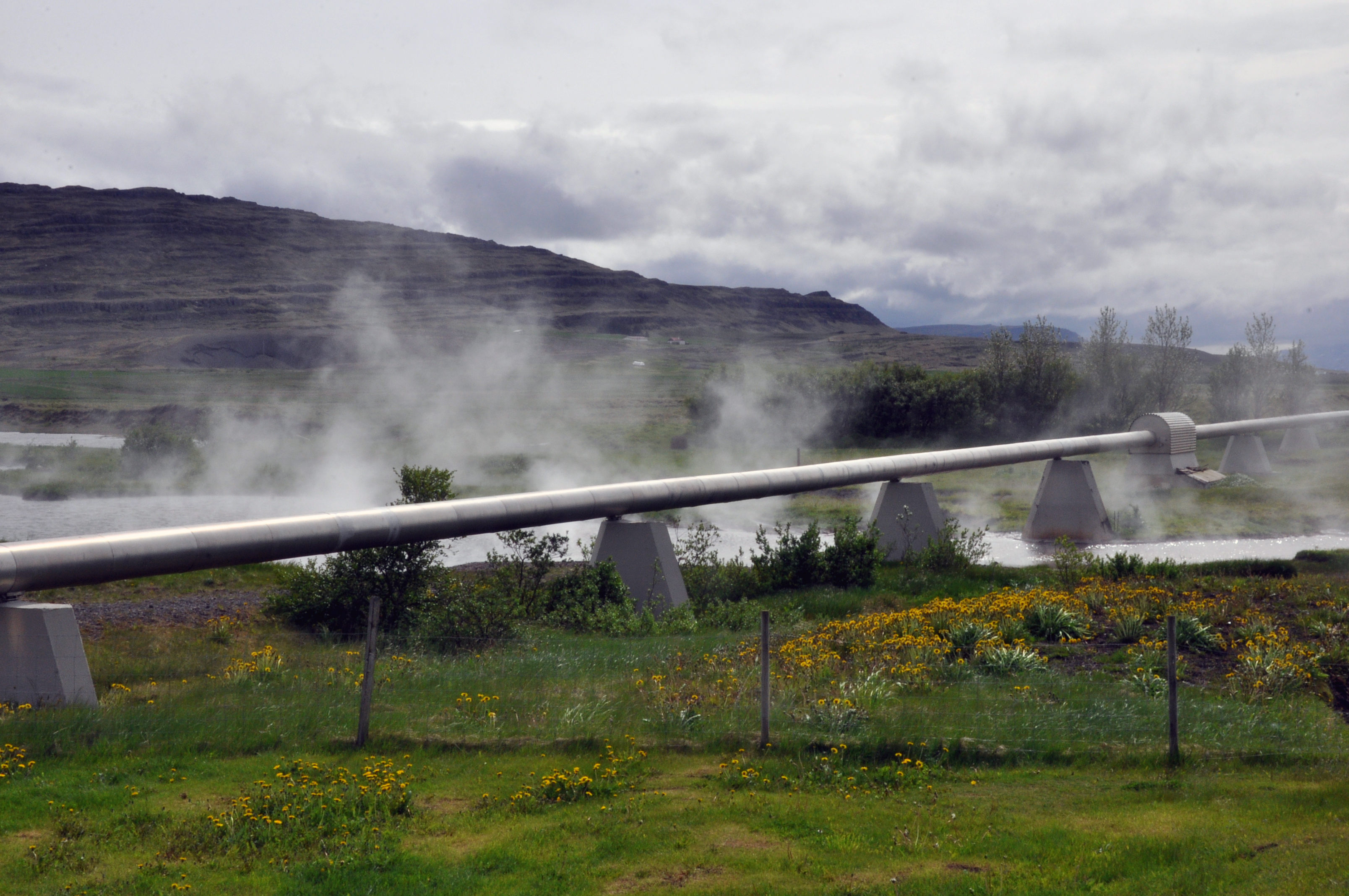
Geothermal district heating
Sector: Heating & Electricity | Addressed GST |
|---|---|
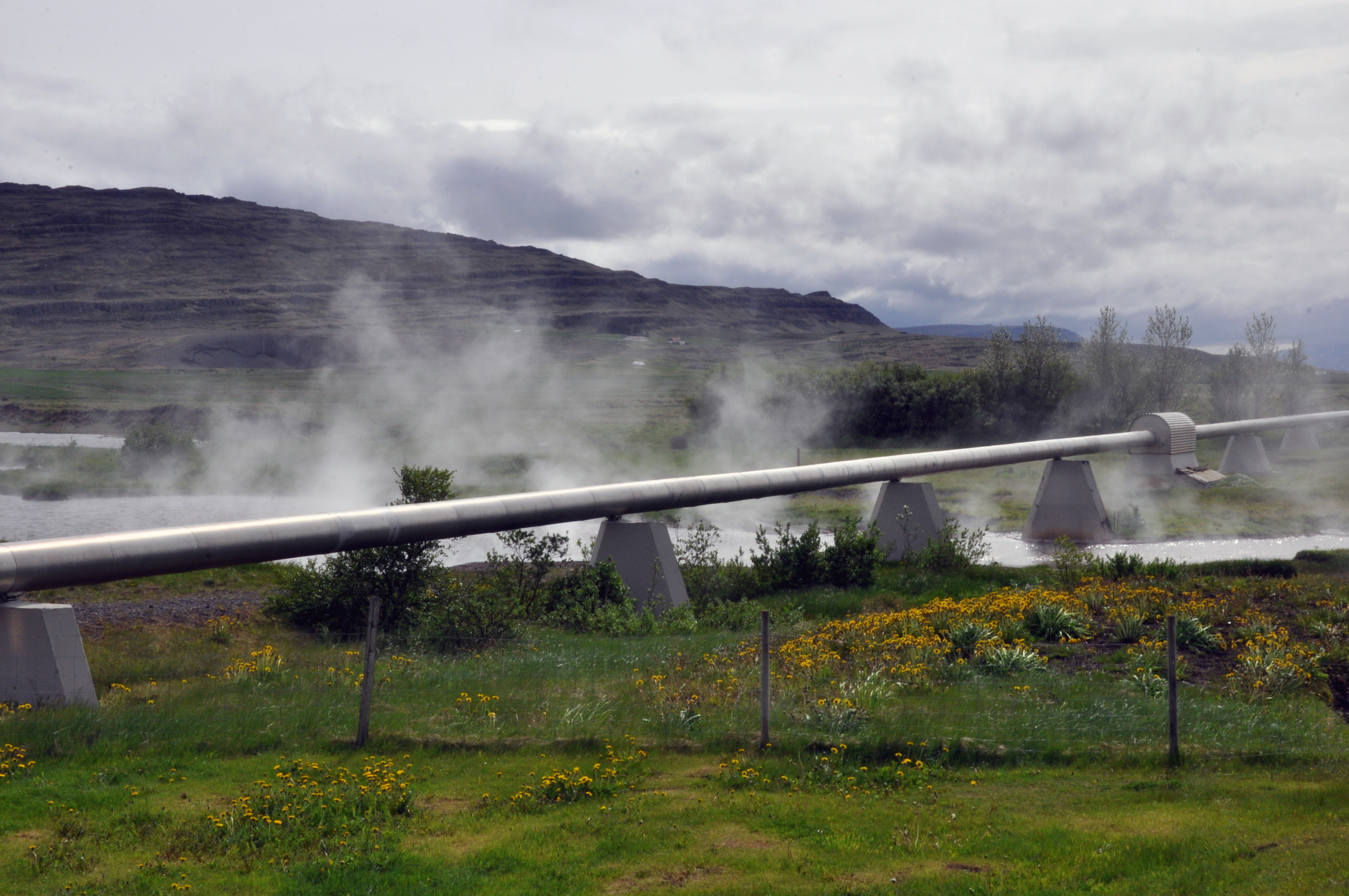  | a) Tripling renewable energy By harnessing the Earth’s inner heat, geothermal energy contributes to increasing the share of renewable energy in the energy mix. c) Accelerate net-zero energy systems Renewable geothermal energy can be harvested with virtually no emissions of GHG, thus contributing to the overall goal of net-zero emissions. d) Transitioning from fossil fuel energy systems Geothermal district heating can effectively decarbonize the energy system by displacing fossil-based heating options. e) Accelerate zero- and low-emission technologies Expansion of geothermal energy capacity contributes to zero-emission energy supply in several regions of the world. |
Sector: Heating & Electricity
Addressed GST
a) Tripling renewable energy
By harnessing the Earth’s inner heat, geothermal energy contributes to increasing the share of renewable energy in the energy mix.
By harnessing the Earth’s inner heat, geothermal energy contributes to increasing the share of renewable energy in the energy mix.
c) Accelerate net-zero energy systems
Renewable geothermal energy can be harvested with virtually no emissions of GHG, thus contributing to the overall goal of net-zero emissions.
Renewable geothermal energy can be harvested with virtually no emissions of GHG, thus contributing to the overall goal of net-zero emissions.
d) Transitioning from fossil fuel energy systems
Geothermal district heating can effectively decarbonize the energy system by displacing fossil-based heating options.
Geothermal district heating can effectively decarbonize the energy system by displacing fossil-based heating options.
e) Accelerate zero- and low-emission technologies
Expansion of geothermal energy capacity contributes to zero-emission energy supply in several regions of the world.
Expansion of geothermal energy capacity contributes to zero-emission energy supply in several regions of the world.
Sand batteries: Storing renewable energy to decarbonize heating
Sector: Heating & Electricity, Industry | Addressed GST |
|---|---|
  | a) Renewable energy The sand battery increases renewable energy capacity by storing surplus wind and solar power, enabling more efficient use and scaling of intermittent energy sources. b) Phase-down of unabated coal power The technology can replace coal-generated heat with renewable energy, accelerating the phase-down of unabated coal power. c) Accelerate net-zero energy systems By storing renewable energy for later use, it contributes to the transition toward net-zero emission energy systems by mid-century. d) Transitioning from fossil fuel energy systems The sand battery supports a just and orderly transition away from fossil fuels by providing a replicable solution for renewable heat production for both housing and industry. e) Accelerate zero- and low-emission technologies It accelerates the adoption of zero-emission technologies by offering an innovative storage solution for renewable energy, crucial for hard-to-abate sectors like industrial heat. |
Sector: Heating & Electricity, Industry
Addressed GST
a) Renewable energy
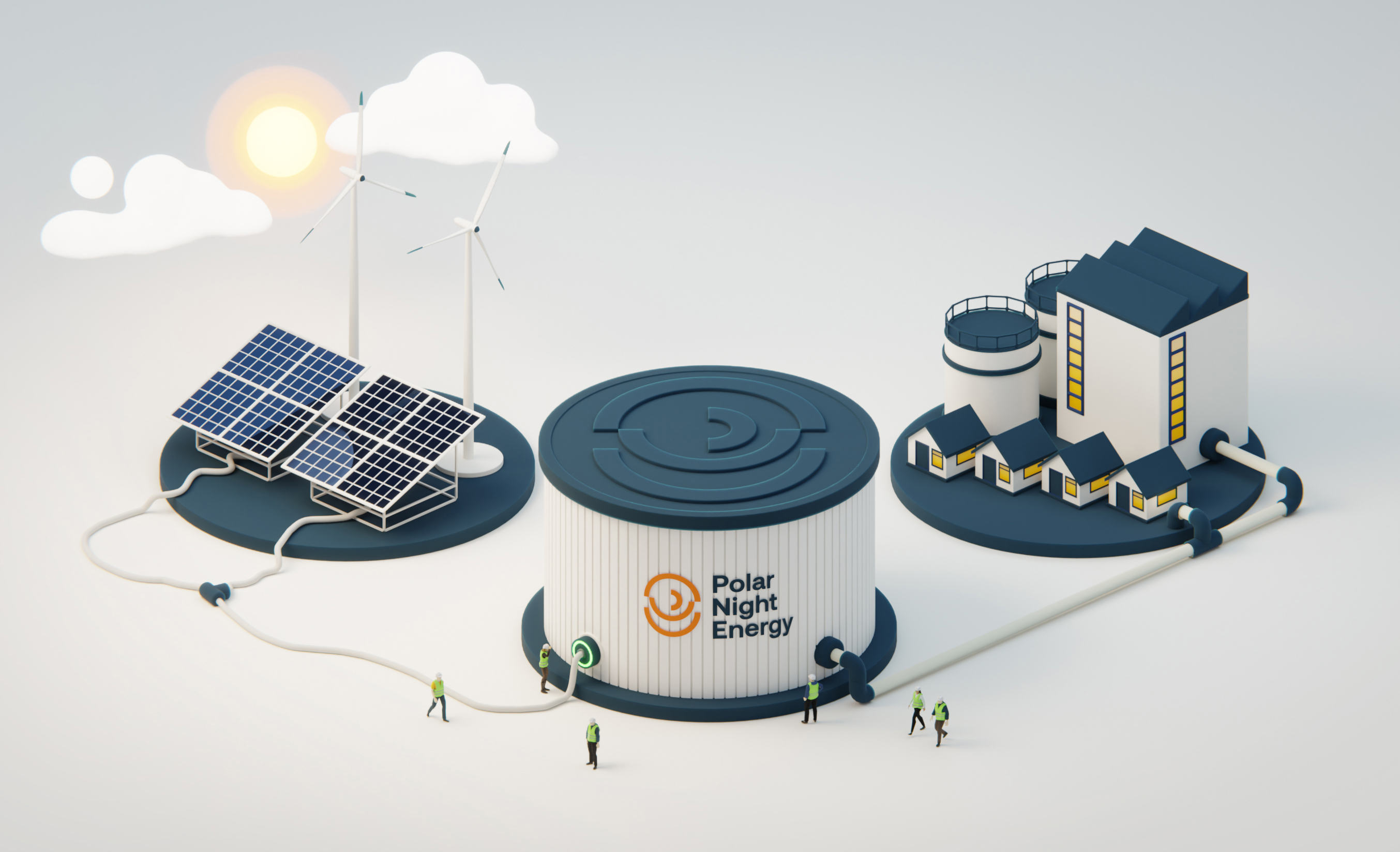
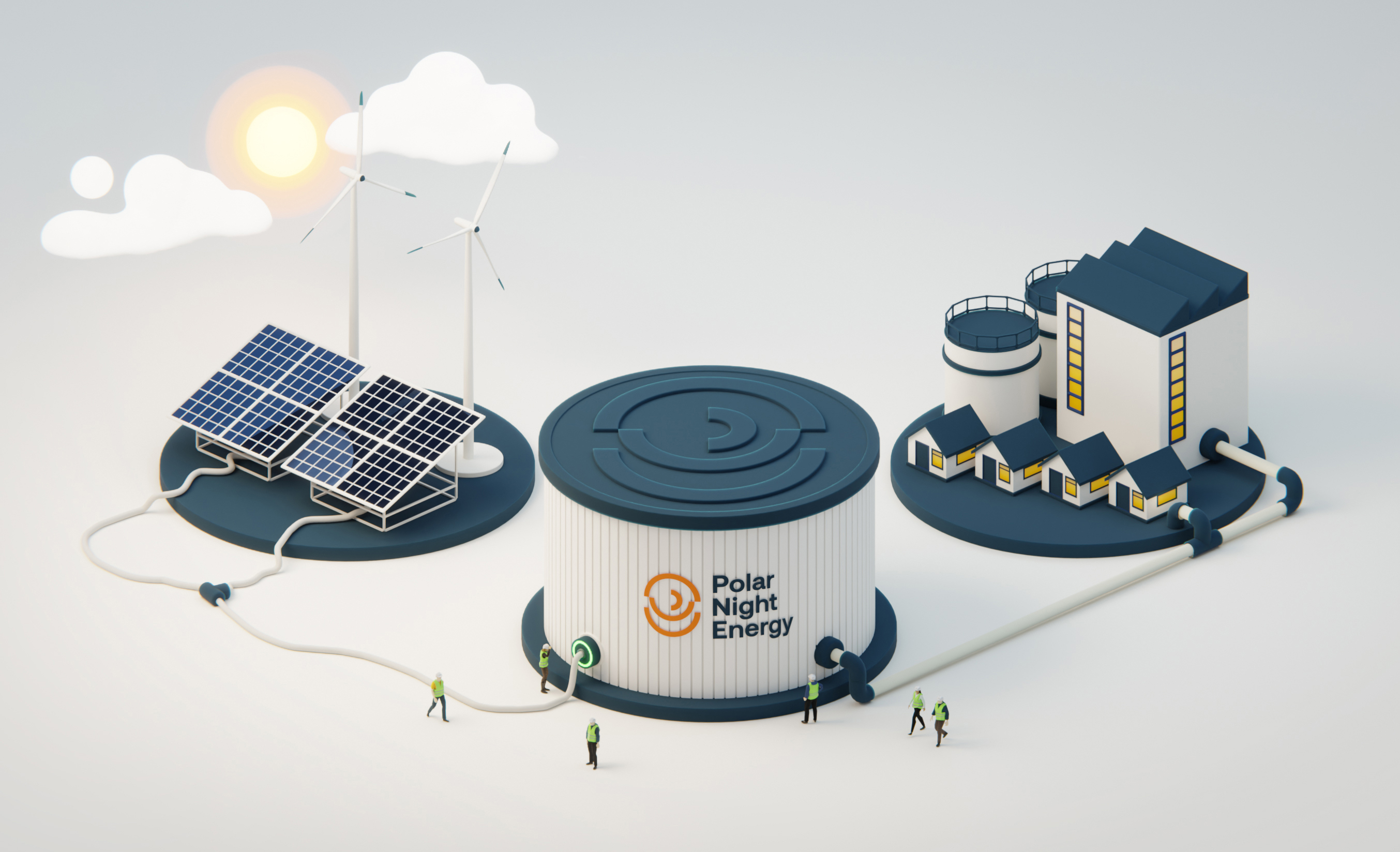
The sand battery increases renewable energy capacity by storing surplus wind and solar power, enabling more efficient use and scaling of intermittent energy sources.
The sand battery increases renewable energy capacity by storing surplus wind and solar power, enabling more efficient use and scaling of intermittent energy sources.
b) Phase-down of unabated coal power
The technology can replace coal-generated heat with renewable energy, accelerating the phase-down of unabated coal power.
The technology can replace coal-generated heat with renewable energy, accelerating the phase-down of unabated coal power.
c) Accelerate net-zero energy systems
By storing renewable energy for later use, it contributes to the transition toward net-zero emission energy systems by mid-century.
By storing renewable energy for later use, it contributes to the transition toward net-zero emission energy systems by mid-century.
d) Transitioning from fossil fuel energy systems
The sand battery supports a just and orderly transition away from fossil fuels by providing a replicable solution for renewable heat production for both housing and industry.
The sand battery supports a just and orderly transition away from fossil fuels by providing a replicable solution for renewable heat production for both housing and industry.
e) Accelerate zero- and low-emission technologies
It accelerates the adoption of zero-emission technologies by offering an innovative storage solution for renewable energy, crucial for hard-to-abate sectors like industrial heat.
It accelerates the adoption of zero-emission technologies by offering an innovative storage solution for renewable energy, crucial for hard-to-abate sectors like industrial heat.
Advanced biowaste management systems for reduced emissions and increased circularity
Sector: Waste management, Heating & Electricity | Addressed GST |
|---|---|
  | f) Reduce methane Norway’s waste management system combines extensive source sorting with advanced sorting facilities to efficiently recycle biowaste into renewable energy and valuable materials. This reduces methane emissions from organic waste and contributes to generating value in a circular economy through the production of biogas, compost, and recycled materials. By generating both societal value and emission reductions through biowaste management, this case demonstrates an adaptable model that can be utilized by other countries to achieve similar contributions towards GST objectives. |
Sector: Waste management, Heating & Electricity
Addressed GST
f) Reduce methane
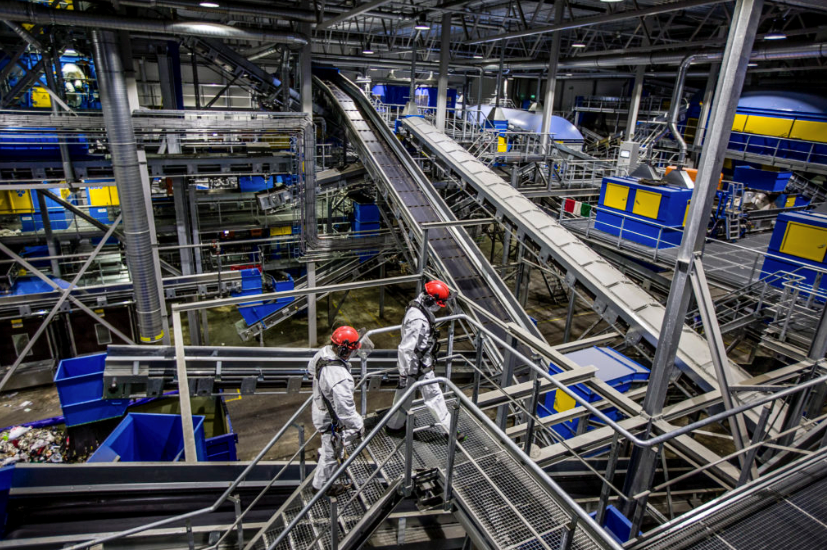
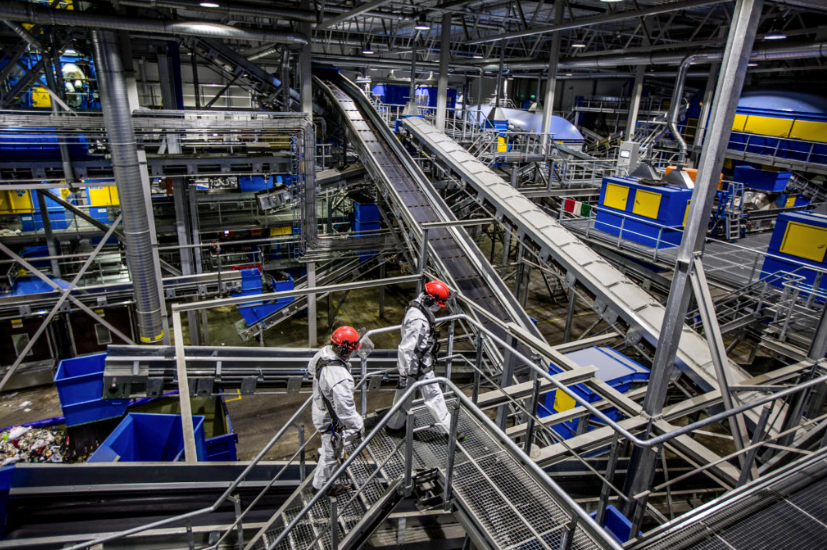
Norway’s waste management system combines extensive source sorting with advanced sorting facilities to efficiently recycle biowaste into renewable energy and valuable materials. This reduces methane emissions from organic waste and contributes to generating value in a circular economy through the production of biogas, compost, and recycled materials. By generating both societal value and emission reductions through biowaste management, this case demonstrates an adaptable model that can be utilized by other countries to achieve similar contributions towards GST objectives.
Norway’s waste management system combines extensive source sorting with advanced sorting facilities to efficiently recycle biowaste into renewable energy and valuable materials. This reduces methane emissions from organic waste and contributes to generating value in a circular economy through the production of biogas, compost, and recycled materials. By generating both societal value and emission reductions through biowaste management, this case demonstrates an adaptable model that can be utilized by other countries to achieve similar contributions towards GST objectives.
Rewetting agreements as nature-based climate solutions
Sector: Forestry | Addressed GST |
|---|---|
  | f) Reduce methane Rewetting agreements in productive forests is a cost-effective strategy to reduce greenhouse gas emissions. While rewetting peatlands stops CO2 emissions, it also triggers methane release. Despite methane's potency, recent modelling shows that there are climate benefits of rewetting despite the impact from methane, with long-term contracts ensuring that the emission reductions are sustained over time. |
Sector: Forestry

Addressed GST
f) Reduce methane
Rewetting agreements in productive forests is a cost-effective strategy to reduce greenhouse gas emissions. While rewetting peatlands stops CO2 emissions, it also triggers methane release. Despite methane's potency, recent modelling shows that there are climate benefits of rewetting despite the impact from methane, with long-term contracts ensuring that the emission reductions are sustained over time.
Rewetting agreements in productive forests is a cost-effective strategy to reduce greenhouse gas emissions. While rewetting peatlands stops CO2 emissions, it also triggers methane release. Despite methane's potency, recent modelling shows that there are climate benefits of rewetting despite the impact from methane, with long-term contracts ensuring that the emission reductions are sustained over time.
Land restoration: Driving carbon sequestration and climate resilience
Sector: Agriculture | Addressed GST |
|---|---|
 | f) Reduce methane 20 per cent of Iceland’s sheep farmers are participating in this project. They have undertaken an action plan aimed at making sheep products carbon-neutral as soon as possible. The plan focuses on offsetting emissions through topsoil and wetland restoration, forest planting, and adopting renewable energy. These efforts are also helping to reduce methane emissions. |
Sector: Agriculture

Addressed GST
f) Reduce methane
20 per cent of Iceland’s sheep farmers are participating in this project. They have undertaken an action plan aimed at making sheep products carbon-neutral as soon as possible. The plan focuses on offsetting emissions through topsoil and wetland restoration, forest planting, and adopting renewable energy. These efforts are also helping to reduce methane emissions.
20 per cent of Iceland’s sheep farmers are participating in this project. They have undertaken an action plan aimed at making sheep products carbon-neutral as soon as possible. The plan focuses on offsetting emissions through topsoil and wetland restoration, forest planting, and adopting renewable energy. These efforts are also helping to reduce methane emissions.
Climate network of municipalities accelerating emission reductions
Sector: Heating & Electricity, Industry, Transport | Addressed GST |
|---|---|
  | b) Phase-down of unabated coal power By promoting local climate work, renewable energy projects and reducing fossil fuel dependence, the Hinku Network of Finnish municipalities accelerate the phase-down of unabated coal power. c) Accelerate net-zero energy systems The network facilitates the transition to net-zero emission energy systems through encouraging and supporting local climate action plans and the adoption of low-carbon technologies. d) Transitioning from fossil fuel energy systems The network enables a just and orderly transition away from fossil fuels by supporting municipalities in scaling up renewables and reducing emissions to meet 2050 net-zero targets. |
Sector: Heating & Electricity, Industry, Transport

Addressed GST
b) Phase-down of unabated coal power
By promoting local climate work, renewable energy projects and reducing fossil fuel dependence, the Hinku Network of Finnish municipalities accelerate the phase-down of unabated coal power.
By promoting local climate work, renewable energy projects and reducing fossil fuel dependence, the Hinku Network of Finnish municipalities accelerate the phase-down of unabated coal power.
c) Accelerate net-zero energy systems
The network facilitates the transition to net-zero emission energy systems through encouraging and supporting local climate action plans and the adoption of low-carbon technologies.
The network facilitates the transition to net-zero emission energy systems through encouraging and supporting local climate action plans and the adoption of low-carbon technologies.
d) Transitioning from fossil fuel energy systems
The network enables a just and orderly transition away from fossil fuels by supporting municipalities in scaling up renewables and reducing emissions to meet 2050 net-zero targets.
The network enables a just and orderly transition away from fossil fuels by supporting municipalities in scaling up renewables and reducing emissions to meet 2050 net-zero targets.
CO2 tax on industry
Sector: Industry | Addressed GST |
|---|---|
 | c) Zero & Low- carbon fuels By implementing a national tax on carbon emissions, Denmark is incentivizing heavy industry to shift to zero- and low carbon fuels. The relatively high tax level ensures that the incentive is strong enough to ensure action, while the recirculation of the revenue supports companies investing in the transition. d) Transitioning from fossil fuel energy systems Recognizing that the tax will ultimately cause increased costs for households with potentially harmful distributional effects, Denmark has implemented several initiatives to mitigate this and support vulnerable households. e) Accelerate zero- and low-emission technologies Part of the revenue from the CO2 tax is placed in a green fund to support companies in developing and implementing new, green technologies, as well as a specific fund for investments in carbon capture and storage. h) Phase out fossil fuel subsidies The green tax reform addresses fossil fuel subsidies by phasing out tax expenditures granting tax exemptions on fossil fuels used in shipping, aviation, and other sectors. |
Sector: Industry
Addressed GST
c) Zero & Low- carbon fuels
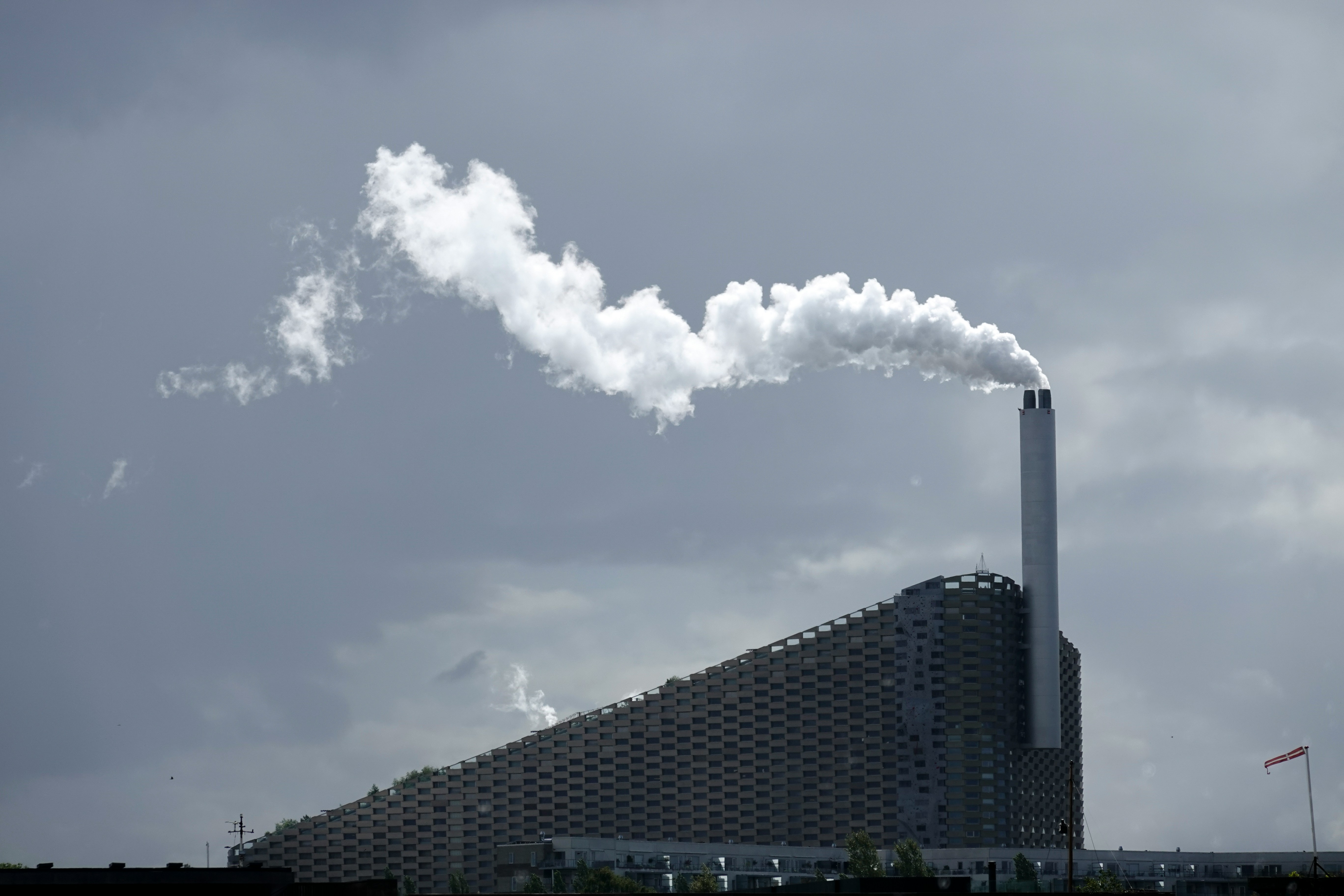
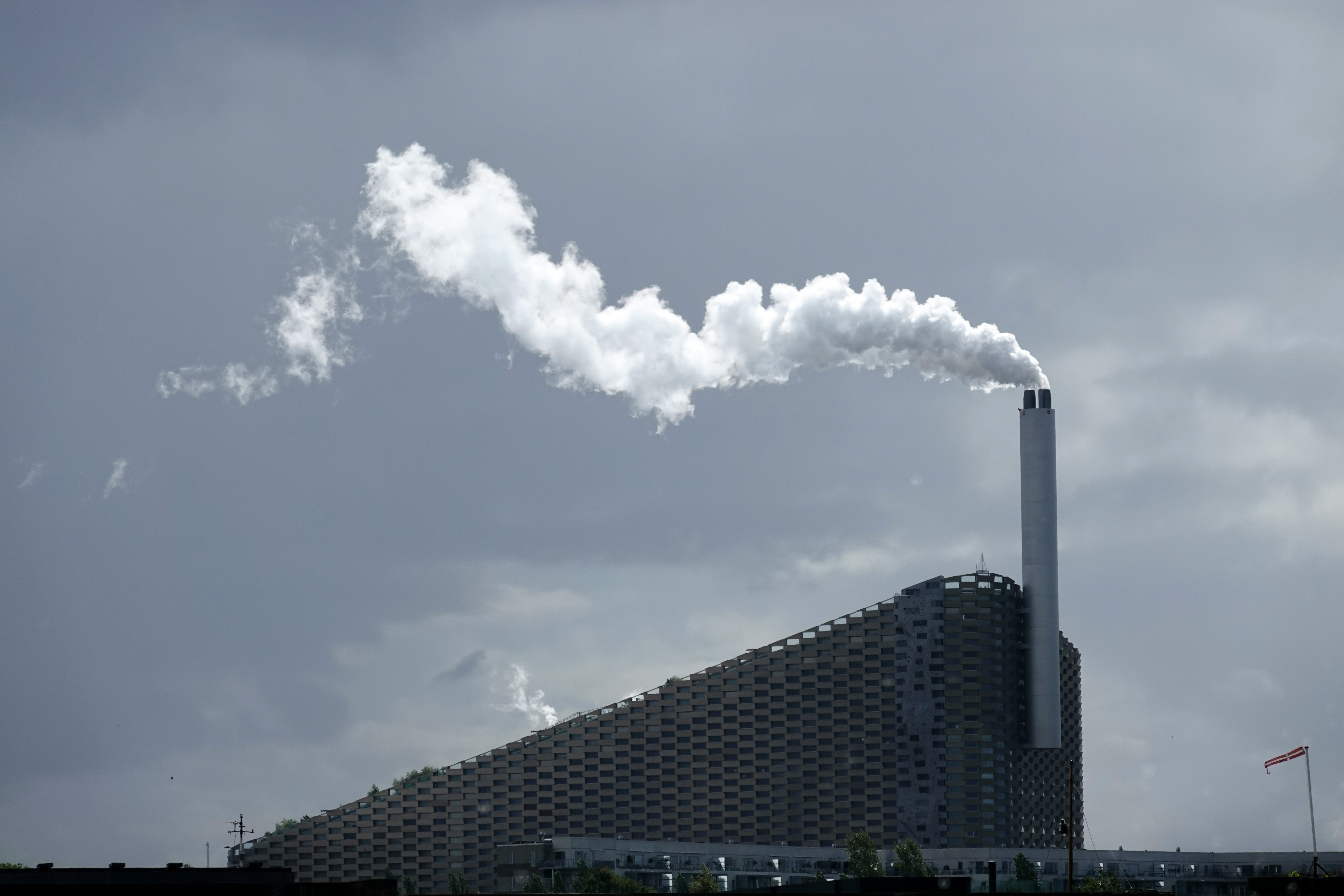
By implementing a national tax on carbon emissions, Denmark is incentivizing heavy industry to shift to zero- and low carbon fuels. The relatively high tax level ensures that the incentive is strong enough to ensure action, while the recirculation of the revenue supports companies investing in the transition.
By implementing a national tax on carbon emissions, Denmark is incentivizing heavy industry to shift to zero- and low carbon fuels. The relatively high tax level ensures that the incentive is strong enough to ensure action, while the recirculation of the revenue supports companies investing in the transition.
d) Transitioning from fossil fuel energy systems
Recognizing that the tax will ultimately cause increased costs for households with potentially harmful distributional effects, Denmark has implemented several initiatives to mitigate this and support vulnerable households.
Recognizing that the tax will ultimately cause increased costs for households with potentially harmful distributional effects, Denmark has implemented several initiatives to mitigate this and support vulnerable households.
e) Accelerate zero- and low-emission technologies
Part of the revenue from the CO2 tax is placed in a green fund to support companies in developing and implementing new, green technologies, as well as a specific fund for investments in carbon capture and storage.
Part of the revenue from the CO2 tax is placed in a green fund to support companies in developing and implementing new, green technologies, as well as a specific fund for investments in carbon capture and storage.
h) Phase out fossil fuel subsidies
The green tax reform addresses fossil fuel subsidies by phasing out tax expenditures granting tax exemptions on fossil fuels used in shipping, aviation, and other sectors.
The green tax reform addresses fossil fuel subsidies by phasing out tax expenditures granting tax exemptions on fossil fuels used in shipping, aviation, and other sectors.
Policy package to increase sales of electrical vehicles
Sector: Transport | Addressed GST |
|---|---|
  | g) Reducing road transport emissions The policy package is aligned with the objective by implementing consistent incentives, such as tax exemptions and access to bus lanes, alongside substantial investments in charging infrastructure. These measures have made electric vehicles more affordable and appealing, fostering a stable market and accelerating the deployment of zero-emission vehicles. As a result, Norway is on track to significantly reduce transport emissions, demonstrating the effectiveness of clear and consistent policies in achieving the GST goals. |
Sector: Transport

Addressed GST
g) Reducing road transport emissions
The policy package is aligned with the objective by implementing consistent incentives, such as tax exemptions and access to bus lanes, alongside substantial investments in charging infrastructure. These measures have made electric vehicles more affordable and appealing, fostering a stable market and accelerating the deployment of zero-emission vehicles. As a result, Norway is on track to significantly reduce transport emissions, demonstrating the effectiveness of clear and consistent policies in achieving the GST goals.
The policy package is aligned with the objective by implementing consistent incentives, such as tax exemptions and access to bus lanes, alongside substantial investments in charging infrastructure. These measures have made electric vehicles more affordable and appealing, fostering a stable market and accelerating the deployment of zero-emission vehicles. As a result, Norway is on track to significantly reduce transport emissions, demonstrating the effectiveness of clear and consistent policies in achieving the GST goals.
Green Steel: The transitioning of a hard-to-abate sector
Sector: Heating & Electricity, Industry | Addressed GST |
|---|---|
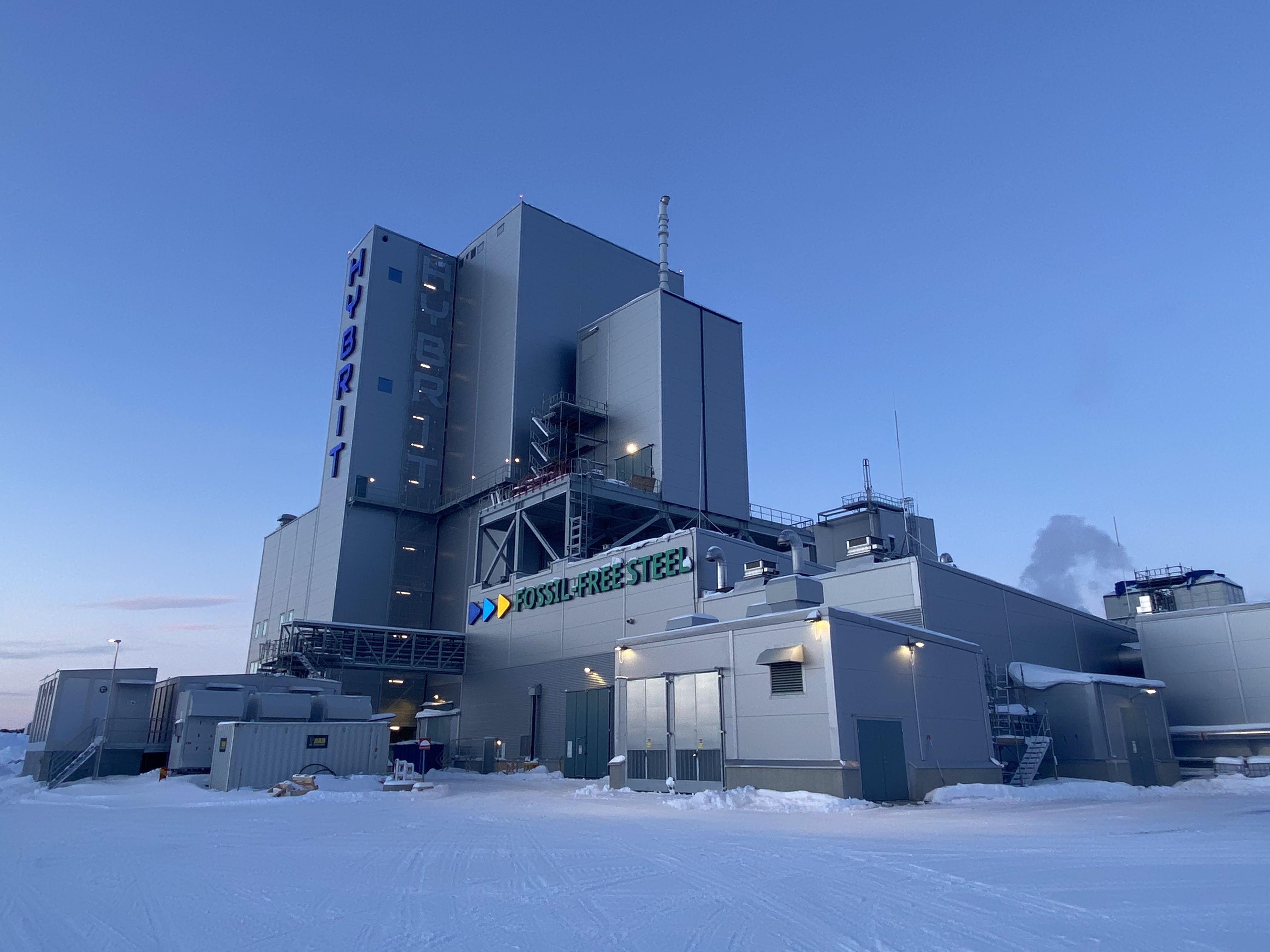
  | c) Zero & Low-carbon fuels By replacing traditional steelmaking (using coal as a reduction agent in blast furnaces) with Direct Reduced Ironmaking (using Hydrogen as a reduction agent), significant amounts of coal can be replaced by hydrogen. This accelerates efforts in reaching near zero steel production if the hydrogen is produced with renewable energy, such as solar and wind-power electricity. d) Transitioning from fossil fuel energy systems Replacing coal with clean hydrogen in the steel sector would make a significant contribution to transitioning away from fossil fuels. e) Accelerate zero- and low-emission technologies This technology offers a pathway to low-emission technologies by using renewables in a hard-to-abate sector and replacing fossil fuels. |
Sector: Heating & Electricity, Industry
Addressed GST
c) Zero & Low-carbon fuels
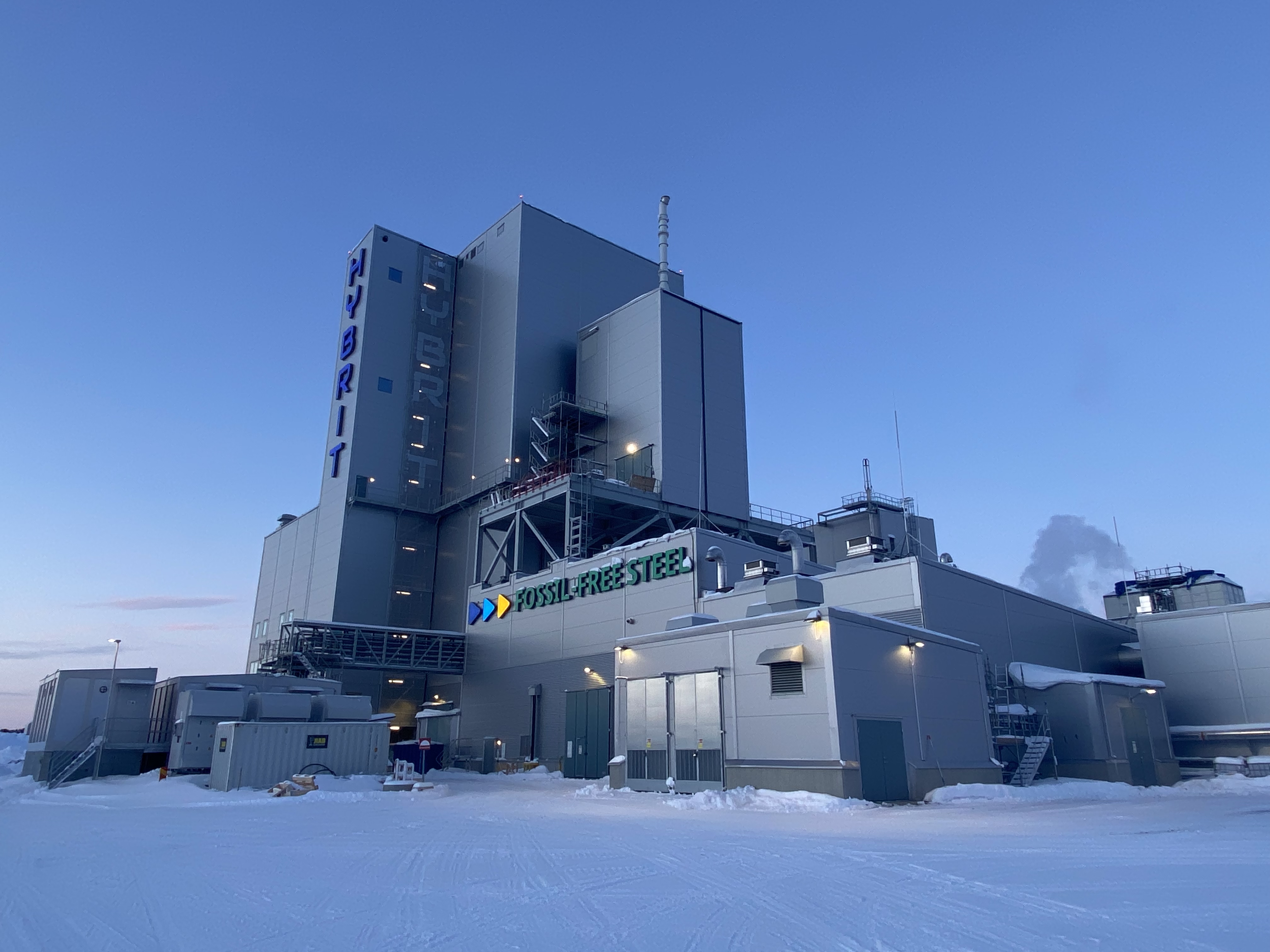
By replacing traditional steelmaking (using coal as a reduction agent in blast furnaces) with Direct Reduced Ironmaking (using Hydrogen as a reduction agent), significant amounts of coal can be replaced by hydrogen. This accelerates efforts in reaching near zero steel production if the hydrogen is produced with renewable energy, such as solar and wind-power electricity.
By replacing traditional steelmaking (using coal as a reduction agent in blast furnaces) with Direct Reduced Ironmaking (using Hydrogen as a reduction agent), significant amounts of coal can be replaced by hydrogen. This accelerates efforts in reaching near zero steel production if the hydrogen is produced with renewable energy, such as solar and wind-power electricity.
d) Transitioning from fossil fuel energy systems
Replacing coal with clean hydrogen in the steel sector would make a significant contribution to transitioning away from fossil fuels.
Replacing coal with clean hydrogen in the steel sector would make a significant contribution to transitioning away from fossil fuels.
e) Accelerate zero- and low-emission technologies
This technology offers a pathway to low-emission technologies by using renewables in a hard-to-abate sector and replacing fossil fuels.
This technology offers a pathway to low-emission technologies by using renewables in a hard-to-abate sector and replacing fossil fuels.
Carbon Capture Storage (Cross-Nordic)
Sector: Heating & Electricity, Industry, Transport | Addressed GST |
|---|---|
 | b) Phase-down of unabated coal power CCS can be applied to existing coal-fired power plants to obtain significant CO2 emission reductions. c) Net-zero energy systems CCS can contribute to net-zero emissions by mitigating emissions from fossil-based energy systems and generating CO2 removal that can counterbalance CO2 emissions that cannot be eliminated, if applied to biomass-energy systems or direct air capture. e) Accelerate zero- and low-emission technologies Significant expansion of the CCS technology will be required to manage hard-to-abate emissions. g) Reducing road transport emissions CCS can cater for carbon-lean, or even carbon-negative, fuels for the transportation sector. |
Sector: Heating & Electricity, Industry, Transport
Addressed in GST
b) Phase-down of unabated coal power
CCS can be applied to existing coal-fired power plants to obtain significant CO2 emission reductions.
CCS can be applied to existing coal-fired power plants to obtain significant CO2 emission reductions.
c) Net-zero energy systems
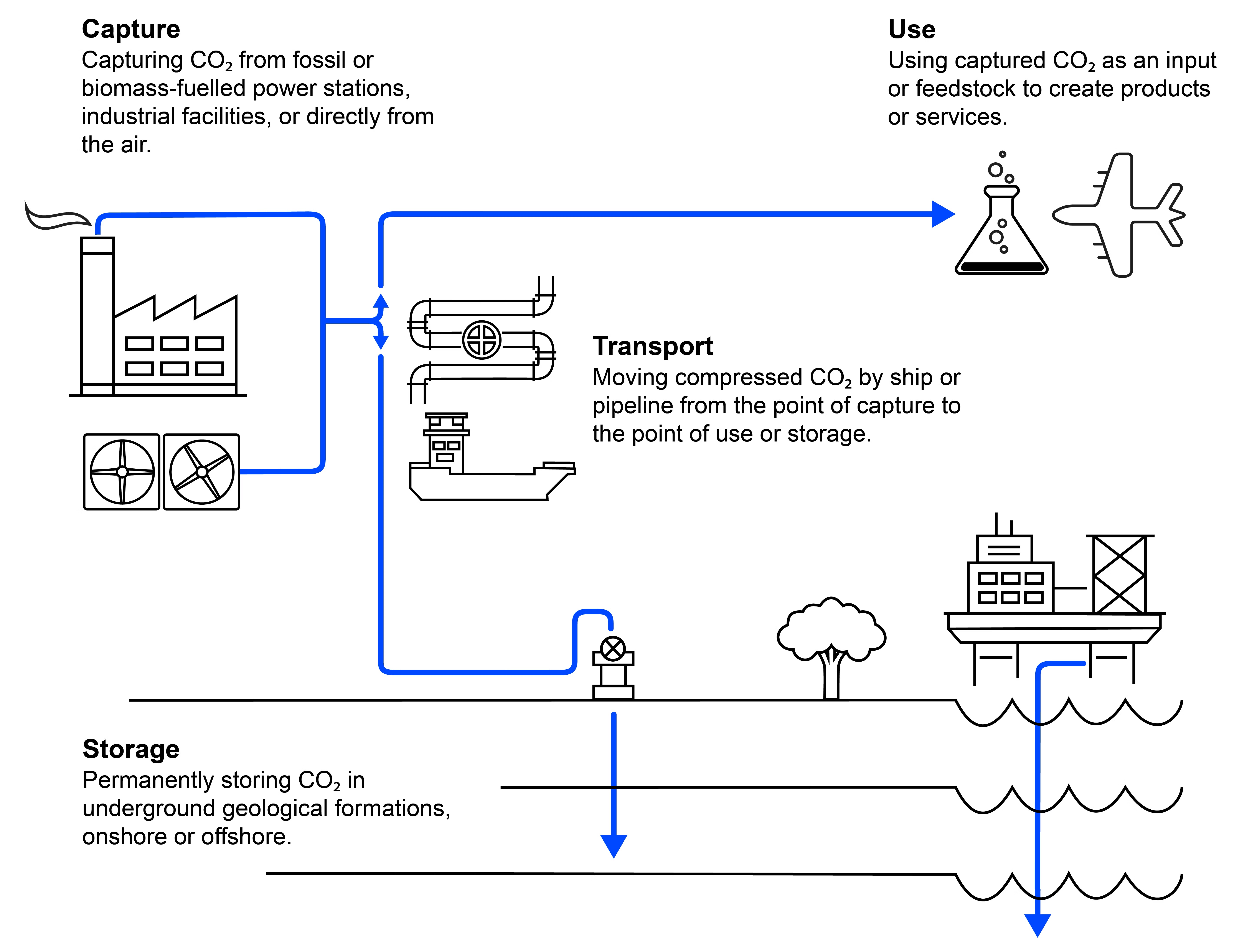
CCS can contribute to net-zero emissions by mitigating emissions from fossil-based energy systems and generating CO2 removal that can counterbalance CO2 emissions that cannot be eliminated, if applied to biomass-energy systems or direct air capture.
CCS can contribute to net-zero emissions by mitigating emissions from fossil-based energy systems and generating CO2 removal that can counterbalance CO2 emissions that cannot be eliminated, if applied to biomass-energy systems or direct air capture.
e) Accelerate zero- and low-emission technologies
Significant expansion of the CCS technology will be required to manage hard-to-abate emissions.
Significant expansion of the CCS technology will be required to manage hard-to-abate emissions.
g) Reducing road transport emissions
CCS can cater for carbon-lean, or even carbon-negative, fuels for the transportation sector.
CCS can cater for carbon-lean, or even carbon-negative, fuels for the transportation sector.