Key findings
Preliminary analyses based on regulation-based classification according to the authoritative guidelines of the MPA guide
Grorud-Colvert, K. et al. 2021. The MPA Guide: A framework to achieve global goals for the ocean. Science 373:eabf0861. https://www.science.org/doi/10.1126/science.abf0861
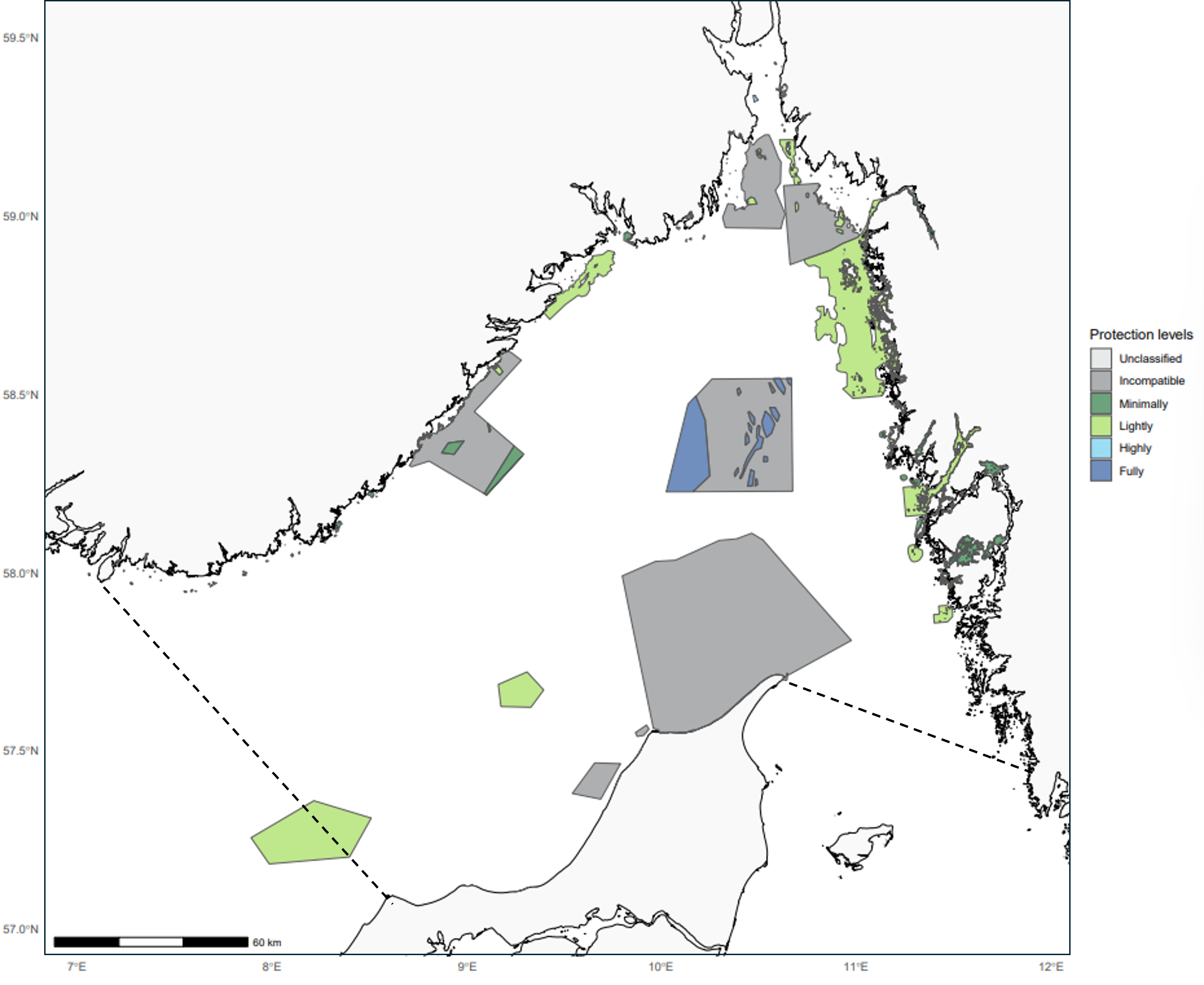
Figure 1. Marine nature protection in Skagerrak consists of Ospar- and Natura 2000 MPAs, in addition to national parks (Norway) designated under national environmental legislation. Preliminary analyses indicate that less than 7 % of Skagerrak’s total area (32 231 km2) has protection instruments compatible with conservation objectives. Dashed lines delimit Skagerrak between the North Sea (left) and Kattegat (right). Map courtesy of project MARHAB/CCMAR UAlg.
Population structure – where species are divided into multiple distinct units or populations – is an evident pattern among organisms within the Skagerrak. Such structure is apparent especially among coastal sites and between coastal and offshore sites (learn more about connectivity and population structure in Spatial population structure and connectivity among marine populations in the Skagerrak). Bottom trawl fisheries target the Skagerrak basin down to 400–500 meter depth (Fig. 2A). A holistic MPA network design in Skagerrak should consider patterns in population structure and population connectivity, as well as configuration and representativity of habitats, and prevailing fishing pressure. Some of the most productive sites, which are essential to include in MPA networks to maximise ecosystem benefits, are likely to be heavily targeted by fisheries, thus risking displacement and intensification of fishing effort in adjacent unprotected areas. To keep negative impacts on fisheries to a minimum while maximizing conservation benefits, it is essential to conduct systematic conservation planning, where maps of conservation values, human pressures and socio-economic interests are considered. An effective MPA network in the Skagerrak, taking both broad conservation and socio-economic objectives into account, would benefit from an international scientific advisory committee including representatives from Norway, Sweden, Denmark and the EU commission.
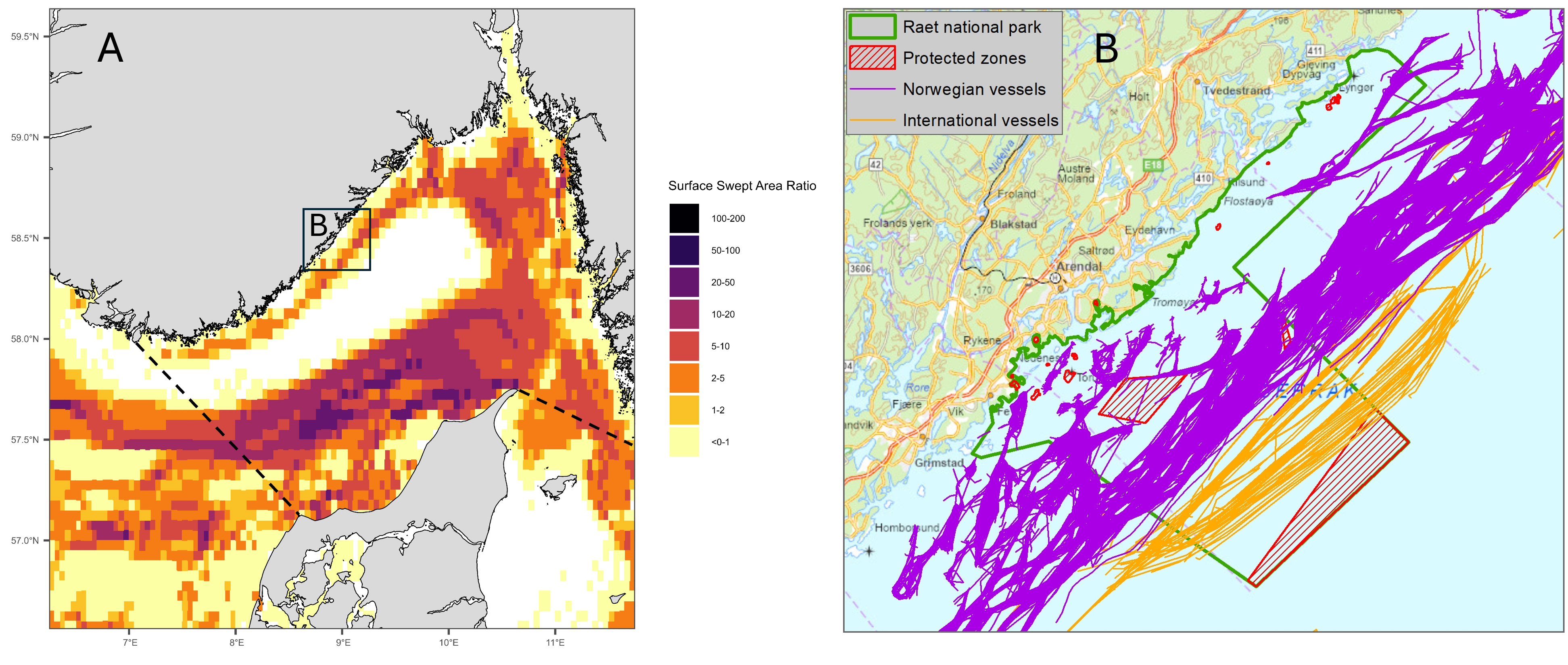
Figure 2. Bottom-contacting fishing activity is widespread in the Skagerrak. A. Footprint and intensity (yr1) of bottom trawl fisheries as surface swept area ratio (entire width of ground gear with bottom contact, regardless of penetration depth) from 2018-2022
ICES. 2022. Greater North Sea ecoregion - fisheries overview. In: Report of the ICES Advisory Committee, 2022. ICES Advice 2022, section 9.2.https://doi.org/10.17895/ices.advice.21641360
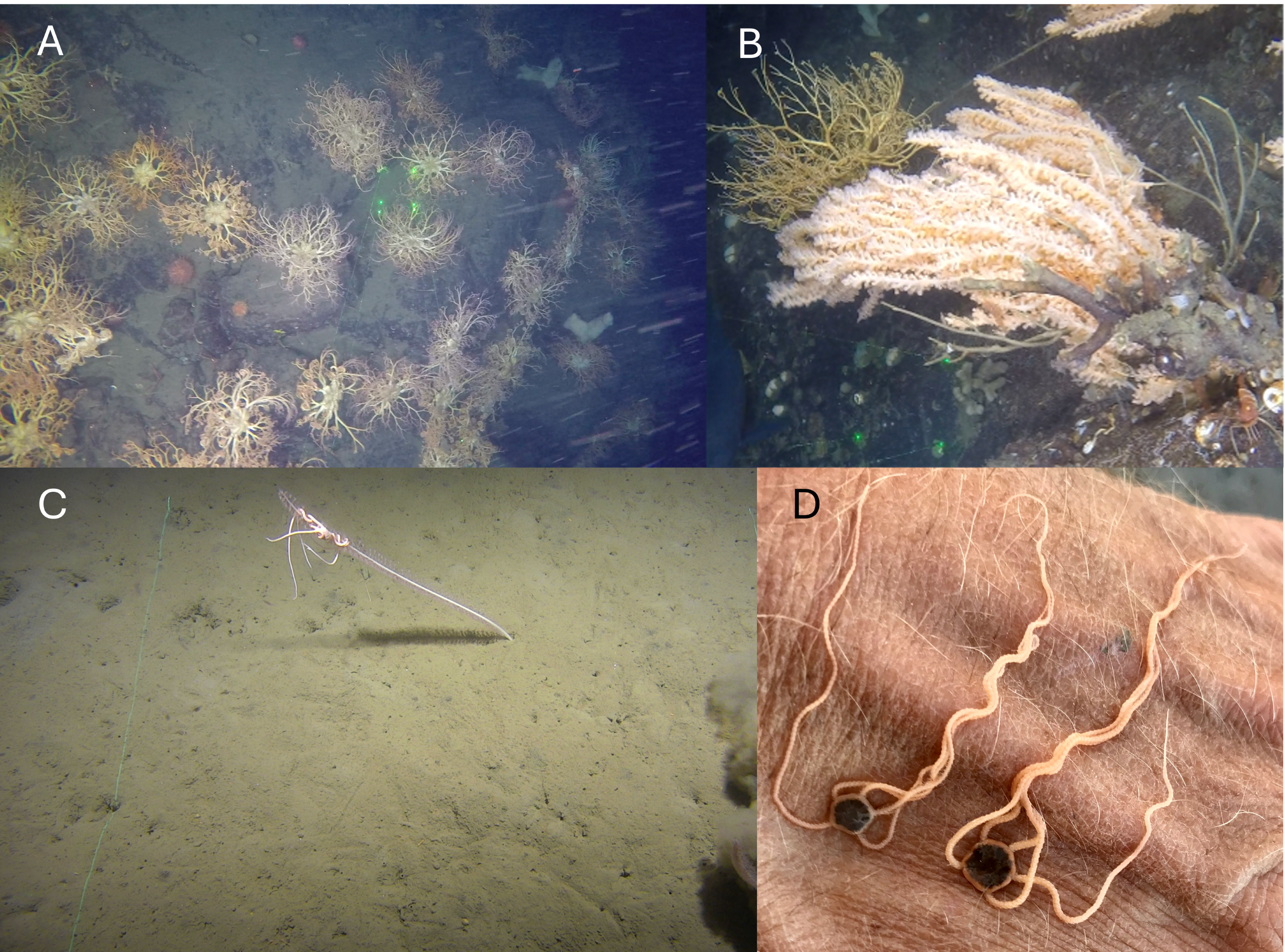
Figure 3. The Bratten Natura 2000 area is a rare example of an offshore MPA with fully protected zones. Situated at the easternmost slope of the Norwegian Trench, Bratten is steep and deep (100-500 m) with canyons, pockmarks and outcropping rocks hosting coral gardens and large soft seafloor areas with sea pen fields. A. Basket stars Gorgonocephalus caputmedusae on current swept rock, B. Soft coral Primnoa resedaeformis on steep rock wall, C. Large sea pen Funiculina quadrangularis with the associated brittle star Asteronyx loveni on muddy seafloor. D. The delicate brittle star Amphilepis norvegica dominates the burrowing fauna of the deep muddy seafloor of Skagerrak. All photos: SLU.
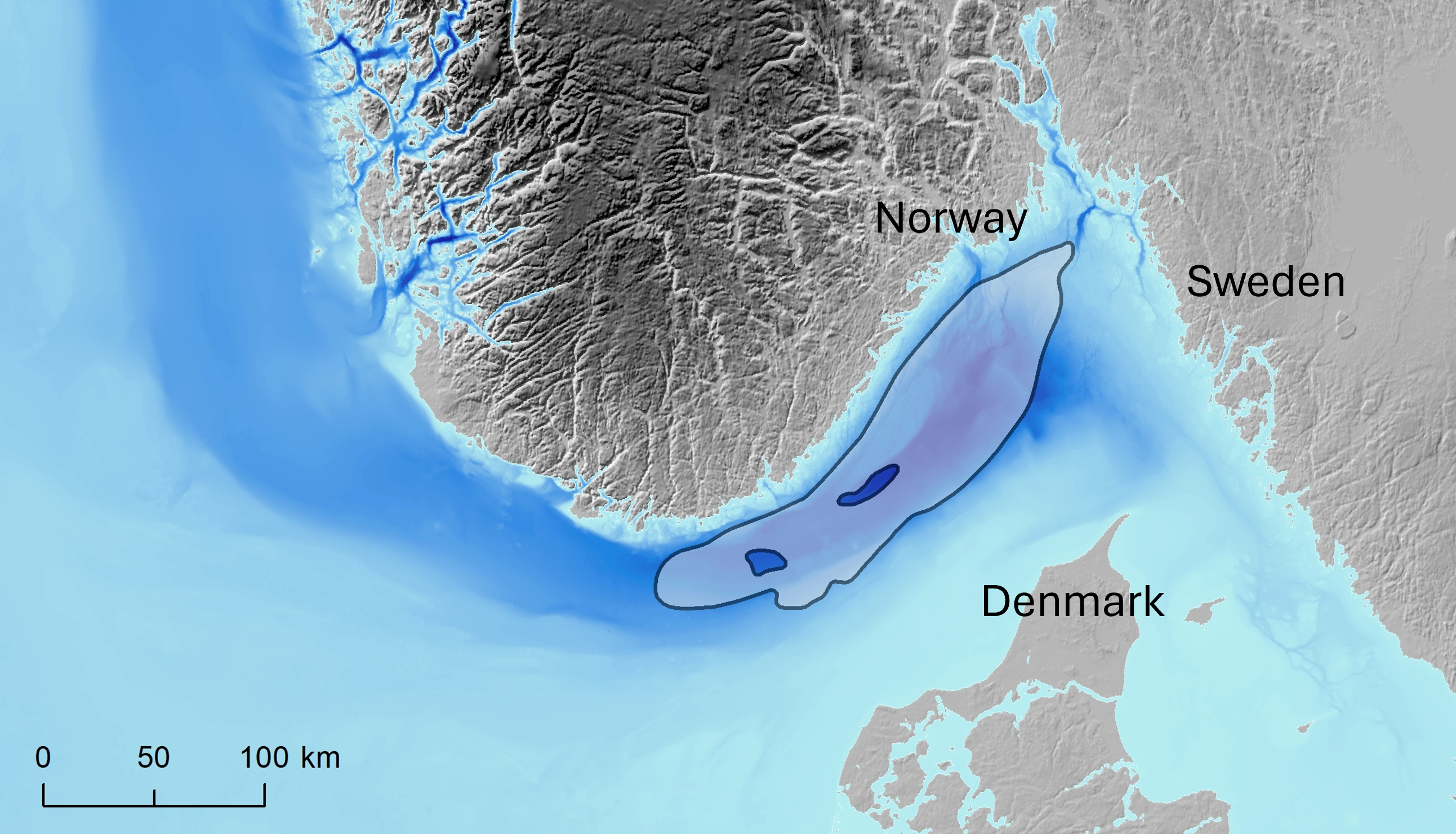
Figure 4. The Norwegian Trench is a deep (<700 m) trough carved into the shelf by fluvial erosion and glacial flows. In the eastern part of the Norwegian Trench, between Norway, Sweden, and Denmark (indicated by polygon), a lot of organic carbon are accumulating annually in the seabed sediments. Courtesy of: M. Diesing/Norwegian Geological Survey, redrawn from Diesing et al. (2024).
The Norwegian Trench and the outer region of the Oslofjord are defined as especially valuable areas (SVO’s) due to the richness of ecosystem components meeting the criteria of Ecologically and Biologically Significant marine Areas (EBSA)
Eriksen, E., et al. 2021. Particularly valuable and vulnerable areas (SVO) in Norwegian seas - Environmental values (English summary). Rapport fra havforskningen 2021-26. https://www.hi.no/hi/nettrapporter/rapport-fra-havforskningen-2021-26
Meld. St. 21 (2023-2024), Barentshavet og havområdene utenfor Lofoten, Norskehavet, og Nordsjøen og Skagerrak. Innst. 375 S (2023-2024), Norwegian Parliament White paper 14.06.2024. (In Norwegian)
Álvarez, H., Perry, A.L., Blanco, J., Conlon, S., Petersen, H.C., Aguilar, R. 2019. Protecting the North Sea: Norway. Oceana, Madrid. 96 p.
Diesing, M., et al. 2024. Glacial troughs as centres of organic carbon accumulation on the Norwegian continental margin. Communications Earth & Environment 5:327. https://doi.org/10.1038/s43247-024-01502-8