

- Full page image w/ text
- Authors
- Table of contents
- Executive summary
- Sammendrag
- Glossary
- Scientific Names
- 1. Introduction
- 1.1. Aquaculture sectors in the Nordic countries
- 2. Status of policy, legislation and certification
- 2.1. EU policy and legislation
- 2.2. Norway
- 2.3. Denmark
- 2.4. Faroe Islands
- 2.5. Finland
- 2.6. Sweden
- 2.7. Iceland
- 2.8. Certification schemes
- 3. Land-based systems
- 3.1. Flow-through
- 3.2. Recirculating aquaculture systems
- 3.3. Static ponds
- 3.4. Aquaponics
- 4. Emissions, wastes and by-products from land-based aquaculture
- 4.1. Definition of emissions, wastes, and by-products
- 4.2. Discharge water
- 4.3. Sludge
- 4.4. Mortalities
- 4.5. Gas emissions
- 4.6. Sources of waste streams from RAS
- 5. Techniques for management of waste and reduction of emissions
- 5.1. Separation of solids and water
- 5.2. Possible reuse of sludge
- 5.3. Discharge water
- 5.4. Reuse of discharge water
- 5.5. Mortalities
- 5.6. Gas emissions
- 5.7. Other forms of waste
- 5.8. Reduction before reuse
- 6. Results from stakeholder engagement
- 7. Recommendations and considerations
- References
- Appendix 1
- Appendix 2
- About this publication
MENU
Best Available Techniques for Reduction and Reuse of Emissions in Nordic Land-based Aquaculture
Callum Howard, Dr. Steven Prescott, Kristoffer Spigseth,
Dr. Ragnhild Inderberg Vestrum, Svein Martinsen, Iselin Evje, Dr. Adrian Love,
Finn Skjennum, Davide Sorella, Tamás Eisenbeck, Dr. Adrian Hartley, Freya Robinson
Contents
This publication is also available online in a web-accessible version at https://pub.norden.org/temanord2023-514.
Executive summary
This report describes methods for the reuse and reduction of waste streams from land-based aquaculture systems. It builds on a previous report describing BATs for Nordic aquaculture (Heldbo et al., 2013). Table 1 shows how the state of the art has changed in the intervening decade, highlighting not only technological improvements but also an increase in attention to the reuse of waste, as Nordic countries have become increasingly environmentally conscious. Land-based production is increasingly seen as an opportunity to reduce environmental damage compared to open-water alternatives. Escapes and interactions with wild populations can be avoided and the release of chemical therapeutants, such as antibiotics and anti-parasitics, can be reduced. If water is recirculated, its use can drop dramatically, which may increase energy demand, the environmental impacts of which might be mitigated through renewable sources. Wastes from land-based systems, rather than being discharged into the environment, can be contained and either processed to reduce harm or potentially valorised, turning the wastes into by-products.
The European Union has no dedicated legal framework for the regulation of aquaculture, with relevant legislation being spread across various areas of policy. Environmental legislation such as the Water Framework Directive and the Waste Framework Directive are relevant but only indirectly, and aquaculture does not fall within the scope of the newly revised Industrial Emissions Directive. The Faroe Islands, Norway, and Iceland are not Member States but implement some of EU legislations, particularly those relating to food safety and the use of chemical therapeutants. As the regulation of wastes and emissions from aquaculture is mostly through the legislation of individual nations, it differs across Nordic counties.
The major waste streams (including emissions that may become wastes or by-products) from land-based aquaculture are sludge, discharge water, mortalities, and gaseous emissions. Other potential waste streams common to many industries (e.g., plastics, metals, and wood) are also produced but are less specific to aquaculture and their reuse is covered in a large number of reports.
Sludge consists of faeces and uneaten feed. It can contain a large amount of water, or it can be thickened, dewatered, and dried. Sludge with various levels of moisture can be reused in a variety of manners. Uncontrolled discharge of sludge can cause environmental damage, such as contamination with antibiotics, heavy metals, and solids, and eutrophication due to its nitrogen and phosphorous content. These nutrients allow the sludge to be reused as fertiliser, although care must be taken to ensure that the bioavailability of these nutrients remains and that heavy metals are not in too high a concentration. Drying the sludge before use as a fertiliser reduces transport costs significantly, whilst it is also possible to desalt the sludge. Biogas production in a third-party biogas plant is another option, and drying reduces transport costs and gate fees but increases the capital expenditure (CAPEX) and operating expenditure (OPEX) of farms if conducted onsite. Biogas can be produced onsite and used to supply energy to the farm. Recent advancements in microbial culture selection allow for 100% fish sludge to be used without the addition of exogenous materials. Sludge can also be used to power parts of the farm through pyrolysis. Burning the sludge in the absence of oxygen creates large amounts of heat energy and turns the sludge into biochar, a charcoal-like substance, which, rather than being used as a fuel, can be used as a soil enhancer and filter material. Bio-oil and biogas are other potential products, but biochar is likely the most economically viable by-product. Dried sludge can be incinerated to produce electricity at third-party incineration plants or replace coal during the production of cement. The EU does not allow sludge to be fed to insects, but it is being explored experimentally, and insects could be fed to fish of another species or ruminants. Valorisation of saline sludge poses a larger issue than freshwater sludge Thus, fertilisation of halophyte crops is being explored, with a biogas plant with specially selected microbes is in the pilot stage. Pyrolysis is possible, as is incineration, whilst washing the sludge or using desalting technology allows sludge to be reused in the same manner as freshwater sludge.
Discharge water contains nutrients that can lead to eutrophication but also facilitate its reuse. Fertigation is the watering of crops with a fertiliser solution. It is more efficient than traditional irrigation and fertilisation, wasting less water and causing less nutrient run-off. The nutrients in aquaculture discharge water have proven useful in the cultivation of crops including cucumbers and tomatoes, but this reuse requires fish farms to be in proximity to a relevant agricultural user. Many farms in the Nordics only use fertiliser in certain periods of the year and the same is true for watering. Greenhouse-based agriculture is the most likely candidate for fertigation using aquaculture water. The nutrients in the water can also be used to grow algae. Algae have been used in the treatment of municipal wastewater. Depending on the species grown, algae can be used to produce high-value fatty acids, fertilisers, silicon, or as a bioenergy source. The economics of growing algae in this manner in the Nordics have not been proven. Large surface areas are needed to process discharge water in this manner, and efficient growth in winter typically requires additions of heat and light. Constructed wetlands are often used in Denmark, and if space is available these can present a simple method of discharge water treatment. Discharge water and nutrients can contain heat and physical energy, and capturing this energy can reduce costs on farms.
Almost every farm site we surveyed currently ensiles mortalities, which involves mixing mortalities in an acid solution to prevent bacterial activity. This process can be environmentally and economically expensive and poses a health hazard to workers, although the method is simple and well established. Ensiled mortalities can be processed into protein isolates and fish oils, but the market for these is limited, in part due to EU legislation. The fat content of the mortalities makes bioenergy production a reuse option; the mortalities can be transported to a biogas plant or turned into biodiesel. This option was until recently used in the Åland Islands to power buses in the capital city. The oil content of the mortalities can also be used to replace hydrocarbon oils in the leather industry, and purified fish oil can fetch a high price. Recent advancements in technology present the possibility of drying mortalities. As with sludge, drying decreases the transport costs significantly, sanitises the mortalities, and opens up other valorisation options such as use in cement production. Gate fees at biogas plants are reduced with dried mortalities. One possible avenue is pet food. This is not currently allowed due to EU regulations, but dried mortalities have proven to be stable, free from bacterial concerns, and nutritionally compatible. Mortalities can be fed to fur animals or animals in a shelter, but pet food regulations are stricter.
Gas emissions from land-based aquaculture are much less regulated or documented than the above-mentioned waste streams. Much of the greenhouse gas (GHG) emissions associated with salmonid aquaculture stem from the agricultural production of crops, and to a lesser extent, wild capture of fish, used to make fish feeds. The generation of electricity used to pump or heat water is a further source of GHG emissions, and increasing efficiency or using green energy sources can reduce this. Carbon dioxide (CO2) is released by fish respiration, and whilst the amount is not comparable to heavy industry, reducing GHG emissions in any capacity is a noble goal. Two companies have been experimenting with capturing CO2 from fish farms and using microbes to convert this into protein. This may reduce the reliance on exogenous food sources and associated GHG emissions. Hydrogen is an input into these systems and green energy must be used to produce the hydrogen; otherwise, this capture presents no environmental benefit. Nitrous oxide (N2O) is another GHG that can be released from a fish farm, and an intermediate product in denitrification, N2O release from land-based aquaculture is little studied or considered. Advancements in denitrification reactors that favour alternative chemical pathways of denitrification may help reduce this problem, but these reactors are not currently viable for use on a fish farm.
This report focuses on the reuse of waste streams, but it is easier and cheaper to reduce the streams rather than attempt to reuse or recycle them. Simple steps such as appropriate planning, recordkeeping, site selection, equipment choice, and farm practices can reduce the production of all forms of waste, and these should be considered first and foremost.
| 2013 | 2022 |
| SLUDGE | SLUDGE |
| Separation of Solids and Water | Separation of Solids and Water |
| Belt Filter | Sedimentation |
| Disk Filter | Mechanical Filtration (Drum and Disk) |
| Floatation | Wastewater Outflow |
| Drum filter | Sludge Water Processing |
| Band filter | Thickening |
| Sludge cones | Dewatering |
| Precipitation/sedimentation | Drying |
| Drains - eco trap | Reuse of Sludge |
| Geotubes | Fertiliser |
| Hydrocyclone (drain) | Energy Production |
| Reuse of Sludge | Pyrolysis |
| Hydrolysis | Bio-oil and syngas |
| Biogas | Biochar |
| Fuel pellets | Incineration |
| Composting/soil improvement | Insect feed |
| Vermiculture | Sludge Drying |
| Insect feed (insect meal production) | Saline Sludge |
| DISCHARGE WATER | DISCHARGE WATER |
| Biological filtration | Treatment |
| Ultraviolet light | Further Water Quality Improvement |
| Denitrification | Adsorptive Bubble Separation |
| Protein Skimmer | |
| Dissolved Air Floatation | |
| Membrane Floatation | |
| Degassing | |
| Wetlands | |
| Reuse of Discharge Water | |
| Fertigation | |
| Algae | |
| Heat/energy Recovery | |
| CHEMICAL DISCHARGES | |
| MORTALITIES | |
| Ensiling | |
| Protein Isolates and Feed Oil | |
| Biofuels | |
| Leather Industry | |
| Drying | |
| GAS EMISSIONS | |
| Carbon Capture | |
| N2O Reduction | |
| Other Forms of Waste | |
| Reduction Before Reuse |
Table 1. Potential Best Available Techniques as featured in the 2013 and present report.
Sammendrag
Denne rapporten beskriver ulike metoder for gjenbruk og reduksjon av avfallsstrømmer fra landbaserte akvakultursystemer. Rapporten bygger på en tidligere rapport som beskriver BAT for nordisk akvakultur (Heldbo et al., 2013). Tabell 1 viser hvordan det vi anser som best, har endret seg i løpet av tiåret som har gått siden den første rapporten. Det har ikke bare vært ved teknologiske forbedringer, det har også vært en økning i oppmerksomheten rundt gjenbruk av avfall etter hvert som de nordiske landene har blitt stadig mer miljøbevisste. Landbasert akvakulturproduksjon blir ansett for å være bedre for miljøet enn produksjon i sjø for enkelte miljøproblemer. Man kan unngå rømming og interaksjon med ville fiskebestander, og utslipp av kjemikalier som f.eks. antibiotika lusemidler og andre legemidler til miljøet kan reduseres. Ved resirkulering av vann vil vannbruken reduseres betydelig, men fordelene nevnt ovenfor kan føre til økt energibehov. Bruk av fornybar energi kan redusere påvirkningen på miljøet. I stedet for å slippe avfall ut i miljøet, kan man fra landbaserte anlegg samle det opp og prosessere det for å redusere effekten på miljøet, eller også bruke avfallet som nyttige produkter eller råstoff. Landbaserte oppdrettsanlegg vil kunne kreve varige fysiske inngrep, og dersom de eksempelvis legges i strandsonen kan det hindre allmennhetens tilgang. Slike anlegg kan også være avhengig av tilgang til ferskvannsressurser og da i noen tilfeller måtte konkurrere med annen vannressursbruk.
I stedet for å ha et eget lovverk for å regulere akvakulturindustrien i EU, er lovverket spredt på lover og regler som regulerer hver sine områder. Ulike typer miljølovgivning som for eksempel Water Framework Directive og Waste Framework Directive (rammedirektiver for henholdsvis vann og avfall) kan være relevante, men kun på en indirekte måte. Akvakultur blir ikke regulert av det nylig reviderte direktivet for industrielle utslipp (Industrial Emissions Directive). Verken Færøyene, Norge eller Island er medlemmer av EU, men noe av EU-lovgivningen, spesielt det som gjelder mattrygghet og bruk av kjemiske legemidler, implementeres også i disse landene. Ettersom utslipp fra akvakulturindustrien for det meste reguleres gjennom lover og regler i de individuelle landene, varierer dette mye mellom de nordiske landene.
De største utslippsstrømmene (inkludert utslipp som blir avfall eller biprodukt) fra landbasert akvakultur, er slam, utløpsvann, dødfisk og gassutslipp. Andre potensielle utslippsstrømmer som er vanlige i andre typer industri (f.eks. plast-, metall-, og treindustri), produseres også, men dette er ikke spesifikt for akvakulturindustrien, og gjenbruk av disse dekkes i et stort antall rapporter.
Slam består av fiskeavføring og fôrpartikler (fôrspill og ufordøyd fôr), det kan inneholde store mengder vann, men det kan også fortykkes, avvannes, og tørkes. Slam med forskjellig mengde vanninnhold kan brukes til ulike ting. Ukontrollert utslipp av slam kan føre til skade på miljøet, som f.eks. forurensing og eutrofiering på grunn av innholdet av nitrogen og fosfor i slammet. På grunn av at slammet inneholder disse næringsstoffene, er det mulig å bruke det som gjødsel, men man må sikre at biotilgjengeligheten til næringsstoffene ikke er forringet, og at slammet ikke inneholder høye konsentrasjoner av tungmetaller. Ved å tørke slammet før det brukes som gjødsel, vil man oppnå en betydelig reduksjon av transportkostnadene. Et annet mulig bruksområde for slammet er i biogassproduksjon. Dette gjøres som regel av en tredjepartsaktør, og tørking vil også her redusere transportkostnadene og avhendingsavgiftene, men øke CAPEX og OPEX til oppdrettsanlegget dersom biogassproduksjonen gjøres på stedet i stedet for hos en annen aktør. Biogass kan også produseres direkte på oppdrettsanlegget og brukes direkte som energi på anlegget. Nyere utvikling innen mikrobiell seleksjon/økologi gjør at man nå kan bruke 100 % fiskeslam i biogassproduksjon, uten at man må tilsette andre materialer. Slam kan også brukes til å drive deler av anlegget ved bruk av pyrolyse. Ved å brenne slam uten oksygen tilstede produseres store mengder varmeenergi som omdanner slammet til biokull – et materiale som minner om vanlig kull, men som i stedet for å bli brukt som en energikilde, kan brukes i jordforbedring og som et filtermateriale. Bioolje og biogass er andre mulige produkter, men biokull er mest sannsynlig det biproduktet som er økonomisk mest levedyktig. Tørket slam kan også brennes i forbrenningsanlegg for å produsere elektrisitet, og det kan dessuten brukes i stedet for kull i produksjon av sement. I EU er det ikke tillatt å bruke slam som fôr til insekter, men dette undersøkes nå videre, og insekter kan brukes som fôr til andre fiskearter eller til drøvtyggere. Marint slam inneholder salt og er mer problematisk enn ferskvannsslam. Gjødsel i produksjon av halofytter (saltelskende planter) blir nå undersøkt, og et biogassanlegg med spesielt utvalgte mikrober er i pilotfasen. Man kan bruke pyrolyse til forbrenning av marint slam. Vasking av slammet eller bruk av teknologi for avsalting av slammet, gjør at slammet kan brukes på samme måte som ferskvannsslam.
Avløpsvann fra oppdrett inneholder også næringsstoffer som kan føre til eutrofiering, men de samme næringsstoffene er det som gjør at gjenbruk er mulig. En mer effektiv måte å vanne og gjødsle avlinger på enn den tradisjonelle måten, er å vanne med en løsning av vann og gjødsel (dette kalles fertigation). Dette fører til redusert vannforbruk og redusert avrenning av næringsstoff. Næringsstoffene i avløpsvann fra akvakulturproduksjon har blitt brukt til å dyrke bl.a. agurk og tomat, men denne typen gjenbruk fordrer at oppdrettsanlegget ligger nært planteprodusenten. Mange gårder i de nordiske landene gjødsler og/eller vanner avlingene sine kun i enkelte perioder i løpet av året. Landbruk i drivhus som har produksjon året gjennom, er derfor den mest sannsynlige kandidaten til å bruke denne løsningen. Næringsstoffene i vannet kan også brukes til dyrking av alger. Alger har blitt brukt i behandling av kommunalt avløpsvann. Enkelte arter kan også brukes for produksjon av fettsyrer, de kan brukes som gjødsel, som en kilde til bioenergi, eller de kan produsere silikon som kan brukes industrielt. For å dyrke alger basert på avløpsvann må man ha områder med stort overflateareal, og effektiv dyrking i vintersesongen krever gjerne tilførsel av varme og lys. Denne typen algeproduksjon har ikke blitt bevist økonomisk levedyktig i de nordiske landene. I Danmark brukes ofte våtmarker, noe som kan være en enkel måte å kvitte seg med avløpsvannet på, dersom man har nok tilgjengelig areal. Både avløpsvannet og næringsstoffene kan inneholde varme og fysisk energi, og hvis man fanger denne energien kan man redusere kostnadene på oppdrettsanlegget.
Så å si hvert eneste oppdrettsanlegg ensilerer dødfisken. Det betyr at dødfisken blandes i en syreløsning for å hindre bakteriell aktivitet. Denne prosessen kan være en påkjenning både for økonomien og miljøet, og den utgjør også en helserisiko for de ansatte på anleggene. Metoden er imidlertid enkel og godt etablert i næringen. Ensilasje kan bli videre prosessert til protein og fiskeolje, men markedet for disse produktene er begrenset, delvis pga. lovgivning i EU. På grunn av høyt fettinnhold kan produksjon av bioenergi fra dødfisk være en mulig gjenbruksmetode. Dødfisken kan transporteres til et biogassanlegg eller gjøres om til biodiesel. Denne metoden brukes på Åland for å drive busser i hovedstaden. Oljeinnholdet i dødfisken kan også brukes i stedet for olje basert på hydrokarboner i lærindustrien, og renset fiskeolje kan selges for en høy pris. Nyere teknologiutvikling har sett på muligheten for å tørke dødfisken. Dette vil redusere transportkostnadene betydelig, det hygieniserer dødfisken og åpner opp for andre gjenbruksmuligheter. Avhendingsavgiftene ved biogassanlegg vil også bli redusert hvis dødfisken er tørket på forhånd, og det kan brukes i sementproduksjon. En annen mulighet er å bruke den som fôr til kjæledyr. Dette er per nå ikke tillatt i EU, men det er påvist at tørket dødfisk er stabil, uten bakterielle problemer, og næringsmessig tilfredsstillende. Dødfisk kan brukes som fôr til pelsdyr eller dyr i dyrehjem, men reguleringen av fôr til kjæledyr er strengere.
Gassutslipp fra landbasert akvakultur er mye mindre regulert eller målt enn andre utslipp. Mye av utslippene av drivhusgasser relatert til produksjon av laksefisk, stammer fra landbruksaktivitet som skjer i forbindelse med produksjon av fiskefôr. Mye mindre kommer fra fangst av villfisk for bruk i fiskefôr. Disse utslippene er like uansett om produksjonen foregår på land eller i sjø. Produksjon av elektrisitet som trengs for å pumpe eller varme vann, er også en kilde til utslipp av drivhusgasser, og dette kan reduseres ved å øke effektiviteten eller gå over til fornybar energi. CO2 slippes ut som følge av fiskens respirasjon, og til tross for at mengden ikke kan sammenlignes med mengden som produseres i annen industri, er all reduksjon av utslipp av drivhusgasser positiv. To bedrifter har begynt å eksperimentere med CO2 fra oppdrettsanlegg, og de bruker bakterier for å omdanne gassen til protein, som igjen kan brukes i fiskefôr. Målet er at utslipp av drivhusgasser i forbindelse med ekstern fiskefôrproduksjon da kan reduseres. Men hydrogen er også en innsatsfaktor i denne løsningen, og man må bruke energi for å produsere hydrogenet. Denne karbonfangsten utgjør derfor ingen gevinst for miljøet per i dag. N2O er en annen drivhusgass som kan slippes ut fra oppdrettsanlegg. Gassen er et mellomprodukt idenitrifikasjonsprosessen, og utslipp av denne gassen er lite studert og hensynstatt når man snakker om utslipp fra landbasert oppdrett. Utvikling av bedre reaktorer for denitrifisering som favoriserer alternative kjemiske spor i denitrifiseringen, kan redusere utslippet av denne gassen, men slike reaktorer er per nå ikke tilgjengelig for bruk i oppdrettsnæringen.
Denne rapporten fokuserer på gjenbruk av avfallsstrømmer, men det er billigere og enklere å redusere avfallsstrømmene enn å forsøke seg på gjenbruk eller resirkulering. Enkle trinn, som f.eks. tilstrekkelig planlegging, rapportering, valg av riktig lokalitet, valg av riktig utstyr og gode driftsrutiner, kan redusere mengden avfall som produseres i et anlegg, og bør vurderes før andre tiltak gjøres.
| 2013 | 2022 |
| SLAM | SLAM |
| Separasjon av fast stoff og vann | Separasjon av fast stoff og vann |
| Beltefilter | Sedimentering |
| Diskfilter | Mekanisk filtrering (trommel og disk) |
| Flotasjon | Utløp av avløpsvann |
| Trommelfilter | Prosessering av vann i slam |
| Båndfilter | Fortykking |
| Slamkjegler | Avvanning |
| Utfelling/sedimentering | Tørking |
| Avløp - eco trap | Gjenbruk av slam |
| Geotuber | Gjødsel |
| Hydrosyklon (drain) | Energiproduksjon |
| Gjenbruk av slam | Pyrolyse |
| Hydrolyse | Bioolje og gass |
| Biogass | Biokull |
| Pellets | Forbrenning |
| Kompost/jordforbedring | Insekter |
| Vermiculture | Tørket slam |
| Insektsfôr (produksjon av insektsmel) | Marint slam |
| AVLØPSVANN | AVLØPSVANN |
| Biologisk filtrering | Behandling |
| UV | Videre forbedring av vannkvalitet |
| Denitrifisering | Adsorptive Bubble Separation |
| Proteinskummer | |
| Dissolved Air Flotation | |
| Membranflotasjon | |
| Degassing | |
| Våtmarker | |
| Gjenbruk av avløpsvann | |
| Fertigation | |
| Algeproduksjon | |
| Varme/energigjenvinning | |
| KJEMISKE UTSLIPP | |
| DØDFISK | |
| Ensilasje | |
| Protein isolater og matolje | |
| Biodrivstoff | |
| Skinn/lærindustri | |
| Tørking | |
| GASSUTSLIPP | |
| Karbonfangst | |
| N2O reduksjon | |
| Andre typer avfall | |
| Reduksjon før gjenbruk |
Table 2. Best available techniques identifisert i 2013 BAT-rapporten og i denne nye rapporten.
Glossary
| Term | Definition |
| Anoxic | Depleted of dissolved oxygen |
| BAT | Best Available Techniques |
| Biochar | Charcoal-like substance from pyrolysis of sludge |
| Biofilter / Biofiltration | Filter containing bacteria often attached to floating media, bacteria nitrify and denitrify the water removing toxic compounds |
| Biogas | Mix of mainly methane and carbon dioxide resulting from microbial digestion of organic material |
| By-Products | An output of economic production that has an economic value that is lower than that of the primary target of production |
| CAPEX | Capital expenditure: funds used to acquire, upgrade, and maintain physical assets |
| Coagulation-flocculation | A process used in water treatment to separate solid and dissolved compounds from water by adding compounds that promote ag-gregation of particles, which can then be easily removed from the water |
| Denitrification | Microbial reduction of nitrate to nitrite to gaseous nitrogen |
| Discharge water | Effluent water from aquaculture facilities |
| Emission | Substances which having left the aquaculture facility also leave the economic sphere and enter the environmental sphere |
| Energy Carriers | A substance such as fuel that contains energy and is used to provide power |
| Ensiling (silage) | Addition of mortalities to acid solution for safe disposal |
| Eutrophication | Over-enrichment of water with nutrients such as nitrogen and phosphorus, causing oxygen depletion, phytoplankton blooms and ecosystem changes |
| Finfish | Sometimes called true fish, this group excludes molluscs, crusta-ceans, and other aquatic life that are sometimes called fish, e.g., shellfish, crayfish, cuttlefish |
| Flow-through | Semi-enclosed aquaculture system where water flows through the system without being reused. It may flow through more than one pond or tank before exiting into the receiving water source |
| Static ponds | The term ‘static ponds’ is used in this report to refer to ponds that are more closed than those operated on a flow-through basis, with water usually being emptied and replenished periodically rather than continuously |
| Market good | Goods that are traded on markets (international and local), and have their value determined by their price |
| Nitrification | Microbial oxidation of ammonium to nitrate and nitrate |
| OPEX | Operating expenditure: ongoing cost of running a process or asset |
| Pyrolysis | The burning of material in the absence of oxygen |
| Raceway | An artificial water channel in which fish or other aquatic species are reared. Most raceways consist of a concrete basin with an inlet and outlet on each side to create a semi-enclosed flow-through system |
| RAS | Recirculating aquaculture system |
| Sludge | Mixture of faeces and uneaten feed, ranging in water content from almost 100% to 5% |
| Waste | Discharges from an aquaculture facility that, beyond inputs to a waste treatment and final disposal stage, have no further econom-ic intervention |
| Waste streams | Specific discharges that have the potential to become either waste or by-products, depending on handling |
Scientific Names
| Common Name | Scientific Name |
| Arctic charr | Salvelinus alpinus |
| Atlantic cod | Gadus morhua |
| Atlantic salmon | Salmo salar |
| Blue mussel | Mytilus edulis |
| Common carp | Cyprinus carpio |
| European eel | Anguilla anguilla |
| European flat oyster | Ostrea edulis |
| Great European scallop | Pecten maximus |
| Halibut | Hippoglossus hippoglossus |
| Pikeperch | Sander lucioperca |
| Rainbow trout | Oncorhynchus mykiss |
| Senegalese sole | Solea senegalensis |
| Striped bass | Morone chrysops x Morone saxatilis hybrid |
| Yellowtail amberjack | Seriola lalandi |
1. Introduction
Aquaculture is an important sector in the Nordic region, and recent developments suggest the number and size of land-based aquaculture facilities are likely to increase in the future. Across the Nordics, more than €13 billion worth of fish (including molluscs and shellfish) were produced in 2020 through a combination of fisheries and aquaculture. This production is not evenly spread across the region, with Norway producing more than double the amount of fish than all other Nordic countries combined, whilst Finland and Sweden are net importers of fish and fish products. Despite over 50% of fish produced worldwide being from aquaculture, the Nordic region, except for Norway, relies heavily on capture fisheries. Many Nordic countries have failed to establish an aquaculture industry equivalent to the scale of their marine-based economies. For example, Sweden produces fewer salmonids per year through aquaculture than is possible in a single large land-based facility. There are a multitude of reasons for this failure to meet potential. Environmental conditions give Norway an advantage compared to other countries such as Greenland and Denmark; an abundance of deep, sheltered fjords, and temperatures ideal for Atlantic salmon production allow the country to dominate production of this species. Instead, Denmark has focused on land-based and freshwater production.
The size of nations is relevant when comparing production volumes. The Faroe Islands produce more farmed Atlantic salmon per capita than any other country, despite a significantly lower overall production compared to Norway. Each country has unique factors influencing the growth of its aquaculture industry. Concerns of local stakeholders, including the tourism industry, anglers, and indigenous peoples, the presence or lack of specific legislation, concerns over interactions with wild populations and disease management, the prevalence of private ownership of aquatic spaces, and public suspicion over foreign ownership, all vary between countries. Each of these factors, whilst often valid and based on the wishes of users of shared space, places hurdles preventing the industry from meeting its full potential.
One of the largest and most consistent factors limiting the growth of the aquaculture industry across the Nordics emanates from environmental concern. The present trend in research and policy encourages reductions in environmental emissions from intensive aquaculture and an increased valorisation of waste streams. Nutrient discharge causing eutrophication, impact on benthic ecology, and the historic use of antibiotics have all caused concern. This is one of the appeals of land-based aquaculture systems over sea-based or lake-based cultures. Land-based culture of aquatic organisms, be it contained and tank based or of a more traditional pond or raceway design, gives a level of potential control over the outputs from the system not possible in open, cage-based culture systems. Wastes can be captured and turned into by-products, and control over inputs can reduce mortalities or the need to treat the fish with antibiotics or therapeutants. Whilst control of emissions is possible, land-based systems remain capable of generating large amounts of waste and emissions in various forms (sludge, water, mortalities, gas), and failure to handle waste streams appropriately can result in the emission of pollutants or at very least reduce the environmental benefits of using such a method of production. Landfill and discharge into the ocean or watercourse have been traditionally employed, but many more options are now available and allow for farms to both reuse waste and increase their green credentials.
A previous report highlighted Best Available Technologies (BATs) for waste capture and reuse relevant at the time (2013), but the capacity of land-based systems to capture waste streams and the potential for reusing them are improving through technological innovations. The present report aims to discuss some of the best currently available technologies at the time of writing (2022). It provides a brief overview of aquaculture in the Nordics and of land-based culture. Currently available and emerging opportunities to capture and reuse waste streams are discussed alongside a description of the current legislative requirements and hurdles. It is hoped the report will inform relevant stakeholders with an interest in this field. It will provide an overview of both emerging and established best available techniques for reducing emissions to the environment and for the management of wastes, with a focus on circular economy. Improving waste management might improve the viability of land-based aquaculture, supporting sustainable growth in the sector.
1.1. Aquaculture sectors in the Nordic countries
Table 3. Aquaculture production statistics for Nordic countries in 2020
| Country/ Autonomous Region | Salmonid Production 2020 (Tonnes Live Weight) | Salmonid Production As A Percentage Of Aquaculture Production | Top Three Salmonid Species | Source |
| Denmark | 35.082 | 81,9% | Rainbow trout, Atlantic salmon, charr | FAO, 2022 |
| Faroe Islands | 88.950 | 99,88% | Atlantic salmon | FAO, 2022 |
| Finland | 14.728 | 97,85% | Rainbow trout | FAO, 2022 |
| Åland Islands | 5.571 | * | Rainbow trout | The Government of the Åland Is-lands, Office of Fisheries, 2022 |
| Greenland | - | - | - | - |
| Iceland | 40.324 | 99,33% | Atlantic salmon, Arc-tic charr, rainbow trout | FAO, 2022 |
| Norway | 1.485.199 | 99,65% | Atlantic salmon, rain-bow trout, Arctic charr | FAO, 2022 |
| Sweden | 9.700 | 80,23% | Rainbow trout, Arctic charr | FAO, 2022 |
| *Not within available data |
1.1.1. Norway
1.1.2. Denmark
| Year | ||||||||
| 2013 | 2014 | 2015 | 2016 | 2017 | 2018 | 2019 | 2020 | |
| No. of traditional trout farms | 157 | 145 | 138 | 131 | 127 | 123 | 118 | 104 |
| No. of Type 1 model trout farms | 17 | 17 | 17 | 18 | 17 | 17 | 17 | 17 |
| No. of Type 3 model trout farms | 16 | 15 | 16 | 17 | 16 | 16 | 16 | 16 |
Table 4. Number of traditional and model trout farms in Denmark 2013 – 2020
1.1.3. Faroe Islands
1.1.4. Iceland
1.1.5. Finland
1.1.6. Åland Islands
1.1.7. Sweden
1.1.8. Greenland
2. Status of policy, legislation and certification
2.1. EU policy and legislation
Table 5. European Union policies, legislations, and regulations relevant or of potential relevance to the management of aquaculture wastes, by-products and emissions, and associated BATs
| Policy/legislation/regulation | Common Name | Relevance |
| Regulation (EU) No. 1380/2013 on the Common Fisheries Policy | Common Fisheries Policy | Article 34 calls for the promotion of the sustainable development of the European aquaculture sector through a coordinated strategy, including the production of a multiannual national strategy plan for aquaculture by Member States. |
| COM/2021/236 Strategic guidelines for a more sustainable and competitive EU aquaculture for the period 2021 to 2030 | N/A | European policy for supporting and promoting European aquaculture. Proposes development of detailed, good practice documents, and simplification of administration procedures for granting licences. |
| Directive 2000/60/EC, establishing a framework for Community action in the field of water policy | Water Framework Directive | Requires Member States to achieve good ecological status in all bodies of ground and surface water. |
| Directive 2008/105/EC on environmental quality standards in the field of water policy | Environmental Quality Standards Directive | Sets quality standards for substances identified as priority pollu-tants, for use in assessing water status as required by the Water Framework Directive. |
| Council Directive 91/676/EEC concerning the protection of waters against pollution caused by nitrates from agricultural sources | Nitrates Directive | Aims to reduce water pollution caused by nitrogen from agricultural sources, through environmental monitoring, designation of ‘nitrate vulnerable zones’, and establishment of codes of good practices. Although aquaculture is not a direct focus, the legislation is potentially relevant. |
| Council Directive 91/271/EEC concerning urban wastewater treatment | Urban Wastewater Treatment Directive | Provides rules for the collection, treatment, and subsequent discharge of urban wastewater. Does not apply to aquaculture dis-charge water unless it is treated in an urban wastewater treat-ment plant. However, it does apply to wastewater from fish processing facilities. |
| Regulation (EU) 2020/741 on minimum requirements for water reuse | Water Reuse Regulation | Provides rules for the reuse of water from urban wastewater (according to Article 12 of Directive 91/271/EEC) for agricultural irrigation. Thus, it only applies to the reuse of water from aquaculture if is treated in an urban wastewater treatment plant. |
| Directive 2008/98/EC on waste | Waste Framework Directive | Legislative framework for managing wastes according to an order of preference; ‘prevention, reuse, recycling, recovery, and dis-posal’. |
| Commission Decision 2000/532/EC | European List of Waste | Provides the categorisation of aquaculture wastes, according to the provisions in Article 7 of Directive 2008/98/EC. |
| Regulation (EC) No. 166/2006 concerning the establishment of a European Pollutant Release and Transfer Register | E-PRTR Regulation | Requires operators of facilities to report specified emissions to the environment, for documentation in a publicly accessible register. Applies to aquaculture with production ≥ 1000 tonnes per year. |
| Regulation (EU) No. 528/2012 concerning the making available on the market and use of biocidal products | Biocidal Products Regulation | Regulatory control of biocidal products that may be harmful to human or environmental health. |
| Regulation (EC) No. 1069/2009 laying down health rules as regards ani-mal by-products and derived products not intended for human consump-tion | Animal By-product Regulation | Regulations for the management of animal by-products (ABPs). Defines three categories of ABP in order of their risk of transmitting diseases to humans and animals: - Category 1 – highest risk - Category 2 - intermediate risk - Category 3 – lowest riskOptions for reuse or disposal differ for each. |
| Commission Regulation (EU) No. 142/2011 implementing Regulation (EC) No. 1069/2009 laying down health rules as regards animal by-products and derived products not intended for human consumption and imple-menting Council Directive 97/78/EC as regards certain samples and items exempt from veterinary checks at the border under that Directive | N/A | |
| Regulation (EU) 2016/429 on transmissible animal diseases | Transmissible Animal Disease Regulation | Regulations for preventing transmission of disease from livestock to animals or humans. Provisions relating to the management reporting of biosecurity measures. |
| Commission Delegated Regulation (EU) 2020/691 supplementing Regula-tion (EU) 2016/429 as regards rules for aquaculture establishments and transporters of aquatic animals | N/A | Detailed provisions for the management, recording, and reporting of aquaculture biosecurity measures. |
2.2. Norway
Footnotes
Table 6. Norwegian legislation and regulation relevant to land-based aquaculture
| Legislation/regulation | Purpose and relevance |
| Act No. 79 of 2005 relating to aquaculture | Provisions applicable to aquaculture, including land-based aquaculture. - Requires aquaculture facilities to be granted a permit to operate by the Ministry of Industry and Fisheries. - General provisions for the granting of permits. |
| Regulation 17 June 2008 No. 822 on the operation of aqua-culture facilities | General provisions relating to operating facilities, fish health and welfare (including water quality, handling, and feeding), mortality management, use and dis-charge of pharmaceuticals and chemicals, environmental monitoring, and biomass limitations. |
| Regulation 19 June 2017 No. 941 on requirements for tech-nical standards for land-based aquaculture facilities for fish | Requires implementation of Norsk Standard (NS) 3424: 2012 and NS 9416:2013. - Operation, maintenance, inspection, reporting and documentation should meet the minimum requirements of these standards. - Changes to technical equipment should be doc-umented and faculties should install and document technical components for preventing escapees. |
| Act No. 124 of 2003 relative to food production and food safety (Food Act) | General provisions relating to food safety that are applicable across the food value chains. |
| Regulation 20 February 1997 No. 192 on disinfection of in-take water for and wastewater from aquaculture - related activ-ities | Provisions for methods and equipment regarding the filtering of intake and discharge water, and for deactivating pathogens. Applies to hatcheries, grow-out, slaughter and secondary processing, and fish transportation. - Intake water for aquaculture facilities must be filtered through a filter/strain device with a pore opening/gap width ≤ 0.3 mm. - Aeromonas salmonicida, infectious pancreatic necrosis (IPN) and infectious salmon anaemia (ISA) virus in intake water and dis-charged water must be inactivated using a recognised method. - Methods and equipment require approval from the Norwegian Food Safety Authority. |
| Regulation 22 December 2002 No. 1798 on permits for aqua-culture for salmon, trout and rainbow trout | Provisions for the granting of aquaculture permits. Amended by Regulation 1 June 2016 No. 562 to in-clude a requirement for a 'Separate permit for aqua-culture on land’. |
| Act 13 March 1981 No. 6 on protection against pollution and on waste (Pollution Act) | General provisions for the prevention and reduction of environmental pollution (emissions to land, air, and water), reduction of waste production, and waste management (including discharge water and sludge). - Provides emission limit values. - Provisions for the granting of permits for polluting activities. |
| Act 24 November 2000 No. 82 on watercourses and groundwater | General provisions for the use and management of waterways and groundwater, including water abstrac-tion and diversion. These activities may require a permit. |
2.3. Denmark
Table 7. Danish legislation and regulation relevant to land-based aquaculture
| Legislation/regulation | Purpose and relevance |
| Environmental Protection Act (No. 5 of 2023). | Provisions for preventing environmental pollution and reducing waste. - Approval required for land-based aquaculture. - Emissions must not exceed those associated with BATs |
| Statuary order on the delegation of tasks and powers to the Danish Environmental Protection Agency (No. 1514 of 2021) | Delegates authority to set the conditions for the granting of aquaculture permits to the Danish Environmental Protection Agency |
| Statuary order on environmental approval and simultaneous case processing of freshwater pond farming (No. 1567 of 2016) | Detailed provisions relating to permit-based regulation of land-based aquaculture environmental impacts - Requirement for approval and periodic assessment (at least every 10 years) - Permits set maximum feed use quota or maximum allowable nutrient emissions in discharge water |
| Statuary order on approval of listed company (2080/2021) | Covers rules regarding the licensing of aquaculture companies and how this relates to BATs |
| Water Planning Act (126/2017) | Framework for the protection and management of surface- and ground- water |
| Decree on action programs for watershed districts (449/2019) | Action plan regarding monitoring and protection of wa-tershed districts. |
| Statuary order on the determination of environmental targets for streams, lakes, transition waters, coastal waters and groundwater (1625/2017) | Sets out environmental targets and understanding of good ecological and chemical conditions for surface water and groundwater |
| Act on Environmental Assessment of Plans and Programs and of Specific Projects (1976/2021) | Regulates the requirement for environmental impact assessments during the planning and adoption of projects including aquaculture |
| Executive order on environmental assessment of plans and programs and of concrete projects (1376/2021) | Defines rules for the application and permitting of projects covered by the environmental assessment act (1976/2021) |
| Decree on waste (2512/2021) | Regulates the handling of wastes, including those specific to aquaculture, such as sludge and animal tissue |
| Statuary order in the reporting of information on Danish aquaculture (2288/2021) | Provides details that must be reported by aquaculture operators to the Danish Fisheries Agency. Recirculation farms are no longer to be classified as Type 1 and Type 3. The following terms are now to be used: - Plants with low recirculation: Plants located on land that have a water intake of between 5,000 and 25,000 litres per kg of feed - Plants with medium recirculation: Plants located on land that have a water intake of between 1,000 and 5,000 litres per kg of feed - Plants with high recirculation: Plants located on land that have a water intake of less than 1,000 litres per kg feed. |
Case Study 1 – Danish Model Trout Farms
The story of how this regulation evolved and determined the trajectory of Denmark’s trout farming sector makes an interesting case study. In 1989, The Environmental Act was amended to include provisions for regulating the environmental impacts of freshwater trout farming. The subsequent Decree on Freshwater Pond Farming (BEK 224 of 05/04/1989) introduced new rules for limiting the level of nutrients in water discharged to the environment. A feed quota was introduced, restricting the quantity of feed used per tonne of fish (i.e., FCR), whilst a maximum limit was set for feed nutrient content. The use of feeds other than dry pelleted or extruded diets was prohibited. Additionally, the decree contains provisions that encourage a lower rate of water use, and it became mandatory to use sedimentation methods and sludge traps for reducing the suspended solid content of discharged water. The new rules had a profound impact on Denmark’s trout farming sector. Trout farms being typically of a flow-through, raceway-pond design, the mandatory use of sedimentation effectively entailed the construction of large settling ponds. In practice, the production of fish without exceeding the given feed quotas was difficult at best, and for production to increase or even be maintained, methods and strategies for reducing feed use were now needed. Some producers ceased to operate, and sectorial grow stagnated. In 2000, an advisory committee was established by the former Ministry of Food, Agriculture and Fisheries. The committee prompted an investigation of methods and techniques that could be offered a standard model for producing trout that was economically viable and complied with stringent regulatory demands. The resulting ‘Model Trout Farms’ were a modification of traditional flow-through practices. The most distinct change was the reuse of water, facilitated through the addition of biofilters. Three types of model trout farms where established, each differing principally by the degree at which water is recirculated. Reuse of water reduces the rate at which water is discharged, enabling increased water residence times in sedimentation ponds. Trials undertaken by Danmarks Tekniske Universitet (DTU; Technical University of Denmark) demonstrated reduced emissions of dissolved and solid bound nutrients and all three model type farms (but only Type 1 and Type 2 were cost efficient). The outcome precipitated the most influential legislative shift since the curtailing measures introduced in 1989. Facilities meeting the specifications of a model farm no longer required a feed quota-based permit. Instead, permits could be granted according to maximum allowable nutrient emissions. This removed an upper limit on production to the extent that compliance with emission allowances could be maintained.
The opportunity for increased production was a key driver behind the development and adoption of best technologies and techniques. Increased production required higher expenditure (CAPEX and OPEX), encouraging greater efficiency through economies of scale. Smaller farms merged, and the sector’s production grew without a concomitant increase in the number of farms. Regulatory changes no longer classify farms as Type 1 or Type 3, but the importance of the model trout farm to the regulatory development of Danish aquaculture has been significant.
Below: Transition of a traditional flow-through trout farm to a Type 1 model farm, near Ringkøbing, Jutland, Denmark. Google Earth images show how the physical landscape of the farm has changed with the addition of technology, sedimentation lagoons, and the size and number of raceways.
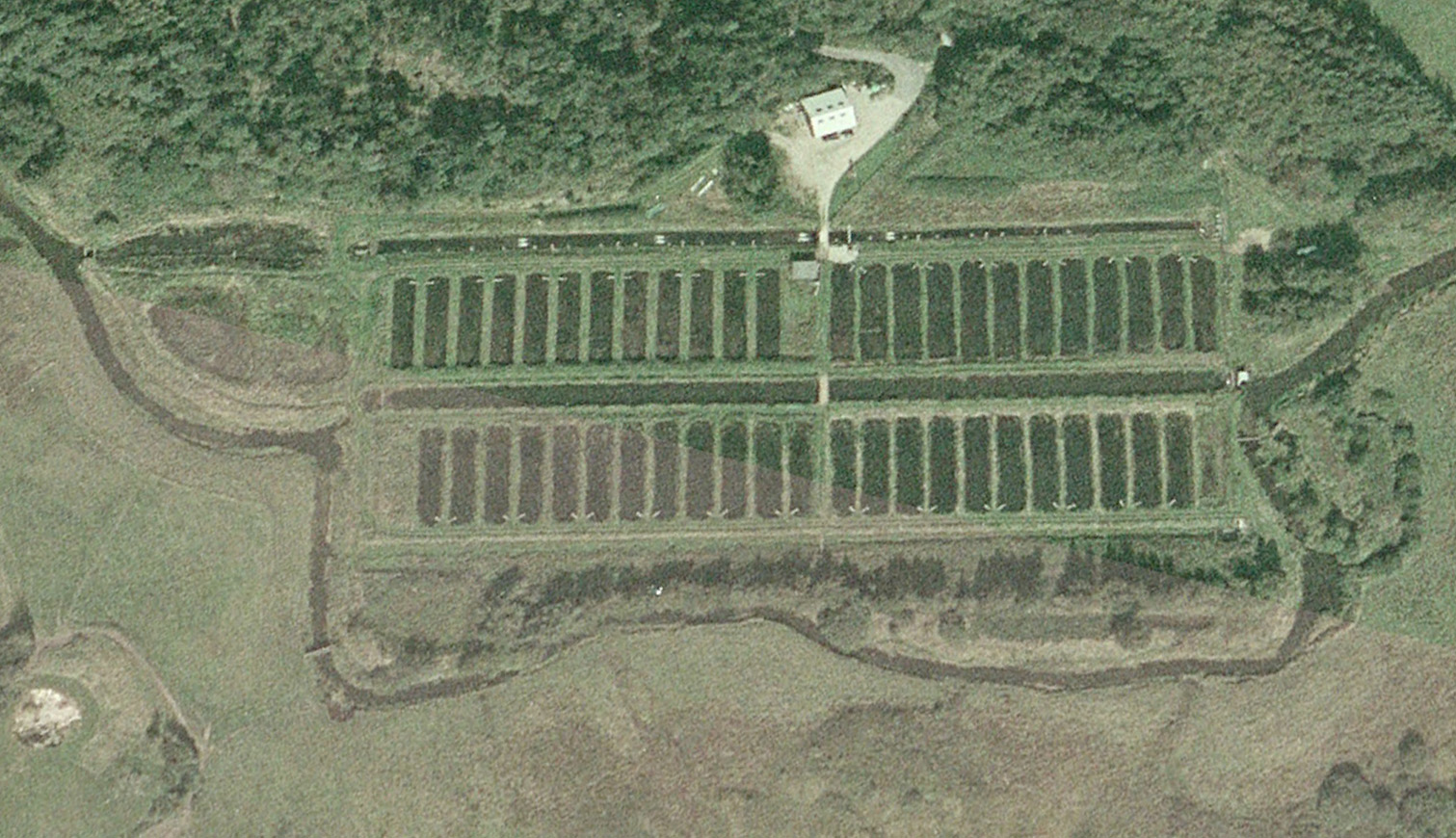 July 2005
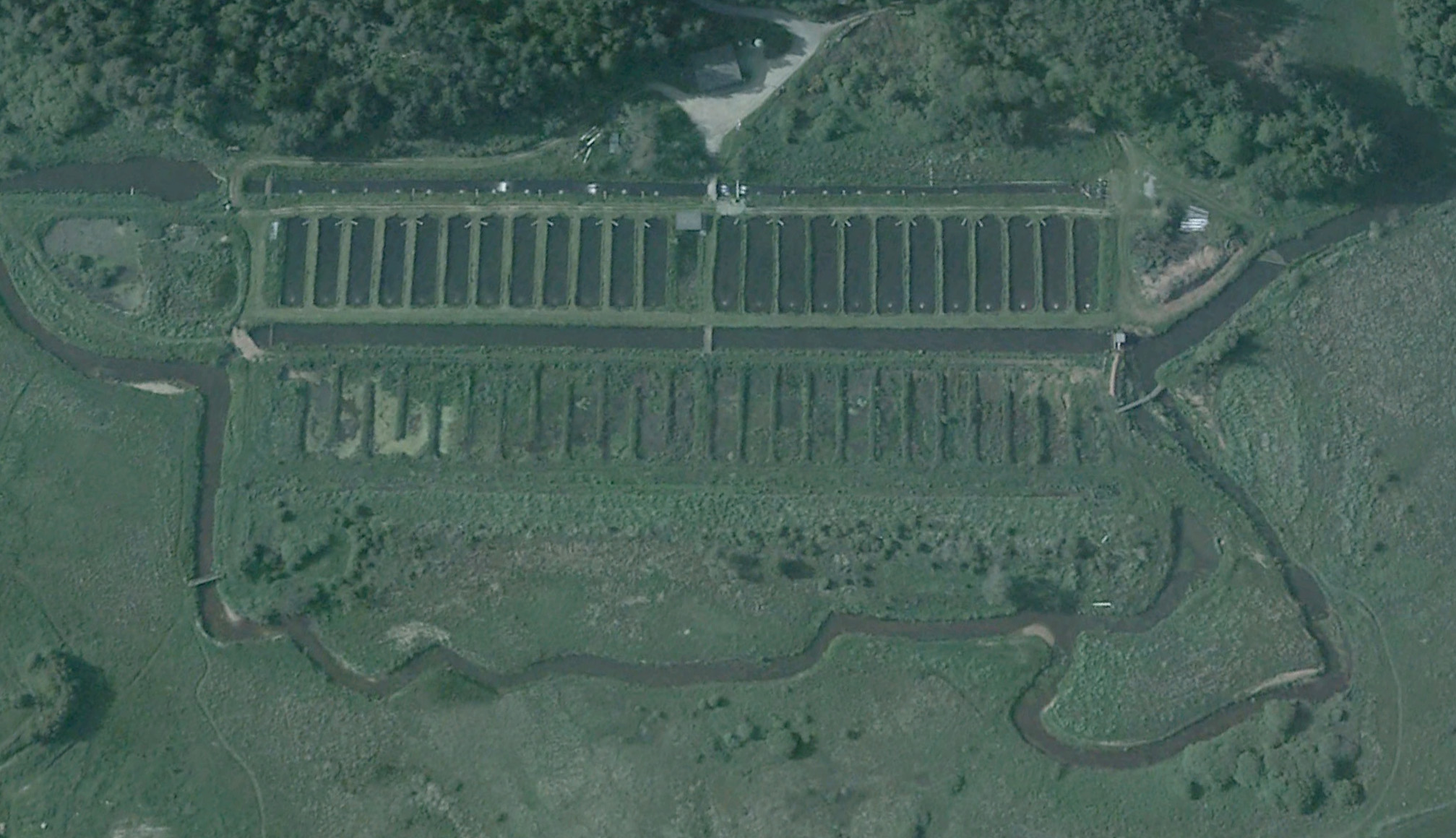 September 2011
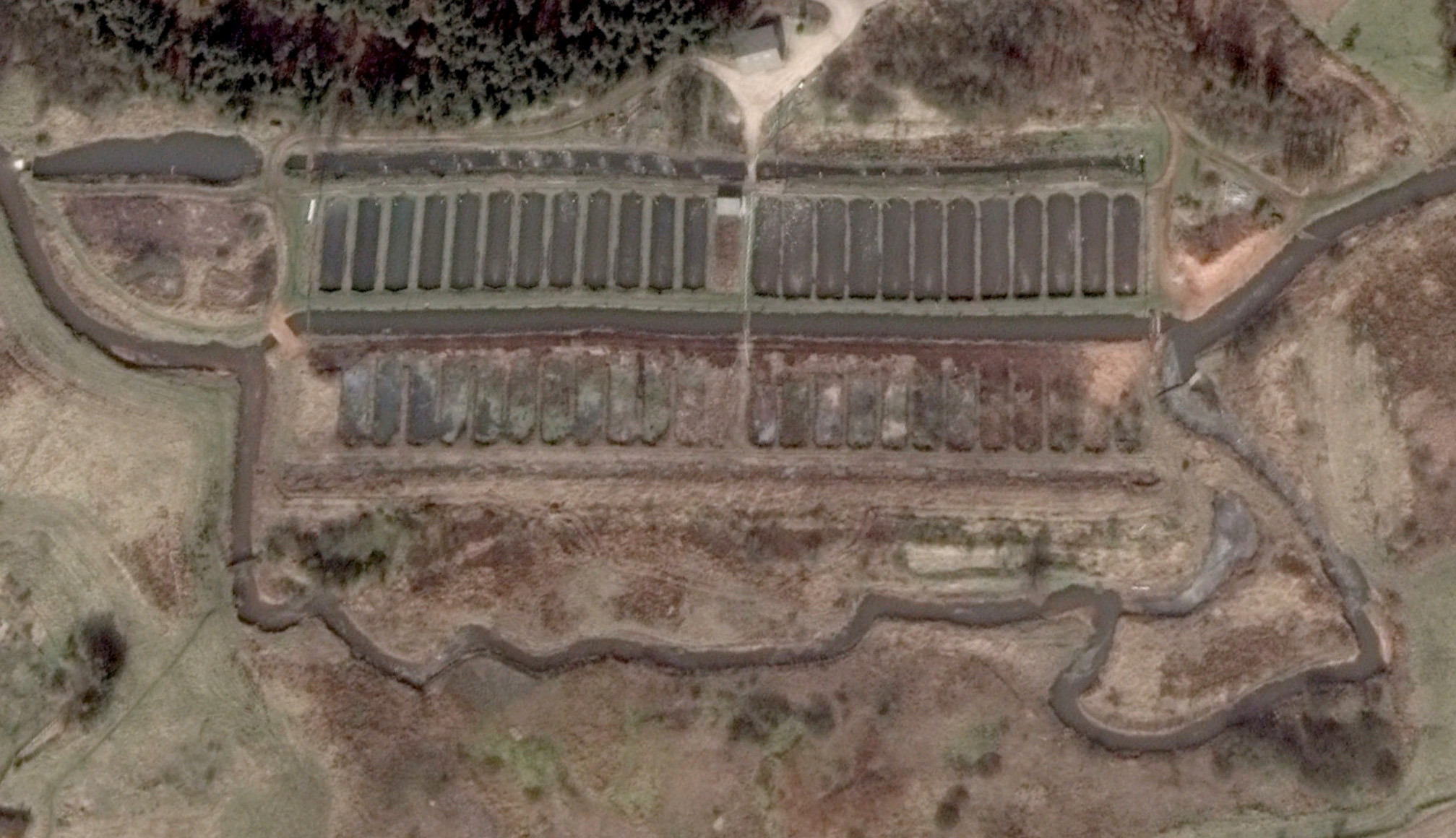 April 2015
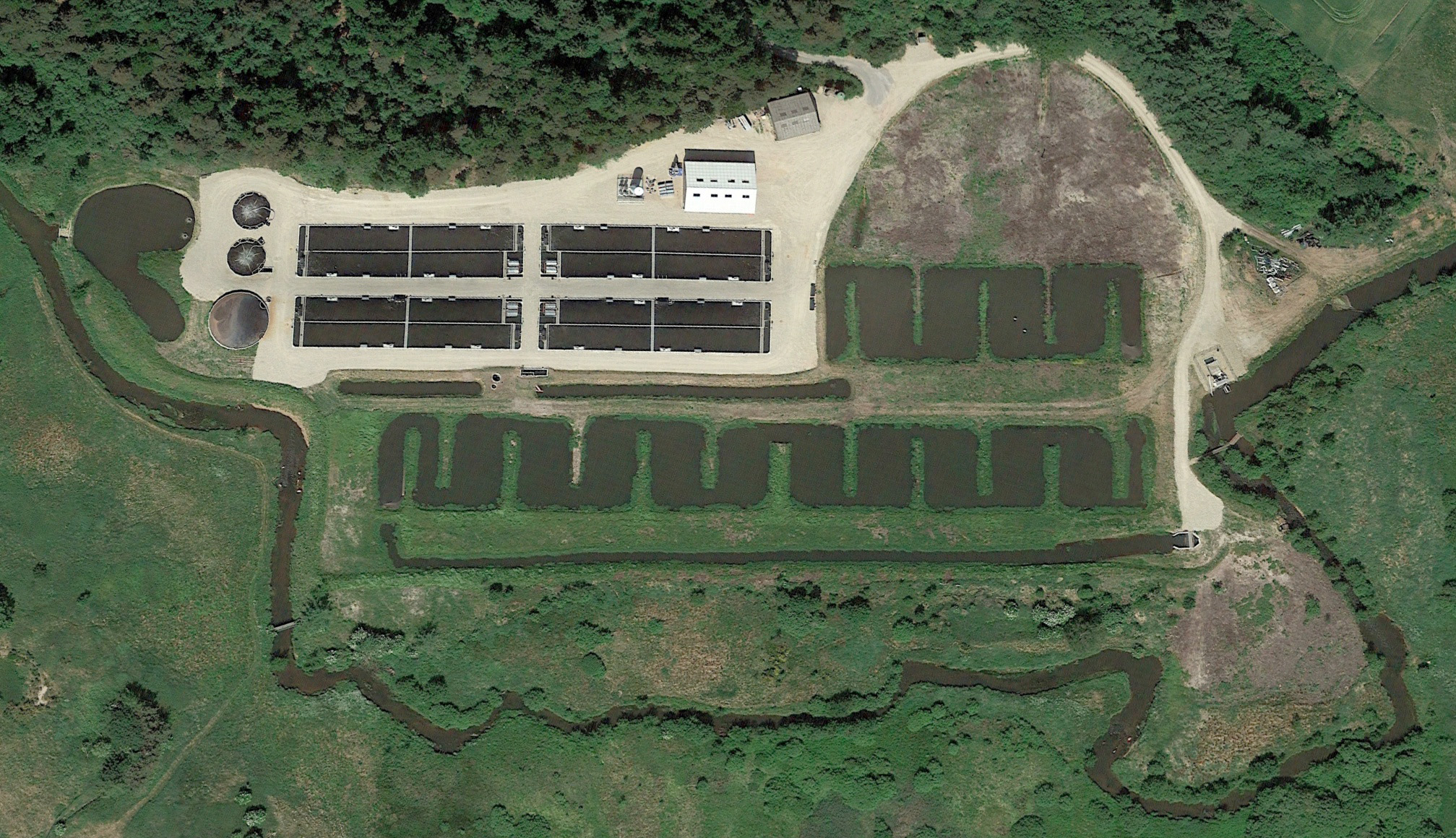 June 2018
2.4. Faroe Islands
Table 8. Faroese legislation and regulation relevant to land-based aquaculture
| Legislation/regulation | Purpose and relevance |
| Parliamentary Act No. 83, 25th May 2009, on Fish Farming and Other Provisions | Legislative framework for aquaculture in water and on land, including provisions for regulation through the granting of licences. |
| Executive Order No. 82, 14th June 2019 on Allocation of Aquaculture Licenses | Provisions for the allocation of licenses for aquaculture, including land-based, to be administrated by the Food and Veterinary Authority. |
| Parliamentary Act No. 16, 23rd February 2001 on Animal Disease (On the prevention and slaughter of sick animals and market control of animals and animal extractions) | Legislative framework for regulating animal disease management, including aquaculture animals. General provi-sions for use of animal manure, and animal waste including mortality, feed, and medicines. |
| Announcement No. 72, 26th July 2002, on Disinfection of Wastewater from Aquaculture Farms and Aquaculture Facilities, etc. | Provisions for disinfection and treatment of water discharged from land-based aquaculture: - inactivation of Aeromonas salmonicida, IPN and ISA virus - equipment and method require evidence-based approval. |
| Parliamentary Act No. 49, 30th April 2018 on Animal Welfare (An-imal Welfare Act) | General provisions for the promotion of animal welfare. |
| Executive Order No. 80, 14th June 2019, on the establishment of and disease-prevention in aquaculture facilities | Detailed provisions for establishment and operation of aquaculture activities, relative to health, disease and biosecurity. Provisions for landbased: - Approval and assessments required to ensure compliance - Set minimum distances between farms according to type and based on water inlet and discharge points - Require treatment of intake water to inactivate pathogens -System design must enable complete system draining and disinfection - Different year classes allowed if in separate production units - Minimum of one week fallow between production cycles - Set minimum number of health inspections according to type and production quantity - Requires detailed operation plan and recording of specific parametres relating to stock data, health and water quality. |
2.5. Finland
Table 9. Finnish legislation and regulation relevant to land-based aquaculture
| Legislation/regulation | Purpose and relevance |
| Animal Protection Act (247/1996) | General provisions for the protection of animal welfare. |
| Government Decree on the Pro-tection of Farmed Fish (812/2010) | Provisions for protecting the welfare of farmed fish. Au-tomatic and mechanical equipment that affects welfare must be checked daily and must be an alarm to signal malfunction. Recirculation systems must have a low oxy-gen alarm. |
| Animal Disease Act (2021/76) | Implements EU Directives and regulations relating to an-imal diseases. Pursuant to Section 43, aquaculture facility disease control measures must be approved by Food Agency. |
| Decree of the Ministry of Agricul-ture and Forestry for Combating Animal Diseases in Fish, Crusta-ceans and Molluscs (1009/2013) | Provisions for prevention, control and prevention of the spread of animal diseases in fish, crustaceans and molluscs. - Includes provisions specific to aquaculture activities and for controlling specific diseases - Details that must be self-reported for approval of disease control measures. |
| Environmental Protection Act (527/2014) | Provisions for preventing environmental damage. - Requires use of BATs for reducing emissions as a basis for environmental permit regulation. - Section 53 provides criteria for selecting BATs. - Permit required for 'fish breeding or fish farming facility where at least 2,000 kg of dry feed is used per year or an amount of other feed equivalent in nutritional value, or where the additional growth of fish is at least 2,000 kg per year, or a natural pond or group of ponds with a size of at least 20 ha'. |
| Government Decree on Environ-mental Protection (713/2014) | Details relating to the state environmental permit au-thority, which has the responsibility to resolve case-specific matters relating to the environmental permits for fish farms. |
| Water Act (587/2011) | General provisions for the protection of water bodies other than those provisions in the Environmental Protec-tion Act.Permit required to abstract water from surface and groundwater. |
| Government Decree on Water Management (1560/2011) | Detailed provisions relating to the issuing of permits re-quired pursuant to the Water Act. - Stipulates details to be provided when applying for a permit. |
2.6. Sweden
Table 10. Swedish legislation and regulation relevant to land-based aquaculture
| Policy/legislation/regulation | Purpose and relevance |
| Fisheries Act (1993:787) | Legislative provisions for regulating fisheries and aqua-culture, including permit-based regulation of aquacul-ture by a competent authority. |
| Regulation (1994:1716) on Fish-ing, Aquaculture and the Fishing Industry | Implements Fisheries Act (1993:787). Basic provisions for aquaculture permits issued by the Country Adminis-trative Body; issuing of regulations by the Swedish Board for Agriculture; regulation of aquaculture prod-ucts and financial support for the industry. |
| Environmental Code (1998:808) | General provisions for the protection of the natural environment and human health, and environmental assessment of activities including intensive aquaculture. Stipulates (Ch.3 §5) land and water important for aqua-culture are to be protected against interventions of significant hindrance. Aquaculture facilities are exempt from requiring a permit for extracting water (Ch.11). |
| Environmental Examination Reg-ulation (2013:251) | Implements Environmental Code provisions on envi-ronmental permits. Aquaculture >40 tonne feed/year requires a permit from the County Administrative Board and is subject to environmental assessment. Aquacul-ture >1.5 tonnes up to 40 tonnes must notify municipal authorities. |
| Animal Protection Act (2018:1192) | Legislative provisions for protecting the welfare of ani-mals kept by humans. |
| Animal Protection Regulation (2019:66) | Implements Animal Protection Act. Aquaculture facili-ties require examination for suitability by County Ad-ministrative Board (Ch. 6 §1). New technology used for animal husbandry must also be approved (Ch. 6 §5). |
| Regulation on registration, ap-proval, traceability, movement, import, and export, concerning animal health (SJVFS 2021:13) | Detailed provisions relating to the permitting of aqua-culture, including land-based facilities, concerning ani-mal health and disease control. |
2.7. Iceland
Table 11. Icelandic legislation and regulation relevant to land-based aquaculture
| Legislation/regulation | Purpose and relevance |
| Act on Aquaculture (No. 71/2008) | Legislative provisions for the regulation of aquaculture - Administration of act delegated to Food and Veterinary Agency - Permit-based regulation of aquaculture - Aquaculture farming requires a license from the Environmental Agency and Food and Veterinary Agency. |
| Regulation on Aquaculture (No. 540/2020) | Covers in detail the provisions outlined in legislation No. 71/2008 including carrying capacity, genetic mixing, appli-cations, operations, and controls. |
| Regulation on the registration obligation of parties in aquacul-ture (No. 1133/2021) | Provisions specifically for the requirement of land-based aquaculture to register with the Food and Veterinary Agen-cy - If the maximum biomass in food fish farming and research farming is up to 20 tonnes at any one time and the maxi-mum biomass in fry farming is up to 1,000 kg or 10,000 fry at any one time - Is not 'subject to an environmental impact assessment according to the Act on environmental assessment of projects and plans' - General provisions relating to the use of equipment, reporting and inspection. |
| Animal Welfare Act (No. 55/2013) | General provisions for the promotion of animal welfare. |
| Act on protection against fish diseases (No. 60/2006) | General provisions for the prevention of fish diseases and parasites. Requires the development of regulations for the control of aquaculture diseases and parasites. |
| Regulation on the Welfare of Farm Animals, Prevention of Diseases and Health Control of Farms (No. 300/2018) | Implements provisions in Act No. 60 regarding the regulation of aquaculture disease and parasite control. |
| Act on Hygiene and Pollution Prevention (No. 7/1998) | General provisions for prevention of reduction of emissions to air, soil, and water, and to prevent waste. - Provisions for licence-based regulation of activities, including aquaculture. - Licence is granted according to sets emissions limit values. - Requires implementation of BATs. |
| Regulation on Industrial Emission and Integrated Pollution Prevention and Control No. 550/2018 | Covers in detail the provisions outlined in legislation No. 7/1998 on the prevention and reduction of emissions to the atmosphere, water, and soil. Including preventing the generation of waste. |
| Act on environmental assessment of projects and plans (No. 111/2021) | Provisions for administration and requirements of environmental impact assessments. - May require an environmental impact assessment if the maximum biomass is 200 tonnes or more and effluent goes to sea or 20 tonnes with effluent going to freshwater. |
| Act on research and utilisation of resources in the ground (No. 57/1998) | Abstraction of groundwater beyond a rate of 70 li-tres/second requires a permit from the National Energy Authority. |
| The Planning Act No. 123/2010 | Regulates the permits required for the construction of an aquaculture facility. |
| Act No. 160/2010 on Structures | Regulates the construction of structures including those required for aquaculture facilities. |
| Act No. 36/2011 on Water Man-agement | The act aims to protect water and ecosystems and the sus-tainable use of water. |
| Regulation on wastewater treatment No. 798/1999 | Covers the discharge of wastewater and sludge and the maximum allowable discharge of certain pollutants. |
| Act No. 33/2004 on the Prevention of Marine and Coastal Pollution | Covers pollution of coastal areas and insurance that land-based farmers must buy when discharging into these envi-ronments. Also covers contingency plans. |
2.8. Certification schemes
Table 12. Main certification schemes of relevance to land-based aquaculture
| Standard | Application |
| Global Seafood Alliance, Best Aqua-culture Practices Farm Standard | Finfish production in flow-through, partial exchange, RAS, cages/net-pens, closed-containment (not in-cluding broodstock, hatcheries, or salmonids reared in marine-based cages). |
| Global Seafood Alliance, Best Aqua-culture Practices Hatchery Standard | Broodstock, hatchery, and nursery facilities. |
| Aquaculture Stewardship Council RAS Module | Recently developed standards especially for RAS. |
| Aquaculture Stewardship Council Freshwater Trout Standard | Standards for the production of rainbow trout, in-cluding on-land production. |
| Aquaculture Stewardship Council Salmon Standard | Standards for the production of salmon, including inland production of smolts. |
| Global G.A.P. Standard of Integrated Farm Assurance for Aquaculture | Covers all species of finfish and other aquaculture species. This applies to all system types, broodstock, grow-out, harvesting and transportation. |
3. Land-based systems
Aquaculture systems are often categorised according to production intensity and the degree of their dependence on the exogenous supply of inputs, especially feed. Aquaculture methods that exclusively use manufactured feed, such as pelleted and compound diets, are described as being intensive. Intensive feeding and the supply of other inputs are often associated with higher fish stocking densities and production volumes. Contrastingly, extensive methods rely almost entirely on natural production to supply nutrition to the cultivated species. The only exogenous inputs of economic consideration are fertilisers to support primary productivity. Mussel farming is a good example of extensive aquaculture. Mussels are often grown attached to ropes, and they feed by extracting seston from the surrounding seawater. Sometimes extensive farming methods are combined with the use of manufactured or hand-made diets. Such practices are referred to as semi-intensive or semi-extensive. This approach can be seen in some pond systems where herbivorous fish feed on naturally present aquatic plants but are also fed human-produced feed to increase the growth rate and/or stocking density. Intensive feeding may enable (and, indeed, the term is sometimes used to imply or denote) greater volumes of fish and stocking densities, and, thus, is often associated with a dependence on other inputs, such as oxygen and energy (e.g., electricity for operating equipment).
Production systems may also be categorised by their level of connectivity with natural water bodies. Open systems present few barriers to the exchange of water from and to the natural environment. They rely on the surrounding ecosystem to supply water of a temperature and oxygen content suitable for cultivation and to remove and assimilate waste nutrients. Cage and net-pen farming in seas and freshwater lakes, cultivation of bivalves on drop-ropes and lantern nets, and seaweed production on rafts and longlines are examples of open systems. There are fewer examples of what can be considered a true, closed system, in which there is no exchange of water with the environment. Oxygen levels, temperature, and other water quality parameters are to be controlled within a closed system with minimal reliance on the provisions offered by the natural environment[1]I.e., their provision occurs within the economic sphere, which requires economic activity.. Recirculation aquaculture systems are often described as closed systems. However, frequent water changes are often required to prevent the accumulation of nitrate. In semi-open (or semi-closed) systems, there is an exchange of water with the surrounding environment, but they also offer a degree of containment. Raceway flow-through systems are an example of land-based, semi-closed aquaculture. Water from a proximal natural source flows through the raceways before (usually) entering the same watercourse, albeit further downstream. Ponds are also frequently described as semi-enclosed. Water is let into the pond and discharged at the time of harvest.
There is sometimes debate about the categorisation of aquaculture systems, especially regarding the relative extent to which they can be considered open or closed. However, it is important to understand that these are useful but somewhat loosely applied terms, and they are not intended to be absolute.
Footnotes
- ^ I.e., their provision occurs within the economic sphere, which requires economic activity.
3.1. Flow-through
Land-based flow-through systems are dependent on a continuous supply of suitable water from a natural source. Fish are reared in constructed ponds or tanks through which abstracted water makes a single pass before its subsequent release. They can be defined as semi-enclosed because, although water flows somewhat freely between the environment and the system, there is some, albeit limited, containment. The use of flow-through systems for cultivating freshwater trout proliferated in the 20th century and the practice is still in use today. Trout grow-out farms are often located next to streams or rivers, from which water is abstracted and fed via gravity through elongated, rectangular ponds called raceways before being discharged into the same watercourse. Freshwater trout hatcheries consisting of much smaller raceway tanks and nurseries with circular or square tanks were also of a flow-through design. Raceways or tanks may be arranged in parallel or in series. The latter enables abstracted water to pass through two or more cultivation units before it exits the system, potentially lowering the volume of water required per unit of fish produced. Depending on characteristics such as the size and shape of raceways and the rate at which water flows, the proportion of nutrient-containing solids remaining within flow-through systems may be significant. This reduces the need for mechanical filtration, and water is sometimes discharged directly into the surrounding watercourse without prior treatment. As such, appropriate site selection is important to ensure that dissolved nutrient discharges do not exceed the assimilative capacity of the receiving environment. Phosphorous and nitrogenous nutrients can also be removed from outlet water using settling ponds and constructed wetlands.
Compared to traditional, relatively simple raceway designs, the operation of more modern flow-through systems incorporates greater use of technology. Typical examples can be found among salmon smolt production facilities. They consist of large, usually circular tanks that allow the fish to swim in shoals, which in turn enables higher fish densities. It is common to oxygenate the water to compensate for high biomasses and to lower water consumption. Water flow may be maintained via gravity alone or assisted by mechanical pumping. The intake water often gets filtered and treated with ultraviolet (UV) radiation before it comes into contact with the fish, as the system is vulnerable to diseases and the loss can be severe if pathogens get established in the plant. Other interventions may include degassing of carbon dioxide (CO2) and the addition of minerals such as sodium chloride (NaCl) and lime (containing CaCO3). Large biomasses entail large amounts of faeces and possible feed residues, so water might be subject to mechanical filtration before being discharged, perhaps as a condition for regulatory compliance. Captured solids may then be subject to thickening, flocculation, and dewatering, resulting in a condensed sludge (see Section 5.1.).
3.2. Recirculating aquaculture systems
Recirculation Aquaculture Systems (RAS) are similar to many other land-based systems in that the farmed species are cultivated in tanks, ponds, or raceways, through which water flows. However, unlike flow-through designs, water is recirculated throughout the cultivation system rather than being completely discharged after making a single pass. Instead, in RAS the percentage of water exchange typically varies from 5 to 20% according to various species-related parameters and according to production targets, water availability and budgets. Zero-water exchange systems have emerged in recent years and, rather than discharging water and exchanging it with freshwater, they replace only the water that is removed via evaporation or sludge removal. This results in around 2.5% replacement of system water per day. Owing to the degree of containment this ‘reuse’ of water can help maintain, RAS are often characterised as closed. They are also intensive, with feed and, most often, various other economic inputs and interventions being required to provide the suitable conditions for cultivation. Thus, RAS are frequently more dependent on technological processes than other types of aquaculture systems. Mechanical and biological water filtration technology is required to remove suspended solids and to prevent the accumulation of nutrients in their most toxic form. Oxygen must be added to replace oxygen consumed via fish respiration and other processes, and heating and cooling methods may also be required. The unit processes likely to be found in a basic RAS are:
-
Mechanical filtration – Organic solids such as fish faeces and uneaten feed need to be removed to maintain appropriate water quality and enhance the efficiency of biological filtration. They are removed via a mechanical filter, the most common method being drum filtration. Cultivation water passes across the cylindrical screen (drum) which collects the solids. The solids are then removed from the screen via rotating the drum and backwashing and concentrated into an organic sludge.
-
Biofiltration – Dissolved ammonia is released into the water as a product of fish metabolism and bacterial degradation of organic matter. Biofiltration reduces ammonia, which in specific concentrations and forms, especially the unionised form, can be toxic to fish. There are various forms of biofilters, although in general, they usually contain a form of media such as plastic beads, providing a large surface area upon which biofilm can be established. Nitrifying bacteria grow in the biofilm. These nitrifying bacteria convert ammonia in an aerobic two-step process, first to nitrite and then to nitrate. Nitrate is less toxic for fish than other forms. Nitrates are usually reduced by regular water exchange. In RAS facilities with a very high degree of recirculation, the removal of nitrate may also be necessary. This can be achieved with an anaerobic biofilter in which nitrate is converted to nitrogen gas (N2) through a multi-step process facilitated by bacteria. The nitrogen gas can then be removed.
-
Oxygenation – Oxygenation is required to maintain an appropriate level of dissolved oxygen in the water. This can be achieved via aeration, which is the mixing of air with water, for which a variety of methods exist, such as the use of air stones that send a stream of air bubbles through the water to its surface. Alternatively, pure oxygen can be used, supplied either by oxygen gas or liquid oxygen injection techniques. The use of pure oxygen is a highly effective and efficient technique. Oxygen can be dissolved into the water via a saturation cone or a venturi injection. Oxygen can also be produced onsite by a pressure swing adsorption generator.
-
Degassing – At high stocking densities or low water exchange, carbon dioxide (CO2), released via fish and bacterial respiration can reach toxic levels. To prevent this, excess CO2 is stripped from the water. This can be achieved by passing water over a medium that diffuses the water, increasing its surface area, so that CO2 transfers passively into the surrounding air. However, degassing units are not always required, as the aeration systems can be sufficient to strip CO2 from the water, especially at lower stocking densities.
-
Ozonation and UV disinfection – Ozonation is an effective method of destroying bacteria and viruses and is achieved by the mixing of ozone and cultivation water in a separate unit. Too high levels of ozone can be fatal to fish, with larvae being particularly sensitive. For this reason, ozone is not used in all RAS. UV treatment maybe be used alone or in conjunction with ozone. It is an effective method of water sterilisation and relies on exposing water to UV light. UV radiation ranges between 0 and 400 nm wavelength. However, 250-260 nm wavelength has the highest disinfection potential. UV-C radiation inactivates bacteria by creating thymine-thymine dimers inside the DNA. Effective UV sterilisation requires relatively clear water; a high level of organic content provides places for pathogens to hide. The most common type of UV lamp used in RAS is the low-pressure high-intensity mercury iridium amalgam vapour lamp.
-
Monitoring – Maintaining appropriate water chemistry and quality with RAS requires a high level of monitoring. Probes and sensors are employed for continual monitoring of key variables such as oxygen level, temperature, salinity, pH and total dissolved gas pressure (TGP). In modern recirculating systems, these probes can automatically regulate O2 dosing and pH level via programmable regulators and solenoid valves. Water chemistry, such as levels of ammonia, nitrite, and alkalinity, is tested daily using chemical test kits. More frequent testing is common during shifts in stocking intensity or when first starting up a RAS.
Recirculation systems are usually housed within a constructed shelter (e.g., insulated buildings and ‘polytunnel’ greenhouses), although there are examples of RAS being located outdoors (e.g., Type 3 model trout farms). Roofs, walls, and floors protect electrical and mechanical equipment and other infrastructure from damage through exposure to local environmental conditions. A suitably designed and constructed building can also support the maintenance of biosecurity by presenting a barrier to, e.g., birds and by facilitating measures for excluding other vectors of pathogens.
Over the past two decades, RAS have come to be seen as an emerging technological approach to fish farming that offers various advantages and opportunities. Certainly, Europe has witnessed a general increase in RAS, both in terms of the number of RAS facilities and the number of RAS proportional to other types of land-based systems. Technology is constantly improving, allowing for increased control, stocking densities, and water reuse. These advancements increase the viability of RAS but also the complexity. Various start-ups and small aquaculture businesses have chosen RAS for growing salmonids, pikeperch, carp species, African catfish, and other types of fish, mainly for local and niche-product markets. However, these endeavours have experienced limited commercial success, and the increase in the number of RAS facilities has come from the already established salmonid aquaculture sector, mainly to produce rainbow trout and Atlantic salmon smolts (previous to growing them in sea cages or net-pens) and some Arctic charr. During the last decade, the production of fish, e.g., Atlantic salmon, to slaughter size in RAS facilities has increased.

Figure 1. Schematic of a recirculating aquaculture system
3.3. Static ponds
Approximately 33% of freshwater finfish produced in the EU, Norway and Iceland were produced in static ponds (EUMOFA, 2021). In Europe, ponds are mostly used for the farming of cyprinid fish. As salmonids prefer flowing, well-oxygenated water, static ponds are generally considered to be less suitable for their cultivation compared to flow-through systems and RAS.
3.4. Aquaponics
4. Emissions, wastes and by-products from land-based aquaculture
- Sludge (fish faeces and uneaten food)
- Discharge water
- Mortalities
- Gaseous emissions (mainly N2O and CO2)
4.1. Definition of emissions, wastes, and by-products
Footnotes
- ^ The management of wastes is likely to incur a cost to the producer, whilst being a source of revenue for the waste management process.
4.2. Discharge water
4.3. Sludge
4.4. Mortalities
Category 1 material includes that which consists of by-products suspected of being infected by transmissible spongiform encephalopathy (TSE) or other specific diseases transmissible to animals or humans or that may pose serious health risks. These by-products must for the most part be disposed of by incineration in an incineration plant and therefore any further use is negated.
Category 2 ABPs include any product that may contain residues of veterinary drugs and contaminants, animals that have died in a way not related to slaughter for human consumption, i.e., being killed to eradicate a disease, and any ABPs that do not fall into Category 1 or 3. In most cases, finfish mortalities can be expected to be classified in this category. Use of Category 2 waste is restricted to disposal through incineration or co-incineration, disposal in a landfill site post-pressure sterilisation, transformation to a fertiliser or soil improver post-pressure sterilisation, ensiling, composting or conversion to biogas, and use as a fuel for combustion.
Category 3 material consists of by-products that are fit for human consumption but not intended for human consumption for commercial reasons, parts of slaughtered animals rejected as unfit for human consumption but not affected by disease, defined components of slaughtered animals post antemortem inspection, and fresh by-products from fish from manufacturing plants producing fish products for human consumption. This category applies to fish waste from secondary processing plants, or fish culled due to small size or premature maturation. Materials that fall under Category 3 can be processed in a multitude of ways and have various applications such as biogas, pet food, or being processed into organic packing materials.
4.5. Gas emissions
Emissions of greenhouse gases and other pollutants also occur from across the value chain of land-based aquaculture farms. Increased use of energy dependant equipment such as electricity-powered water pumps is associated with CO2 and other greenhouse gas emissions from electricity-producing power plants. Recirculation systems using a high amount of technology or machinery may achieve improved production performance and reduced water discharge rates at the cost of an increased contribution to climate change. It is also noteworthy that when emissions from across the value chain are taken into account, the majority of emissions to land, air, and water, and not from the cultivation of fish, but rather fishing and the agricultural production of crops for use as feed ingredients.
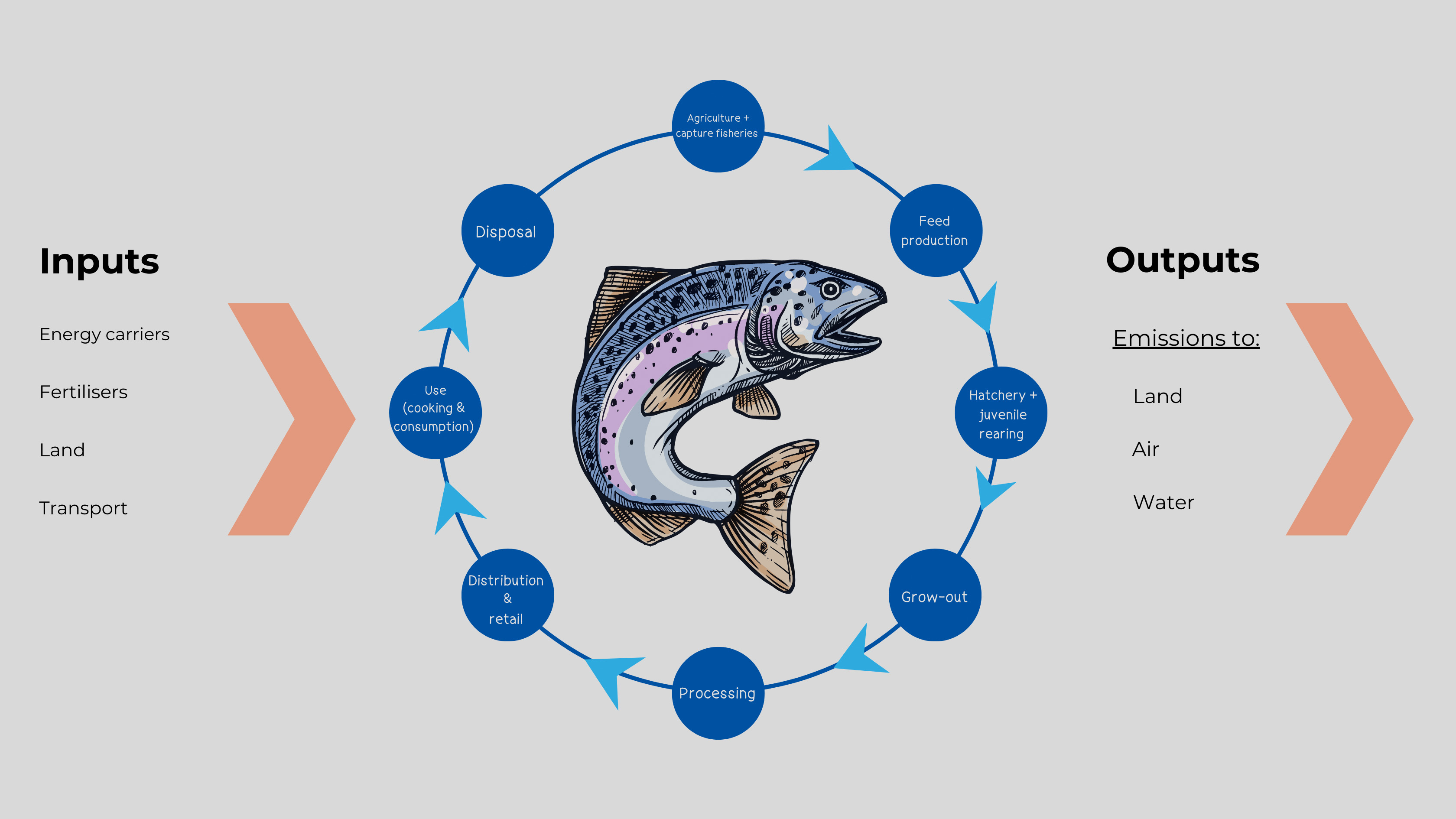
Figure 3. Basic diagram showing the major production stages of an aquaculture value chain (blue circles) and some of the inputs that these stages require (such as energy and transport). All stages are associated with emissions to land, air, and water, as is the production and provision of inputs such as electricity.
4.6. Sources of waste streams from RAS

Figure 4. Diagram of a simple RAS loop and the points at which waste is generated
5. Techniques for management of waste and reduction of emissions
5.1. Separation of solids and water
5.1.1. Sedimentation
5.1.2. Mechanical filtration
5.1.2.1. Drum filter
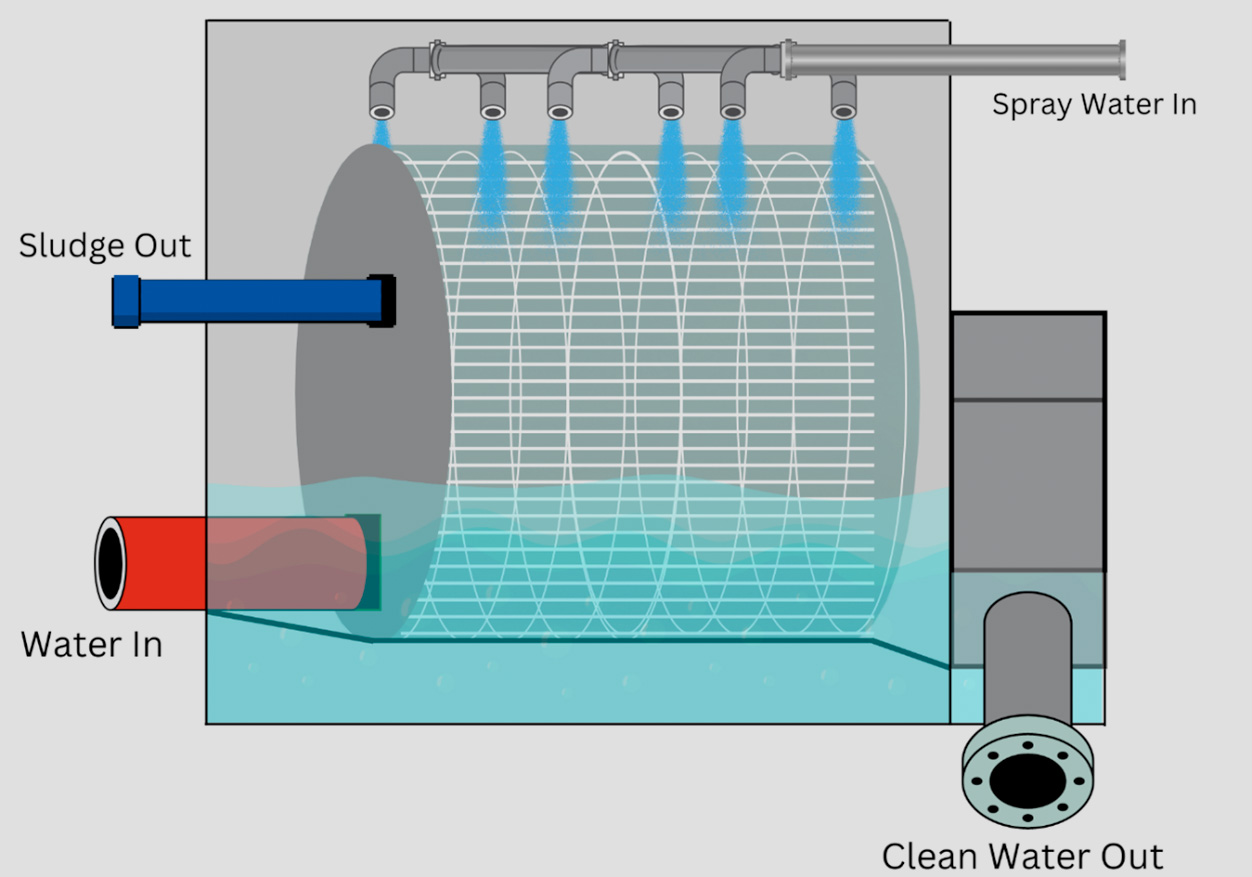
Figure 5. Diagram of a drum filter
5.1.2.2. Disc filter
Just like drum filters, disc filters are self-cleaning microscreen filters. The water flows through the unit and is passively filtered using cloth filters. An advantage of the disc filter is the use of several sequential filter cassettes, which increases the surface area of the unit, providing either more efficient filtration or a small unit footprint. A backwash system cleans the filters and the wastewater containing the concentrated suspended solids is removed for further processing. Finer filter meshes can be used in a disc filter than in a drum, and backwash frequency is reduced, resulting in backwash containing larger percentages of solids.
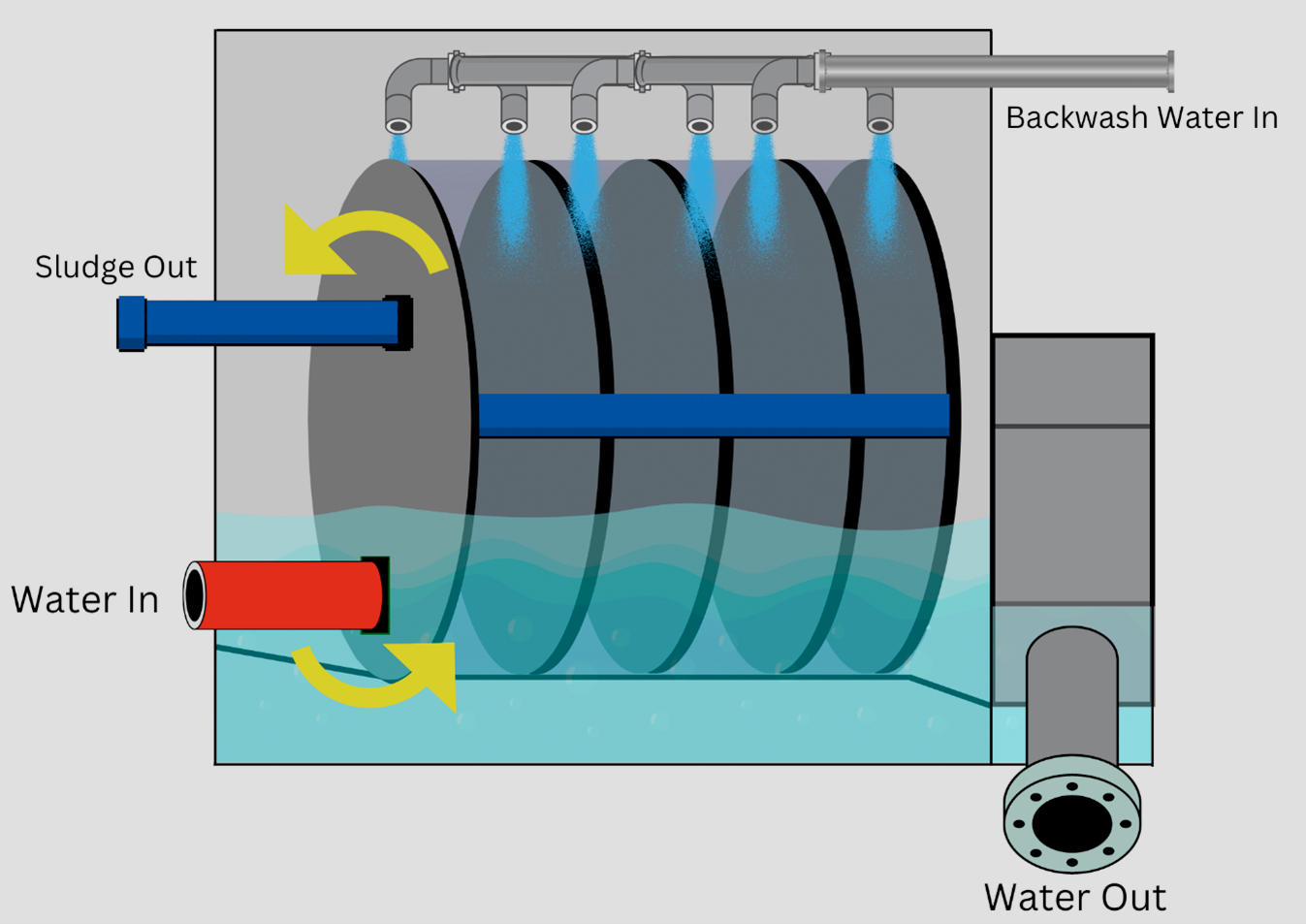
Figure 6. Diagram of a disc filter
5.1.3. Wastewater outflow
5.1.4. Sludge water processing
Thickening. The first stage of sludge water processing is thickening. Suspended solids are coagulated/flocculated, and these accumulations are removed using a mechanical filter. Coagulation involves the addition of ions with the opposite (normally positive) charge to neutralise the charge of the suspended particles. The neutralised particles, rather than repelling each other, now begin to form microflocs. In the water treatment industry, inorganic metal (iron or aluminium) salts are commonly used. These coagulants are easier to use than organic coagulants, such as those based on amines, or activated starch, but they also react with phosphorus to form stable metal-phosphates, which can limit the viability of certain downstream uses for the dewatered solids, e.g., fertiliser (Kirchmann et al., 2017). Microflocs cannot be seen by the naked eye and flocculants must be added to further conglomerate the particles into large flocs. These flocs can be seen in the water body and can be actively removed. A range of polymers can be used. Synthetic polymers are most commonly used with the most common being polyacrylamides, whilst some companies chose to use natural polymers. Natural polymers can be animal-, plant-, or microorganism-based, and depending on the downstream uses for the solids, these can present a more attractive option (Kurniawan et al., 2020). Choosing the correct polymer for the water conditions (pH, salinity, temperature) can improve flocculation efficiency. An alternative to chemical coagulation/flocculation is electrocoagulation. These systems combine electrolysis and ultrasound to flocculate solids without the use of chemicals. These systems present a promising alternative to traditional chemical coagulation and flocculation, but they can be difficult to optimise on an industrial scale. Once particles have been flocculated, they are removed from the body of water. This is usually achieved using a belt or band filter (Figure 7). The water content of the removed solids is still high with 3–10% TS. Belt filters operate similarly to drum or disk filters in that they use a filter mesh to separate solids from surrounding water and employ a backwash to clean the filter. The flow through the filter can be improved using a vacuum (not pictured).
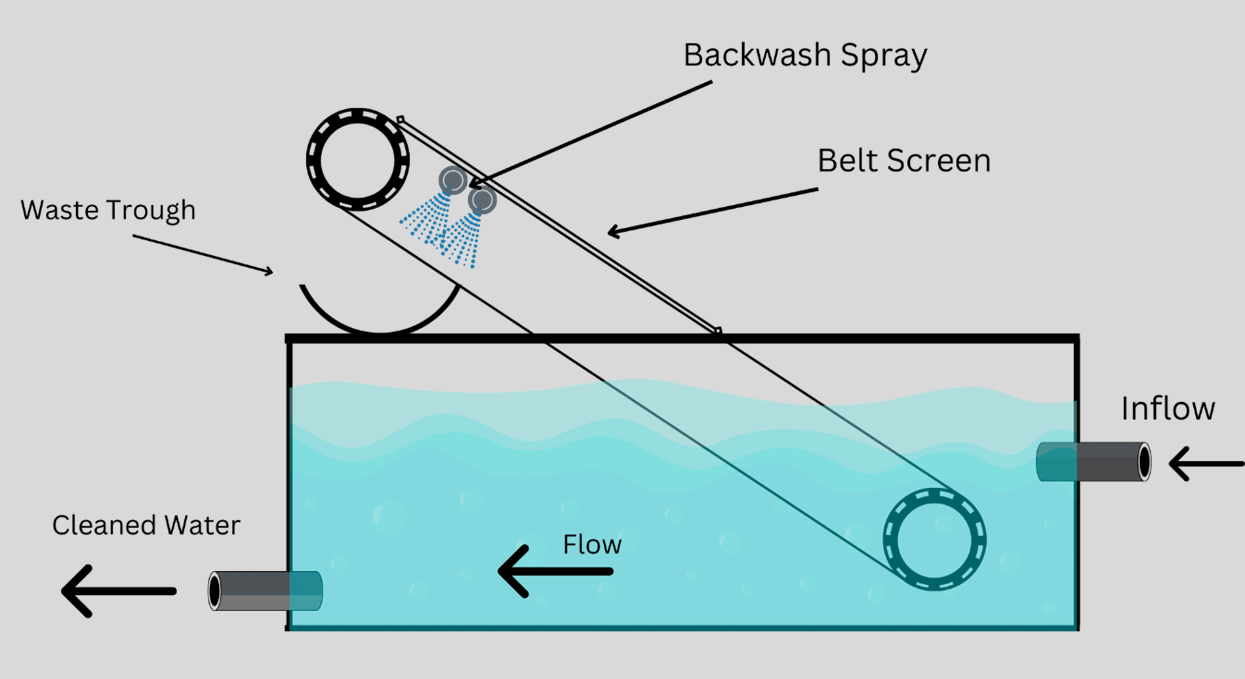
Figure 7. Diagram of a belt screen filter
Dewatering. Many reuse options require sludge to be further concentrated, which is achieved through dewatering. Decanter centrifuges, screw presses (Figure 8) and to a lesser extent filter presses are used to produce sludge with 20–30% TS. A screw press uses an Archimedes screw to move sludge along a permeable chamber. This chamber is normally inclined to assist with water drainage. The filter is typically wedge-wire or perforated metal, and this is less susceptible to clogging than cloth filters. A decanter centrifuge uses centrifugal forces to push solids towards the walls of the chamber, which are then moved along using a screw, the lighter water component flows freely towards the other end of the chamber. These systems must treat the sludge carefully as the lack of fibre makes it more delicate compared to municipal wastewater sludge. Dewatering beyond 30% TS is possible but the sludge is difficult to pump, and the benefits of such a practice are outweighed by the logistical and actual costs.
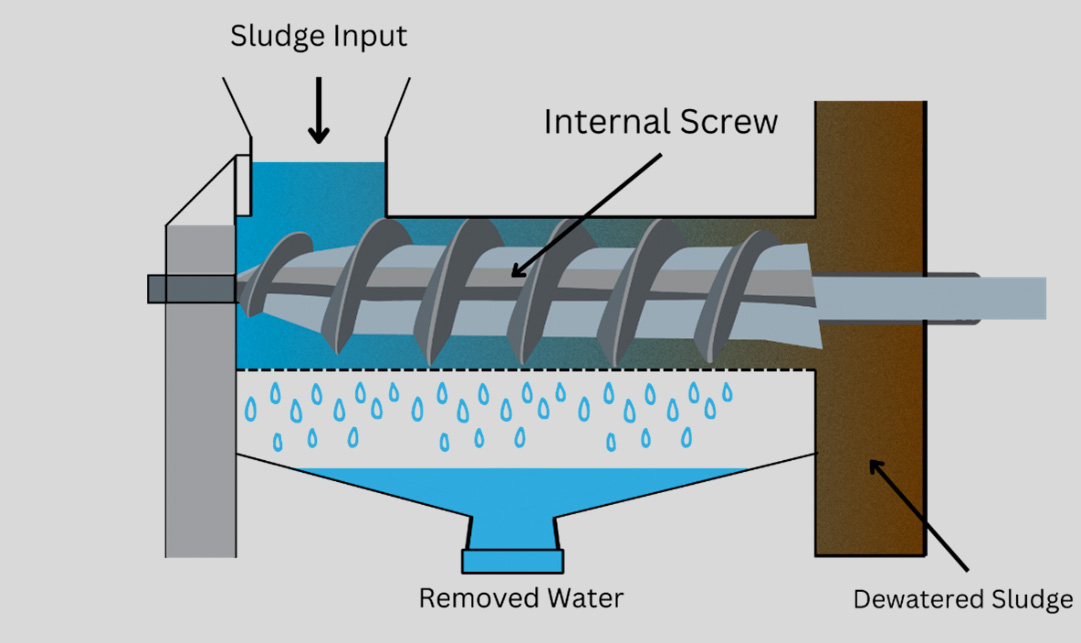
Figure 8. Diagram of a screw press used for sludge dewatering
Drying. Drying is the final stage that may be employed in aquaculture sludge processing. The TS of the sludge can be over 90% and this process can produce a hygienised and stable sludge that can be stored for extended periods and used in a larger number of reuse options compared to wetter sludge (see Section 5.2.4). Drying the sludge can be achieved through various methods including thermally, but this is a costly approach. The most cost-effective is the use of superheated steam, heat pumps, or thermo-mechanical drying. Drying is the most energy-intensive stage of sludge processing. It takes around 0,75kWh to evaporate 1kg of water (this decreases as starting temperatures increase), but many companies report values of more than 50% lower, thanks to efficient reuse of energy.
5.2. Possible reuse of sludge
5.2.1. Fertiliser
The use of aquaculture sludge as an organic fertiliser, whilst previously permitted in the EU, has recently been restricted. EU regulation bans the use of animal by-products, derived products, and waste (other than manure or guano) on crops both intended for direct human consumption and indirectly, after consumption via livestock. This legislation does not stop the use of fertiliser in the country of origin (assuming local rules allow) but does prevent the export to other EU countries. Based on stakeholder responses, turning sludge into fertiliser remains fairly common, with the use of this technique reported by stakeholders in Norway, Sweden, Denmark, Iceland, and the Åland islands.
Once the solids in the water have been collected and thickened, the resulting sludge can be used directly as a fertiliser in local agriculture. This method is simple to implement, but the market for such fertilisers is limited and aquaculture producers must pay significant transport fees due to the liquid nature of the sludge. This sludge cannot be stored and the risk of emissions from nutrient run-off is high.
One way to mitigate these issues is to dewater and dry the sludge, as described in Sections 5.1.4 and 5.2.4. Several companies offer technologies for this process, based on concepts including but not limited to centrifuges, heat pumps, infrared evaporation, and superheated steam. Production of sludge with TS of >90% is possible, which hygienises the sludge, increases the storage potential, and reduces transport costs. The dried sludge can be transported to a fertiliser producer, where it will undergo further processing and likely be mixed with other organic nutrient sources to produce organic fertiliser. The dried sludge can also be used immediately, either as a ground powder or formed into pellets. The technology behind creating organic fertilisers is well established and large volumes of sludge can be handled by processors, making this viable for farms both large and small. A fish farmer who turns sludge into fertiliser should not, however, expect large profits. Farmers can either choose to have their wet sludge collected or can dry it on their farms. Sludge processors charge farms to process the sludge but are responsible for sludge handling, processing, and transportation, releasing farms from the need to invest in the technology. These systems can handle over 100m3 of wet sludge every hour, but the modular nature means that they can handle even larger volumes should they be required. The cost of organic fertiliser is low and whilst sludge processors get paid by the tonne for dry sludge by the fertiliser manufacturer, one supplier said this only covers the cost of the bag that holds the sludge. Drying the sludge on farm increases the complexity of farming operations, but the dried sludge may be collected free of charge by the fertiliser manufacturer.
Restrictions on the exportation of the fertiliser can limit the valorisation of the sludge as much of the sludge is produced in countries that are not nutrient poor but cannot be exported to other EU countries that require inputs of fertiliser. The Norwegian coast, for example, is a potential source of a large amount of fish sludge from both land and cage-based aquaculture, but due to inputs from animal manure and inorganic fertilisers, much of the soil already holds excess amounts of phosphorous (Bechmann, 2014). Further additions of phosphorous are not only wasteful but also harmful, with run-off decreasing surface water quality and increasing the likelihood of eutrophication (Maguire et al., 2005). Nordic countries also have a surplus of nitrogen in the soil (Table 6), with inputs (atmospheric, biological fixation, manure, and synthetic) outweighing outputs heavily. The extent of the surplus is such that policies are in place to mitigate agricultural nitrogen losses (Hellsten et al., 2019). In addition to the possibility of emissions of nutrients into surface waters, microbes in the soil turn the nitrogen present in fertiliser into nitrous oxide, a potent greenhouse gas. That being said, the process is not unique to organic or aquaculture sludge fertilisers and this is thought to be a greater issue when using inorganic fertilisers. The risk of emissions means that it is not recommended that fish sludge fertiliser be added in addition to established sources of nutrients. Instead, it can provide an alternative to inorganic fertilisers. Produced more locally and without inputs such as natural gas, this replacement fits the requirements of the circular economy. Some companies currently ship fertilisers made from aquaculture sludge to markets with less stringent regulations and high demand, namely the Asia-Pacific region, which makes up around 50% of the global fertiliser market (Allied Market Research, 2022).
| Country | Inputs (kg/Ha) | Outputs (kg/Ha) | Nitrogen Surplus (kg/Ha) | |||
| Atmospheric Deposition | Biological Fixation | Manure Applied | Synthetic Fertilisers | Crop Removal | ||
| Norway | 7,2 | 0,2 | 60,1 | 127 | 20,3 | 174,2 |
| Sweden | 11,7 | 1,9 | 25,1 | 72,1 | 29,8 | 81 |
| Finland | 7,2 | 0,4 | 19,8 | 61,6 | 28,1 | 60,9 |
| Denmark | 14,3 | 0,4 | 69,4 | 79,3 | 65,9 | 97,5 |
| Iceland | 9,6 | - | 34,5 | 97 | 0,9 | 140,2 |
Table 13. Nitrogen inputs, outputs, and surplus in five Nordic countries in 2018 (FAO, 2021)
A variety of factors can influence heavy metal concentrations in sludge, including feed makeup and origin of raw materials, the chemistry of influx water, and the level of recirculation in the system. There are a limited number of studies into the concentration of heavy metals in sludge from RAS systems, but what evidence does exist suggests that the values allow for use as fertiliser, with restrictions on the use. A study by Nofima (Ytrestøyl et al., 2016) looked at the levels of heavy metals in the sludge from three commercial hatcheries. The levels of cadmium would allow use as either Class 0 or Class 1 fertilisers under Norwegian regulations, whilst the zinc levels required categorisation as a Class 1 fertiliser. Class 1 fertilisers can only be used up to four tonnes of dry matter per hectare per ten years and can be used on agricultural land, private gardens, and parks (Norwegian Regulations on Organic Fertilizers, 2003). Similar values were reported in the sludge from land-based salmon aquaculture in Chile (Class 1 in Norway) with higher values of cadmium reported in the sludge recovered from underneath lake cages (Celis and Sandoval, 2010). Communication with a sludge processor revealed that all aquaculture sludge they process is over the Class 0 requirements regarding zinc (Zn) and cadmium (Cd). Using too much fertiliser over Class 0 risks farmers not being able to add more fertiliser to plots of land for many years and therefore preventing effective use of that land. Heavy metals are not routinely removed during the drying process, but the aquaculture sludge can be used as an ingredient in Class 0 fertiliser so long as other compounds are low in the same heavy metals. Some companies offer heavy metal removal as part of sludge processing based on the sorption of heavy metals to a specialist filter. The use of this technology on a production scale has not been shown, and the cost of removal is likely to be prohibitive when sludge fertiliser can be mixed to decrease its class.
5.2.2. Energy production
Of the survey respondents that treated their sludge, over 50% were using some form of biogas production. However, a large number did not treat their sludge at all. Both wet and dried sludge can be transported to third-party biogas plants, but economic analysis conducted under a GAIN project (Tirano et al., 2021) concluded that drying the sludge using either of the two drying techniques presented increased short- and medium- or long-term profit compared to transporting wet sludge. The cost of transporting wet sludge is the major reason behind this difference, followed by reduced gate fees at biogas plants. A life cycle assessment conducted by Cristiano et al. (2022) claimed that all drying options also created significantly less environmental impact than offsite wet sludge biogas production. The study did not look at the impact of onsite biogas production. Emissions of greenhouse gases are a downside of biogas production, but biogas energy has a lower carbon footprint than fossil fuels. In addition, should the sludge be landfilled, microbial digestion and release of methane can still occur, but this release is often uncontrolled and unused.
Using third-party biogas plants removes both increased complexity and capital costs from a farming operation. However, it also limits valorisation, with farms being charged significant gate fees to dispose of their sludge in this manner. It is not uncommon for Norwegian farms to transport sludge hundreds of kilometres to Danish biogas plants where gate fees are lower. This is an environmentally unsound practice, and some larger farms are moving to onsite biogas production. Using sludge onsite has benefits such as reducing reliance on fossil fuels and lower transport fees. Following biogas generation, the volume of the sludge is reduced by up to 80%, thereby reducing the cost of subsequent handling and disposal without the need for drying (Letelier-Gordo et al., 2020). Aquaculture sludge is not the perfect feedstock for biogas production with the carbon/nitrogen ratio typically requiring the addition of a carbon source such as plant material or pig slurry. However, 100% fish sludge biogas production is possible. Ammonia accumulation in the digester is also a concern, and if this builds too high it can wipe out microbial communities entirely. Biogas reactors can occupy large amounts of land and require large inputs of biomass to be viable. It is therefore not a recommended solution for a farm with either limited expansion potential or a low production volume.
Continuously Stirred Tank Reactors (Figure 9) are simple in design and operate by mixing sludge using an impeller. A settling tank is often attached with treated water being extracted and solids returning to the reactor. Most systems of this design operate with high efficiency in sludges consisting of 5–10% TS content. The downside of such reactors is that operation can be expensive, with long retention durations and higher energy and labour costs than some other designs.
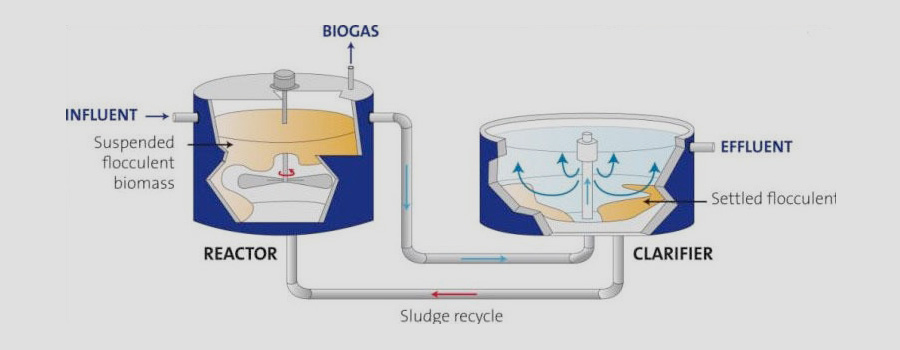
Figure 9. Continuously Stirred Tank Reactor – taken from Banerjee et al., 2022
Up-flow Anaerobic Sludge Blanket Reactors (Figure 10) allow for lower operational costs whilst allowing for higher solid-removal efficiency from discharge water with a TS content of 3–4%. These systems use a suspended blanket of granular sludge through which discharge water flows upward, being processed by microorganisms along the way. The long retention times should be considered when choosing this system.
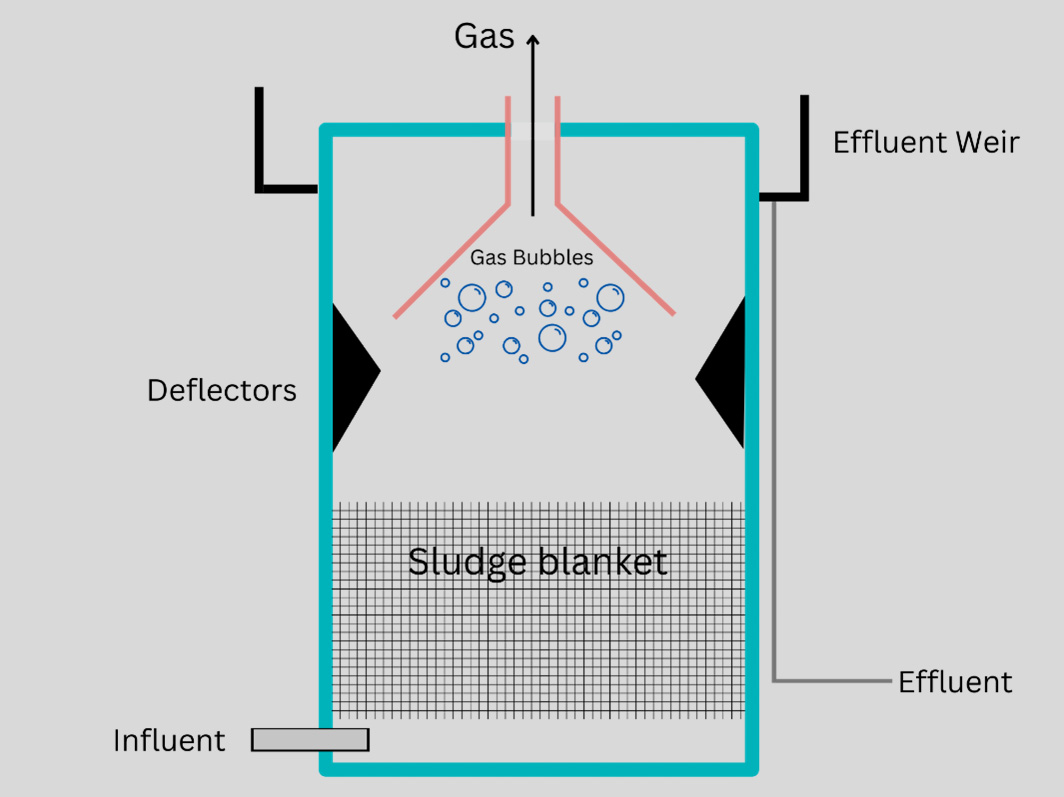
Figure 10. Up-flow Anaerobic Sludge Blanket Reactor.
Membrane Bioreactors (Figure 11) provide high effluent quality and high conversion of influent. They also come with high operational costs and the risk of biofouling. These systems use a submerged membrane to filter particulate waste from the major liquor solution, operating like a traditional activated sludge system.
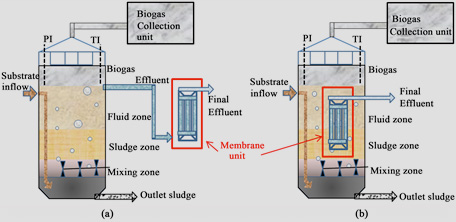
Figure 11. Membrane Bioreactors – (a) Side-stream configuration; (b) Submerged or immersed membrane configuration. Taken from Jain et al., 2018.
Anaerobic Baffled Reactors are widely used in discharge water treatment and can treat water with high solid content. These reactors resemble modified septic tanks with a series of baffles along the length of the tank (Figure 12). As the influent travels across the tank, the sediment settles, therefore separating the solids retention time from the hydraulic retention time. These systems are robust against hydraulic and organic shock and are simple to build and operate. Technology of this type has been used to generate around 500.000 kWh/year from 260 tonnes of sludge (weight as dry matter) at a Norwegian hatchery (see Case Study 2). The heat and electricity generated by the biogas can be used to fuel the sludge dewatering, biogas production, and drying of the remaining sludge. These processes do not use all of the energy in the biogas, and over 50% of the heat and electrical energy is available for usage in additional farming operations.
Whilst dilute discharge water can be used in bioreactors, the efficacy of the process is reduced significantly compared to using dewatered and thickened sludge. A commercially active bioreactor on a salmon farm in Norway was reported to use sludge thickened to less than 5% TS before input into the bioreactor (Case Study 2). This system used microbes selected for high nitrogen tolerance and was able to operate on 100% fish sludge without inputs of an exogenous carbon source. Biogas production does not use the entire volume of the sludge and the remaining residue can be used as a fertiliser.
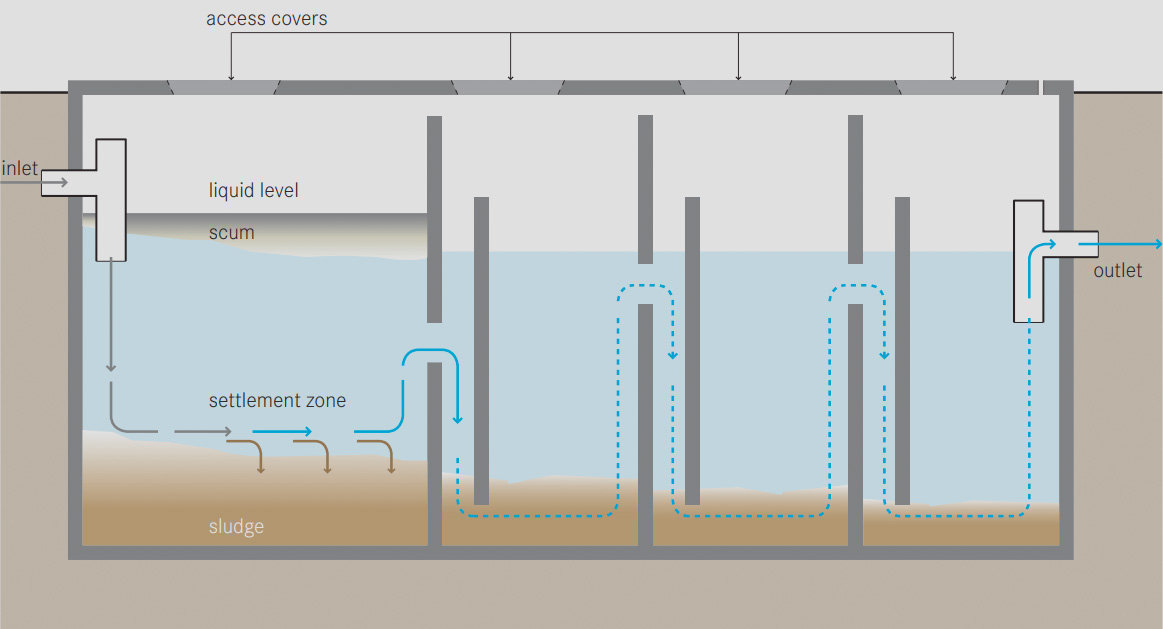
Figure 12. Anaerobic Baffled Reactor – Biogas extraction can occur from vent – Taken from Tilley, 2014.
Case Study 2 – Sterner
Sterner AS is a Norwegian-based company that has been offering water treatment solutions since the early 1990s. They offer two main solutions for aquaculture sludge treatment: sludge drying and on-site biogas production. Sterner’s approach to sludge dewatering and drying is mechanical, using sludge thickeners, dewatering screws, and belt dryers to create a sludge up to 90% TS that can be used as fertiliser or sent to an external biogas plant. Drying in this manner can use as little as 0,3 kW per litre of water removed.
Biogas production takes place inside an anaerobic baffled reactor. Sludge thickened to 3-4%TS enters the reactors and the water remains for around six days. Solids settle out and are removed with a screw. This digestate can be mechanically dewatered and used as fertiliser. Inside the reactor, bacteria that have been specially selected for tolerance of a low carbon/nitrogen ratio can turn 100% fish sludge into biogas (CH4 and CO2). Sludge from marine aquaculture can also be used following novel dewatering techniques. A Sterner biogas plant of this type has been running for almost four years with a good production of biogas, which can be used to power parts of the farm. More than 50% of the electricity produced from the biogas is available for use on the farm, with the rest being used to power the sludge treatment process itself. The heat energy from the process can also be used to heat system water. Onsite biogas production is not applicable to every situation; farms below 5.000 tonnes may find that drying the sludge is more economical, depending on factors such as the remoteness of the farm and electricity costs.
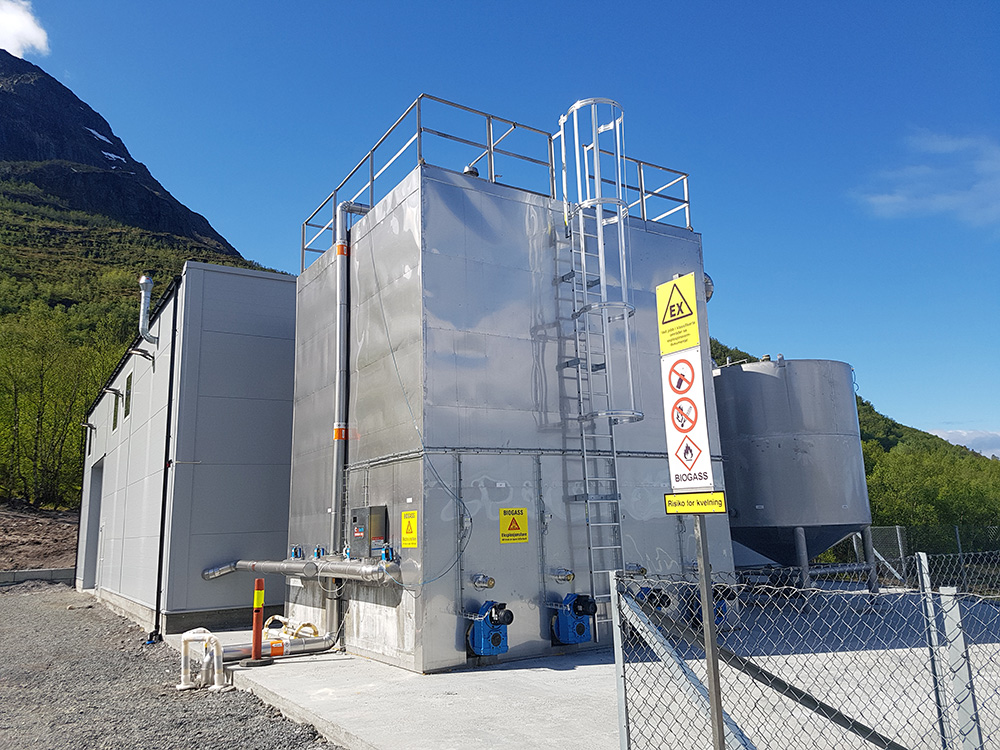 Photo of a Sterner Biogas reactor on a fish farm
Pyrolysis is also an option for the valorisation of sludge. Put simply, pyrolysis is the heating of organic material in the absence of oxygen. In general, pyrolysis uses sludge that has been dewatered and partially dried, although systems that can process sludge with <15% TS are available. These often use microwave heating and can incorporate drying, pyrolysis, and gasification into one process (Lin et al., 2017). Despite pyrolysis use dating back to ancient Egyptian times (Mohan et al., 2006), it was not until the 1980s that the pyrolysis of sewage sludge began to be investigated (Fonts et al., 2012), and only recently has this technology been used as a method of processing aquaculture sludge.
The three major products of pyrolysis are biochar, bio-oil, and syngas. Pyrolysis of biosolids typically occurs between 300 and 900 °C, with the temperature and duration of the process determining the amount of each product. Slow pyrolysis increases the production of biochar to the detriment of biogas and bio-oil production. Fast pyrolysis increases bio-oil production, whilst flash pyrolysis increases bio-oil production even further (Elkhalifa et al., 2022). Some emissions of H, CO, CO2, and CH4 occur during sludge pyrolysis and commercial units often include gas cleaning and purification systems to remove NOx, COx, particulates, and sulphur. Pyrolysis equipment can be purchased from aquaculture suppliers, including the option to handle all processing such as sludge drying and dewatering (see Case Study 3).
Bio-oil and synthetic gas (syngas) are two of the three main products of pyrolysis. The energy content of syngas is considerably lower than that of natural gas (~6 MJ/kg-1 and ~54 MJ/kg-1 respectively) (Laird et al., 2009). This energy can, however, be used to power the pyrolyzer itself, reducing the costs associated with this process. This option is already being offered in some aquaculture pyrolysis ovens.
The heating value of bio-oil varies depending on the nature of the feedstock, but aquaculture sludge will likely produce heating values around half that of No. 2 fuel oil (Laird et al., 2009). Bio-oil cannot be used as a direct replacement for diesel or petrol and must first be refined increasing the cost and complexity of using bio-oil as a fuel source (Gupta et al., 2021), although it can be burned in industrial boilers (Laird et al., 2009). The use of aquaculture sludge in this manner will not only reduce the sludge emissions of a farm but also decrease reliance on fossil fuels. There has also been recent interest in the chemical composition of bio-oil with the possibility to extract a wide range of value-added products from the oil, which can have economic value and industrial applications (Brodie et al., 2018), but the low quantity of these compounds makes the use of these resources from aquaculture sludge a challenge. Burning syngas and bio-oil emits greenhouse gases and toxic compounds, including CO, CO2, NOx, SO2, and in the case of bio-oil, particulate matter (PM<2,5). Despite these emissions, because the carbon in these fuels is sequestered from the environment, they are considered by some to be carbon neutral.
Biochar production results in much of the carbon content of sludge being captured in solid form. Compared to incineration, pyrolysis emits considerably less carbon into the atmosphere, and the carbon can remain stored for hundreds of years. Biochar can be used as a soil enhancer, increasing the nutrient uptake efficiency of plants by trapping nutrients in the soil for longer and decreasing run-off (Carey et al., 2015; Figueiredo et al., 2021). Biochar can also be used to neutralise the soil, with acidic or alkaline biochar being produced from the same urban discharge water sludge depending on the temperature of the pyrolysis (Hossain et al., 2011). Biochar may also be used as a fertiliser, but without the addition of chemicals such as potassium acetate (Buss et al., 2020) or calcium oxide (Liu et al., 2019), the bioavailability of the phosphorous will be low. The temperature of pyrolysis can alter the concentration and bioavailability of nutrients. In municipal discharge water sludge, the total nitrogen content decreases with rising temperatures, as does the bioavailability of the remaining nitrogen (Hossain et al., 2011). Conversely, total and plant-available phosphorous increased with pyrolysis temperature as did the concentration of assessed micronutrients (Ca, Fe, Mg, S, Cu, and Zn) (Hossain et al., 2011). The heavy metal content of the biochar also increased with pyrolysis temperature. However, the availability of these to plants (DTPA-extractable concentration) decreased with temperature (Hossain et al., 2011).
The use of biochar has also been suggested in water treatment systems, with the highly porous nature of biochar, particularly biosolid biochar (Elkhalifa et al., 2022) allowing the removal of chemical, biological, and physical contaminants (Gwenzi et al., 2017). Removal of H2S and NOx from gas streams is another use, as is the sorption of metals, phenols, and dyes (Paz-Ferreiro et al., 2018). Due to its porosity, biochar is a good catalyst during biodiesel production, or for the removal of tar from bio-oil and syngas (Lee et al., 2017). Activated carbon is a further valorisation option. This requires additional processing, but prices can range from €670–2000/tonne (Alibaba, Dec 2022). One company offering pyrolysis to aquaculture (see Case Study 3) reported tuning their system to only produce biochar due to the larger market and increased usage of the product. Pyrolysis occurs at high temperatures, and much of this heat can be recaptured and fed back into the system or used to heat system water. It can also be used to generate electricity to power farming operations. Using this heat decreases the costs associated with pyrolysis. Compared to bioreactors, pyrolysis units are smaller and can process sludge much more quickly. Purchasing and the initial start-up process of a pyrolysis unit can have significant costs and a large amount of sludge is needed to make the operation economically viable. For large farms (10.000 to 15.000 tonnes/year), they can present a viable solution for sludge management.
Case Study 3 – Blue Ocean Technology
One supplier offering pyrolysis-based solutions for aquaculture sludge is Blue Ocean Technology. Started in 2012, Blue Ocean Technology offers a systems approach to sludge management capable of handling all facets of sludge thickening, dewatering, and drying, and offers pyrolysis systems for further valorisation. Specially designed belt filters and screw presses handle the sludge more delicately than those designed for municipal wastewater sludge. These systems require little maintenance and few worker hours, with only ten minutes twice a day being needed. These containerised solutions can be placed anywhere onsite, increasing flexibility and reducing wasted space.
The company can capture sludge from beneath sea cages and boasts the ability to remove 60-70% of the salt, allowing saline sludge from marine or land-based facilities to be used as fertiliser or for biogas production. Blue Ocean Technology states that biogas production onsite generally becomes viable once production is above 10.000 to 15.000 tonnes/year. An alternative for both larger and smaller farms is pyrolysis.
Blue Ocean Technology calculates that on larger farms the total cost of processing the sludge including pyrolysis was reported as 200-400NOK/tonne of fish produced. The pyrolysis system requires heating to 400 °C before the heat from the process itself increases temperatures to 700–900 °C. Too small a volume of sludge makes this process less cost-effective. The pyrolysis system is tuned to produce biochar, which can be used as a soil enhancer, or for other applications such as air or water filtration. The pyrolysis unit produces up to 1300 kWh of heat constantly, based on approximately 4000 tonnes of sludge with 15 MJ energy content. If the sludge possesses a larger energy content (20 MJ) then it is possible to produce 1750 kW of heat or 525 kW of electricity constantly. This makes the system more than self-sufficient as the unit needs only 65 kW to operate. The remaining energy can be delivered to the farm. At 150 m2 to 200 m2 , the pyrolysis unit is smaller than many biogas reactors in general.
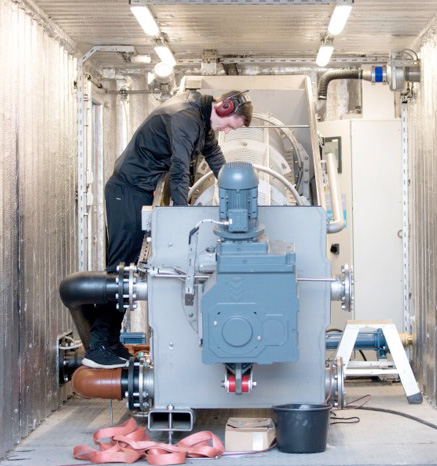 A technician works on a Blue Ocean Technology screw press
Burning – biofuel for the cement industry
In addition to biogas and pyrolysis, the energy in the sludge can also be harnessed through incineration. Dried sludge can be transported to plants which incinerate the sludge alongside waste products from other industries and municipal sources. The burning of sludge compared to microbial digestion prevents the emission of methane but emits large volumes of CO2 into the atmosphere. Cleaning (scrubbing) of the air is common, but carbon capture is not, with only one known carbon capture and utilisation system operational on a European incinerator. Compared to energy produced from renewable sources, e.g., wind or hydroelectric, burning of waste is less efficient and produces much higher emissions of CO2, but when incineration of biomass replaces a hydrocarbon source of fuel, CO2 emissions can be reduced overall. The cement industry uses large amounts of coal every year and emits huge amounts of CO2. The coal is used to burn limestone (CaCO3) to calcium oxide (CaO). Both the combustion of coal and CaCO3 release CO2, but renewable sources of energy cannot currently be used during the combustion process. Replacing coal with biomass is an option however and is an option being explored by a cement manufacturer in Norway (see Case Study 4).
Case Study 4 – Norcem AS
Norcem is one of the world’s largest manufacturers of building materials, including cement. Norcem is a good example of a company considering circularity as part of its core business. Cement is a notoriously “dirty” industry, burning large amounts of coal and emitting large amounts of CO2. Since 1996, Norcem has reduced the percentage of coal used to power Kjøpsvik cement plant from over 95% to just over 50% in 2022. Located in Norway, Kjøpsvik is the northernmost cement plant in the world, and this presents unique challenges including high transport costs for fuels. The plant is located in a region rich in aquaculture farms and routinely uses aquaculture sludge as a fuel source for cement production. During the calcination stage, the dried sludge is used alongside coal and other alternative fuels including used tires, municipal waste, and spoiled fish feed. The plant routinely receives sludge from a number of different farms and is upgrading onsite facilities to accommodate tankers of sludge rather than the current supply in big bags. Sludge and animal meal combined make up 2.000 tonnes of fuel used in the plant each year, and it is hoped this can be increased to 10.000 tonnes of fish sludge in the future.
Sludge is not the perfect fuel source for cement production, and whilst it could replace large volumes of coal, running a plant entirely on fish sludge is unlikely, even if a sufficient supply could be guaranteed. The phosphorus content of the sludge can result in high levels of phosphorus pentoxide (P2O5) and high nitrogen levels can increase NOx emissions that may require additional processing, whilst the chlorine content, especially in marine sludge, can present an issue. Removing phosphorous and nitrogen from the sludge can reduce the issue and allow for larger percentages to be used. Despite these issues, the plant hopes to use large amounts of sludge in the future and sees both environmental and economic benefits in reducing coal usage and replacing it with locally sourced fuel. Should the 10.000-tonne target be met, this would remove the need to burn around 5.000 tonnes of coal. The carbon present in fish sludge was sequestered from the atmosphere and it is therefore a carbon-neutral fuel. Coal (fly) ashes are often added to cement to increase the strength and durability of concrete and the ashes from the burning of the fish sludge can also be used for this purpose.
 Norcem AS Kjøpsvik cement plant
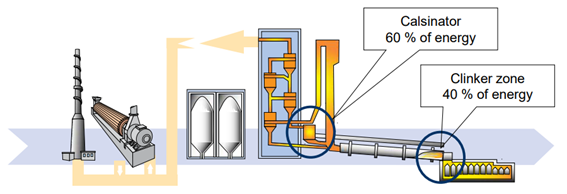 Overview of cement burning process – Sludge can be used in the calcinator
5.2.3. Insects
5.2.4. Costs and benefits of sludge drying
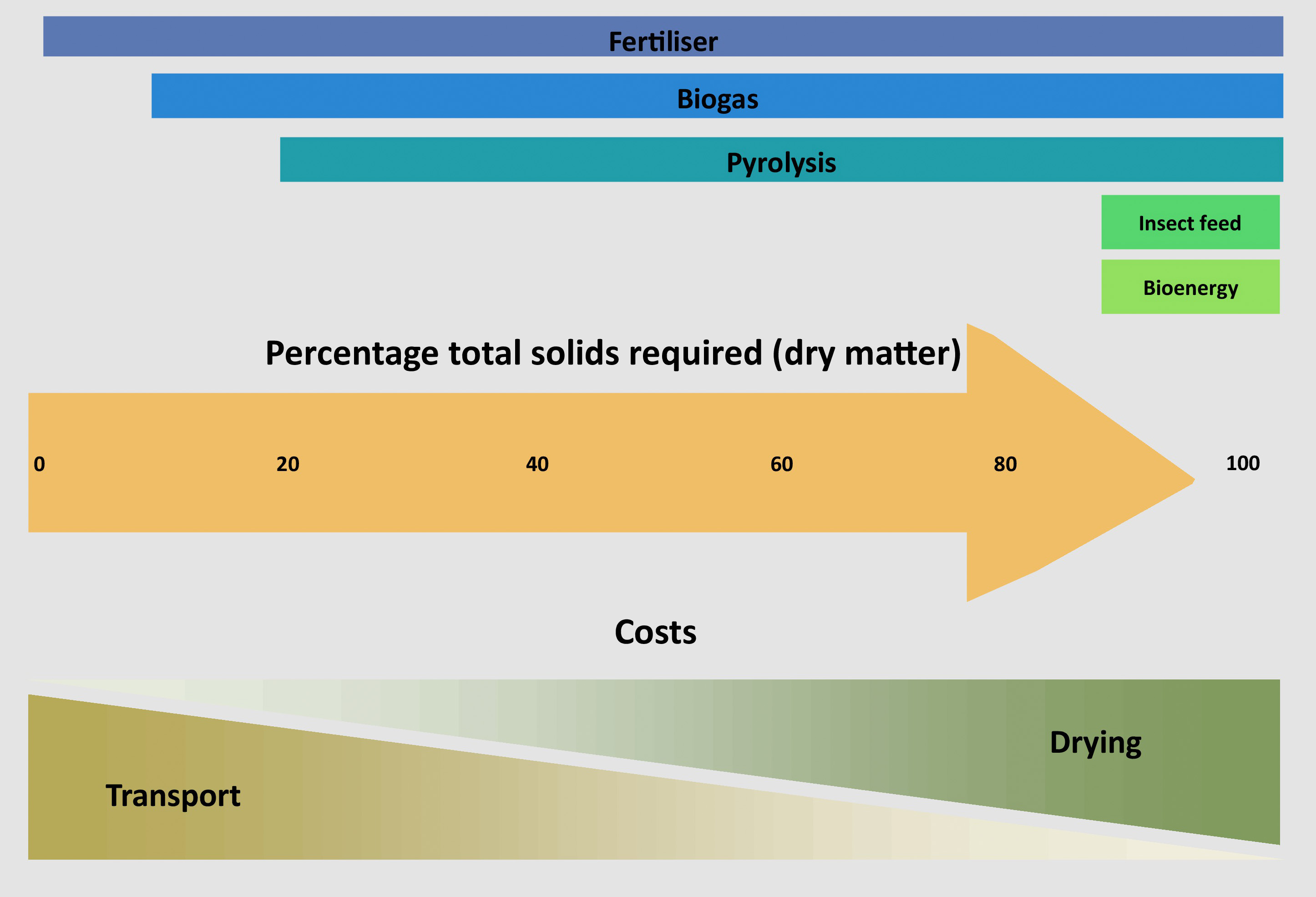
Figure 13. Reuse options for land-based aquaculture sludge and the level of drying required
Case Study 5 – Alternative drying solutions
Various methods of drying aquaculture sludge are commercially available. In earlier case studies we have mentioned mechanical drying such as belt dryers. These can dry sludge to >90%, and when using heat capture this can be achieved with relatively low power consumption. Alternatives to this technology include heat pumps, thermo-mechanical drying, and superheated steam. (This is discussed in the mortalities section.)
Fjell Technology Group AS offers solutions for sludge thickening, dewatering, and drying. A combination of band thickeners and bespoke polymers can effectively capture and thicken suspended solids. Electrocoagulation is installed in two facilities and work is being undertaken to further refine the technology. Decanter centrifuges dewater the sludge before the 20–25% TS sludge is pumped into the drying unit. The patented thermo-mechanical dryer is a type of hammer mill that uses friction to dry the sludge and produces a hygienised and stabilised sludge between 92 and 95% TS. The rotor spins at 600–720 rpm and the internal friction of the materials generates temperatures of 105–120 °C. Fjell reports significant savings compared to the disposal of wet sludge despite the increased energy costs of drying compared to wet disposal. The dry sludge is in the form of a fine powder, and this can improve its use for industries such as fertiliser. Turbo disc dryers are also available, and these use a steam-heated disc to apply indirect heat over a large surface area.
Drying Matter AS use heat pump technology to dry sludge from 15–40% dry matter and up to 95%. Dry and slightly heated air generated using the heat pump flows over the sludge and becomes saturated with water. The cooling side of the heat pump condenses the water, which is drained away. The de-watered air then flows back over the heating element and the cycle begins again. Low temperatures (50–80 °C) and the recycling of air within the system reduce odour from the unit and eliminates emissions. Energy consumption can be as low as 0,3 kWh per litre of water removed. The residency time in the dryer is 60 to 90 minutes, thereby ensuring hygienisation, and the product is a dry sludge of a consistent size. For processes where an external heat source is available, Drying Matter AS has a product range allowing for the substitution of internal heat pumps or a hybrid energy mix using both heat pumps and external sources. A medium-sized unit can process 12 tonnes of mechanically dewatered sludge per day, producing three tonnes of dried sludge. Parallel lines can easily be added if a larger capacity is required.
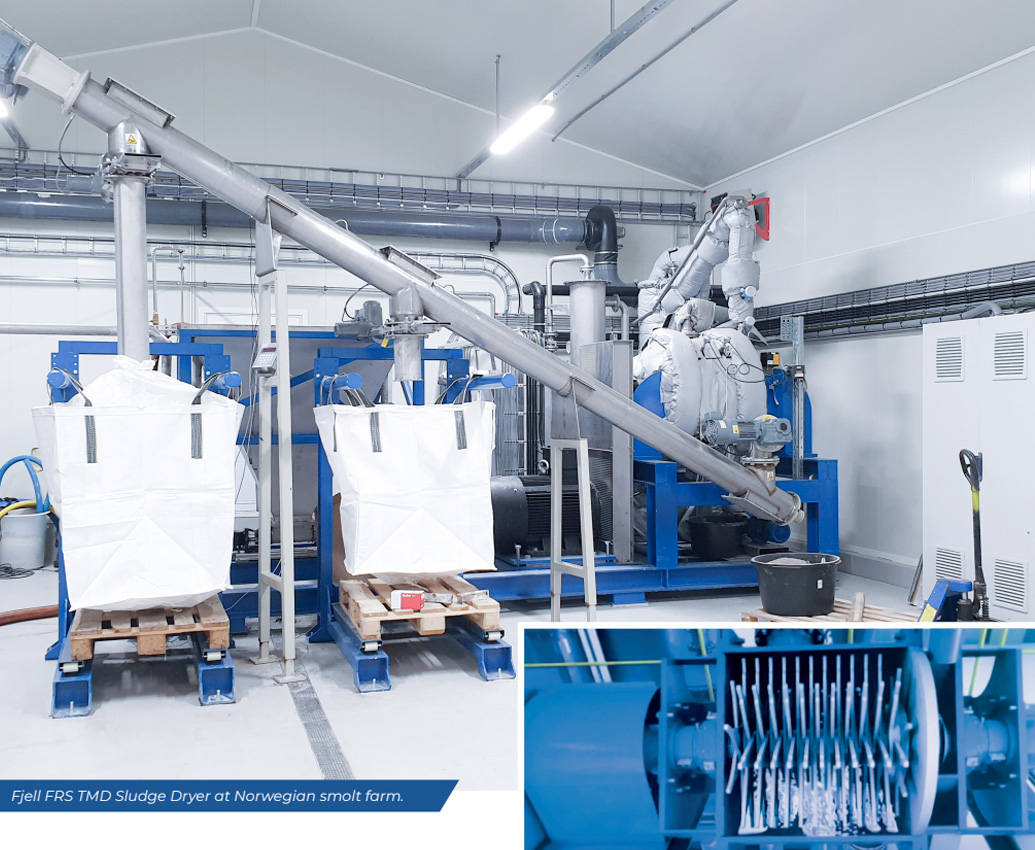 The Thermo-mechanical Dryer offered by Fjell Technology
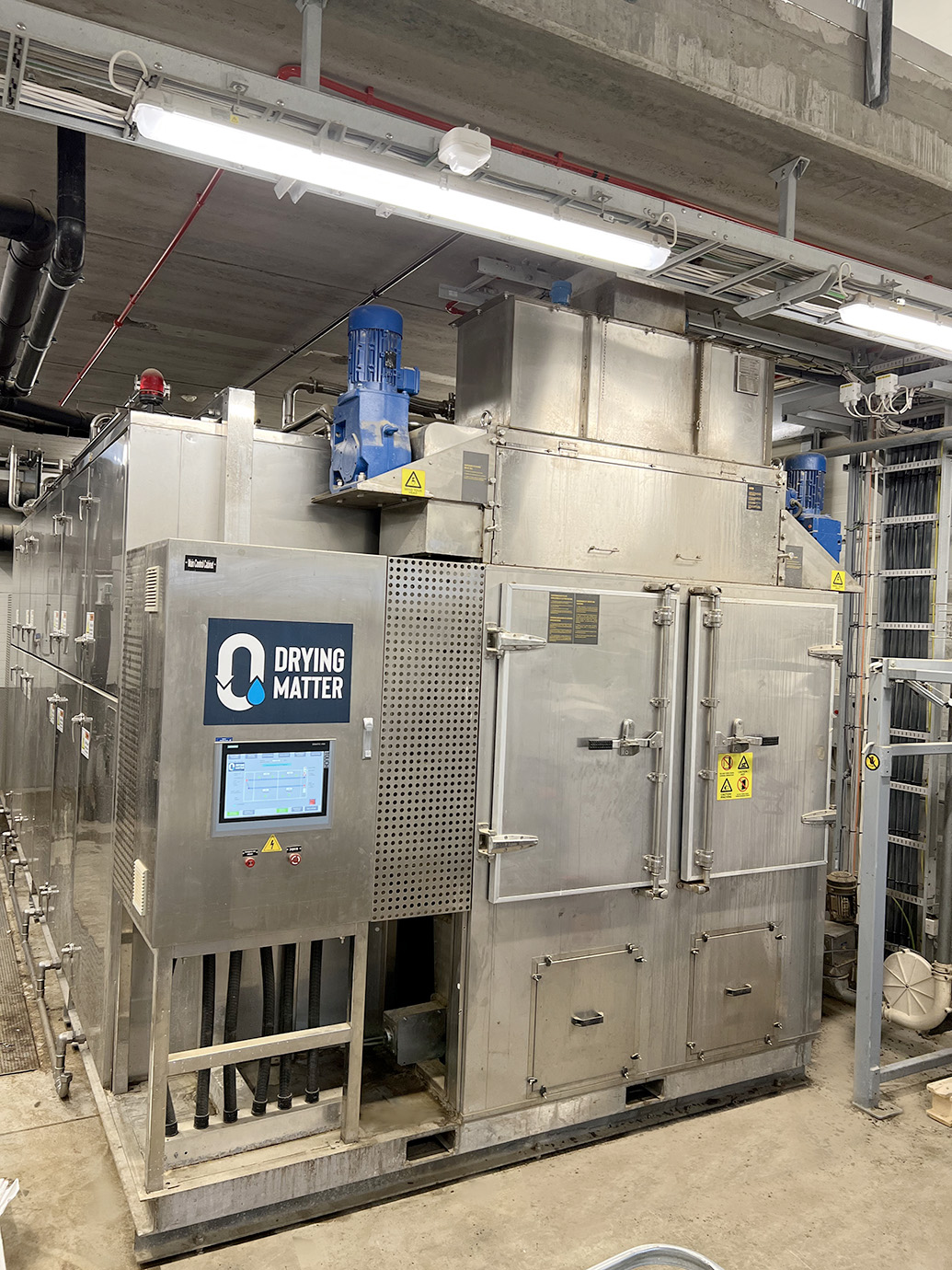 A Drying Matter heat pump sludge dryer
5.2.5. Saline sludge
5.3. Discharge water
5.3.1. Treatment of discharge water
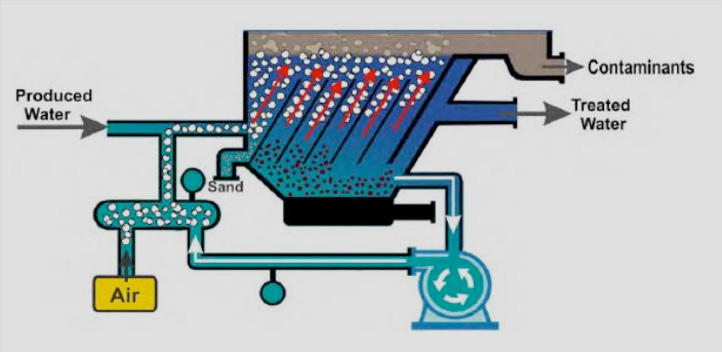
Figure 14. Illustration of DAF process, taken from Ebrahiem et al., 2021
- Microfiltration - Membrane pore size ranges from 0,1 to 10 µm. Such membranes are mainly used for the removal of larger particles, but bacteria, algae and fungi can also be removed by this technique.
- Ultrafiltration – Membrane pore size ranges from 0,01 to 1 µm. The smallest pore sizes will filter out bacteria, viruses, algae, fungi, and polypeptides. This technique is widely used in wastewater treatments.
- Nanofiltration – Membrane pore size ranges from 1 to 10 nm. Typical applications for nanofiltration may include the removal of colour and total organic carbon (TOC) from surface water and the removal of hardness from well water. Nanofiltration removes all of the above-mentioned agents plus some multivalent ions.
Degassing systems (Figure 15) may be employed to remove dissolved compounds such as nitrogen gas and CO2. This process involves improving the contact of water with air to encourage the evaporation of dissolved gases. Increasing the surface area of the water and the contact time with air can be achieved through a variety of methods including stripping towers, surface aerators, and defused aerators. The design and size of degassing systems will depend on the size and stocking density of the farm. Good aeration above the degassing tower is suggested, whilst the gas can also be piped outside of the facility.

Figure 15. Diagram of a packed media degassing tower
5.4. Reuse of discharge water
5.4.1. Wetlands
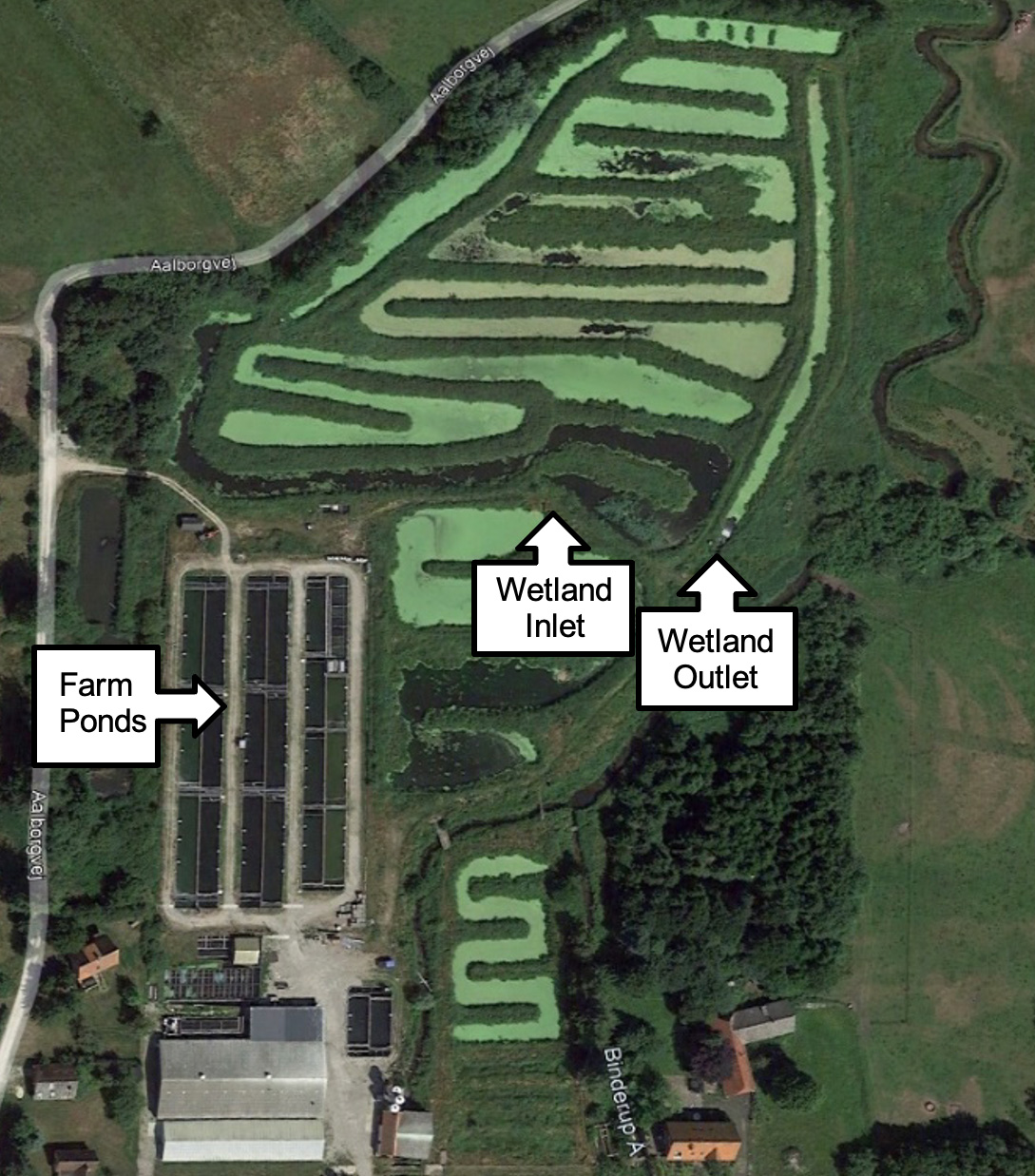
Figure 16. Model trout farm and constructed wetland near Aalborg, Denmark. Google Earth
If large areas of land are available, then wetlands and woodchip filters present a cheap method of emission reduction. Wetlands have been used regularly in Danish trout production to process discharge water, and building wetlands has been a way to increase the amount of feed input permissible, although this restriction has now been changed to target emissions rather than inputs. These trout farms often employ high levels of recirculation and use wetlands to treat the water. Production volumes are, however, relatively low, and using wetlands to process the water from large, high-density RAS facilities presents a different scenario. Very large areas of land would be needed and effluent from the wetland could still contain regulated amounts of nutrients. All but the least intensive farms that use wetlands employ the use of mechanical filtration, sludge cones, and biofilters to clean discharge water before expulsion into the wetland. As mentioned in the legislation section, Danish BAT-focused legislation has contributed heavily to the state of the Danish aquaculture industry. Regulations on the discharge of nutrients into the environment coupled with advances in recirculating technology have physically changed the layout of trout farms over the years. An example of this can be found in Appendix 2. Figure 16 shows the layout of a Danish trout wetland. Saline effluent can also be treated in a wetland system with certain species of halophyte plants showing high nitrogen removal efficiency (Webb et al., 2012; Diaz et al., 2020). The AquaCombine project is experimenting with growing Salicornia, in saline effluent from aquaculture, whilst also using the part of the plant not consumed by humans in feed for European seabass. Other halophyte plants can also be grown, increasing the economic viability of using this method of waste processing across multiple farm sites.
5.4.2. Fertigation
5.4.3. Algae
5.4.4. Heat/energy recovery
5.4.5. Chemical discharges
5.5. Mortalities
5.5.1. Ensiling
Biodiesel, may be considered as a carbon neutral alternative to fossil fuels, as can biogas. Biodiesel can be produced through a variety of methods including microwave-assisted-lipid extraction, transesterification, and rendering. The resultant product can replace traditional diesel, and aquaculture waste biodiesel has been used in several countries to power buses and boats. Biodiesel is less toxic than traditional diesel, and with a higher flashpoint, is less hazardous to handle.
Case Study 6 – The Åland Islands: biodiesel and waste reduction
Historically, the region’s aquaculture production has been involved in several initiatives that together minimise environmental impacts, such as AQAFIMA, AQUABEST and HELCOM’s Baltic Sea Action Program for the Baltic Sea aquaculture sector. The latter project focused on reducing the net load of waste inputs and creating a nutrient-neutral aquaculture sector using Baltic raw material in fish feed for fish. These initiatives complement Åland’s Environmental Law and Water Law.
Despite the widespread acknowledgement of the issues, consensus to resolve them, and resultant policies and action programmes, the most recent 2021 review observed that targets have generally not been achieved as envisioned and that the Baltic Sea is still heavily affected by multiple pressures caused by human activities (HELCOM, 2021). According to Åland Environmental and Health Protection Authority, the biggest concern is the excessive emission of nutrients to water. Though cognisant of and potentially regulated by BAT, cage farms have as yet made no efforts to move towards land-based operations where effluent is more easily monitored and controlled. This reticence is due to market forces: there is no premium or value added for RAS produced fish and the competition from Norwegian cage farms is considerable. The only RAS producer in the region has yet to make a profit. Nevertheless, this and another aquaculture producer are pursuing innovative steps to reduce their waste production.
Storfjärdens fisk process their rainbow trout and were aware that the fish oil from the trimmings was a potential commodity, so they began investigating how to make biodiesel from it in 2009. The technology is simple and had existed for decades; fish oil has been used as a fuel for boats in the past. The company invested in a processor for refining the oil, and from this design built a second one themselves.
The plant can produce approximately 400 litres of fish biodiesel a day. In a year, the plant can turn 15–20 m³ of fish oil into biodiesel. The farm has been able to successfully use this in its own operations and in the public transport system in Mariehamn, the nearest town (population 11.000). From 2013 until recently, the town ran all of its public transport vehicles solely on fish biodiesel. Sixten Sjöblom, the CEO of Storfjärdens fisk, estimates that it has reduced the farm’s waste production by 45% and instead added value from a by-product.
Fifax Eckerö is the region’s only RAS facility, with a capacity of 3200 tonnes of rainbow trout per year. Driven by the aforementioned concerns of eutrophication in the Baltic Sea, the RAS was designed to meet exceptionally high environmental standards. One of the issues with RAS is the buildup of nitrates and phosphates, which typically are removed by dilution – changing perhaps 10% of the water each day (see Section 4.2). Not only is this a waste of resources (particularly as the water will have to have been treated before and after use), but it is a source of waste. By designing specialist water treatment facilities, Fifax are able to reduce their wastewater to less than 1% of total volume; nitrogen and phosphorous emissions are a very small percentage compared with “traditional RAS”.
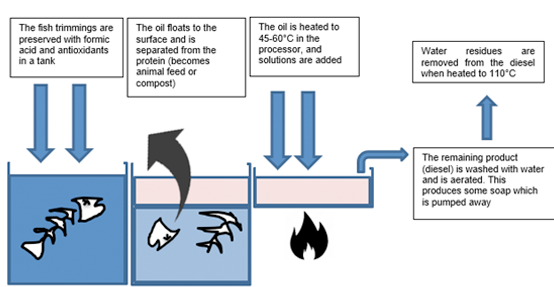 Biodiesel production from fish trimmings
5.5.2. Drying
Case Study 7 – Waister AS
Waister AS is based in Åslyveien, Norway, just 45 km from Oslo, and offers an alternative to traditional ensilage. Waister’s patented drying technology turns mortalities and discarded fish into a dried and finely ground powder. This approach avoids the use of toxic chemicals such as formic acid and the downstream applications for the dried product range from fertiliser and biogas production to pet food. The €55.000 Waister 15 can process 500kg of mortalities per day in just 2,4 m². The company also produces sludge drying machines in a range of sizes, and these can be used to dry mortalities should the capacity of the Waister 15 be too low. Employees must fill the machine with fish, but the machine then operates self-sufficiently. Mortalities are dried using superheated steam and the heat can be reused within the system, resulting in energy consumption of ~0,35 kWh per kg of water removed.
By drying, the weight and volume of the mortalities is reduced by 85% compared to ensilage, cutting down on transportation costs and gate fees at biogas plants. Current legislation preventing use as pet food means that biogas will remain the most likely source for dried mortalities. Drying using this method produces a sanitised and stable product. After six months at room temperature, samples still had no measurable bacteria (Enterobacteriaceae, Salmonella spp, sulphite-reducing clostridia). There has been some interest from pet food producers. However, it is not an option under current EU rules even after testing to ensure the product is disease free. Legislation not designed to fit aquaculture remains, in the eyes of Waister CEO Hallstein Baarset, the biggest challenge to the circular reuse of aquaculture waste products. However, he remains confident that, despite limited downstream application options, the economic, logistic, and safety benefits of drying waste make it the best option. Waister currently supplies mortality drying machines to farms in Croatia and Australia and has plans to build a Nordic demonstration plant in the near future.
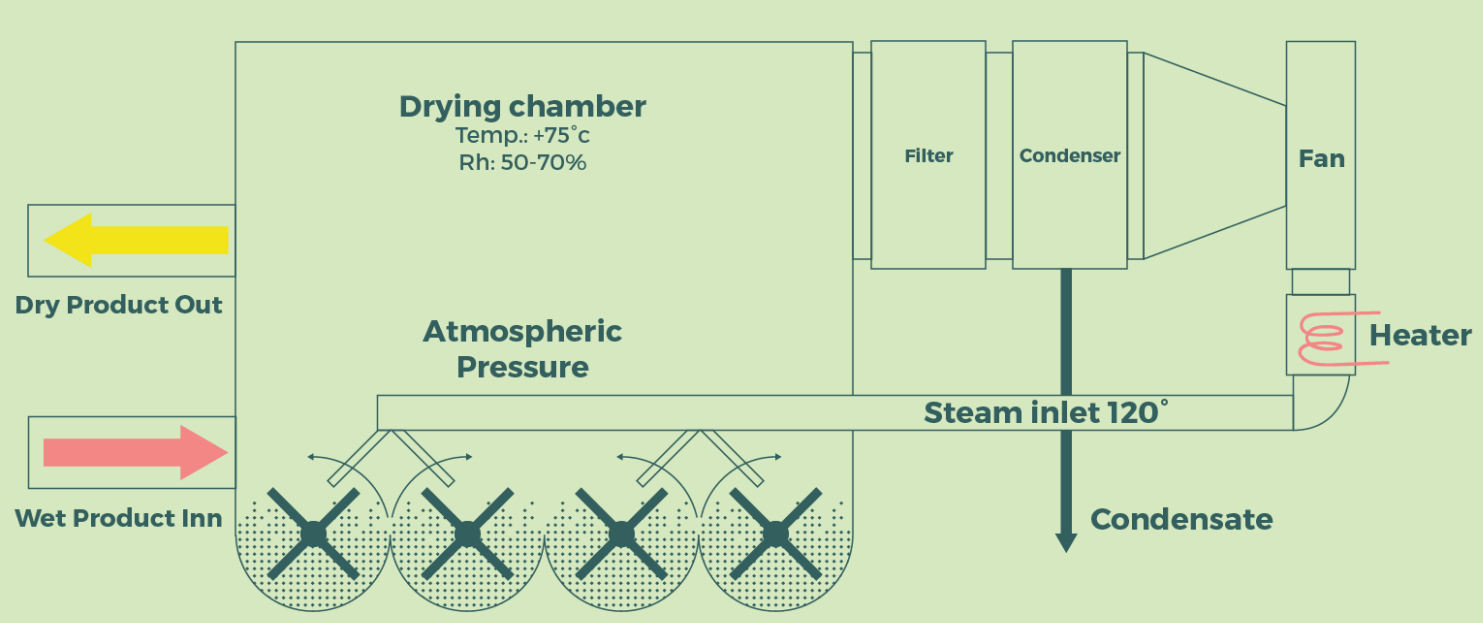 The Waister Drying Technology
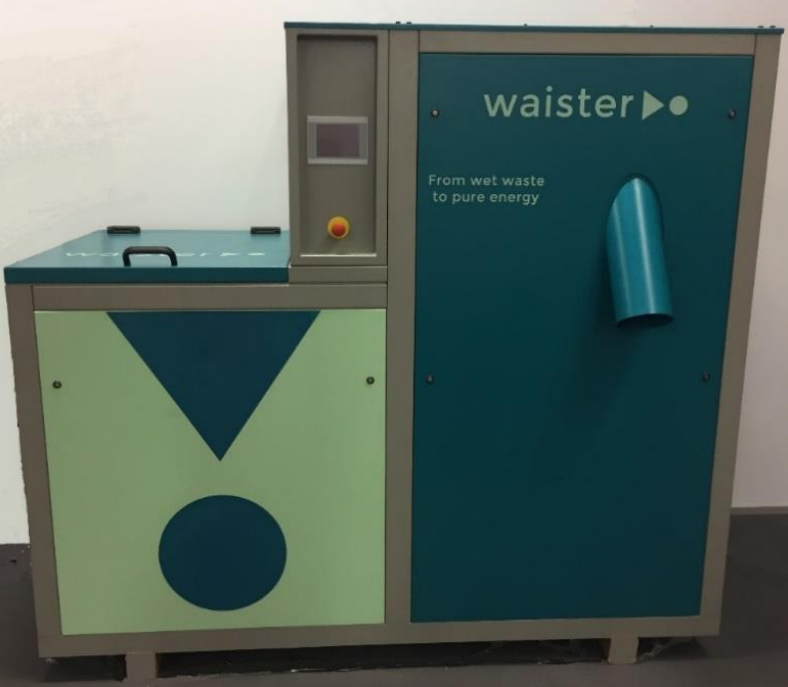 Waister 15 Mortality Dryer
5.6. Gas emissions
5.6.1. Carbon capture
| Nutrient | Profile |
| Protein | 70-80% |
| Fibre | 0-3% |
| Vitamins and minerals | <6% |
| Oils | 3-4% |
| Amino acids | “Similar to fish meal”/“optimal” |
Table 14. Typical reported nutritional profile of feed produced using microbial fermentation supplied with captured CO2 to technology
This technology is still very much in the pilot stage, and it remains to be seen if capturing CO2 in this manner would be economically viable. The disposal of sludge, discharge water, and mortalities are required and regulated facets of a fish farming operation. Because the processing of these waste streams is necessary, there is an incentive to valorise and reuse the waste. Gas emissions face no such restrictions and therefore there is less incentive to spend money reusing the emissions. The benefits of capturing the carbon would need to outweigh the cost of the capture, the capture would need to provide an economic benefit, or legislation would need to change to require the capture or reduction of CO2 emissions. Aquaculture farms are not currently covered by the EU emissions trading system (ETS) but should this change, they would need to pay for all CO2 released beyond a set threshold. The CO2 permit costs reached a record high of almost €98 per tonne in August 2022. Including feed production and operational emissions, a salmon RAS facility will produce roughly seven tonnes CO2eq/tonne of live weight (Liu et al., 2016).
5.6.2. N2O reduction
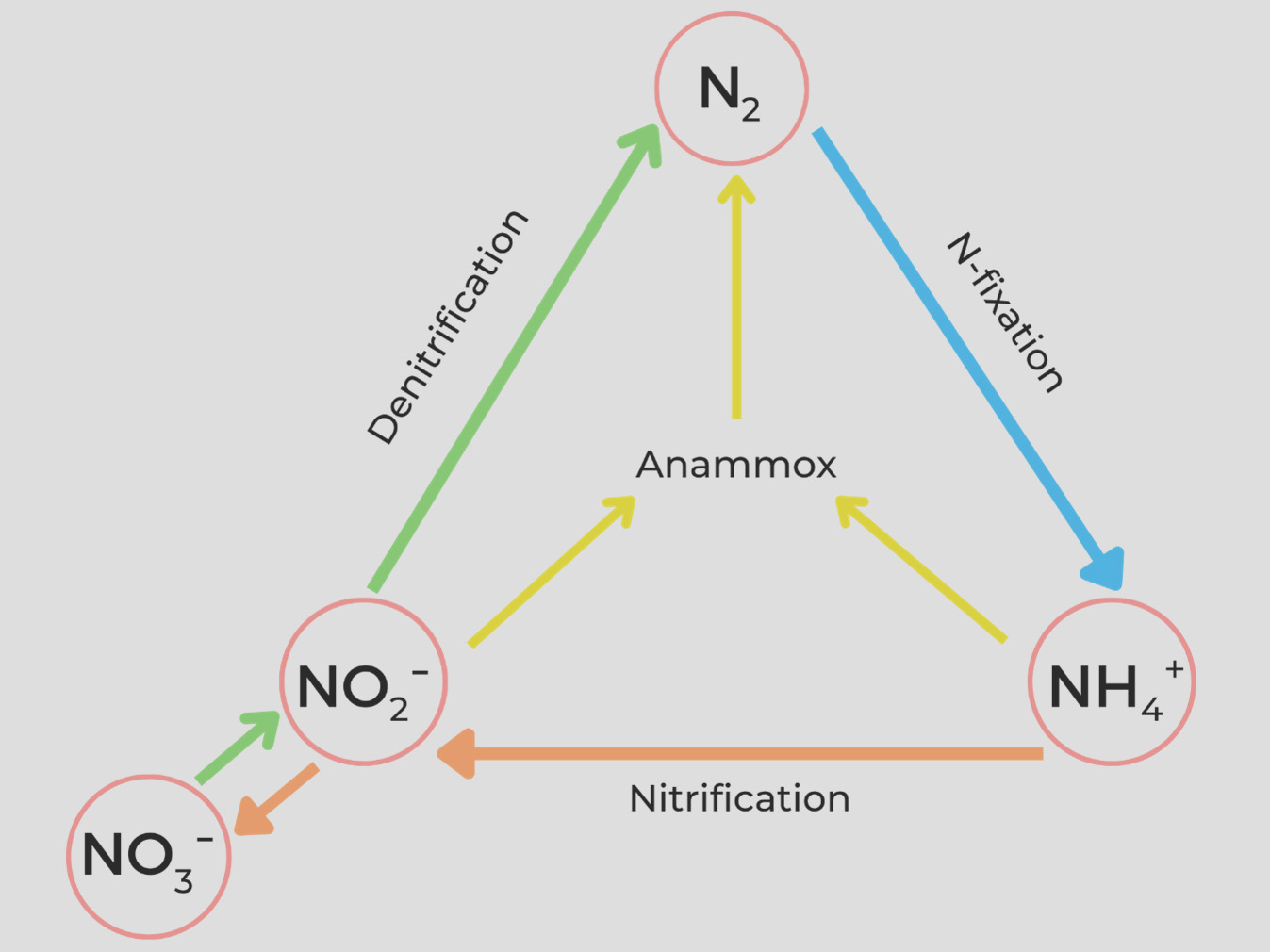
Figure 17. Anammox process
This process has been used in industrial discharge water treatment for quite some time, but because anammox bacteria are easily inhibited by pollutants and environmental parameters (Massara et al., 2017) wide-scale usage of this process has not resulted (Cho et al., 2019). Despite anammox reactor prototypes being reported for both cold and seawater aquaculture applications (Espinal and Matulić, 2019), commercial application of this technology in an aquaculture setting has not been demonstrated. Outside of a specific reactor, anammox still often occurs in RAS. Yogev et al. (2017) reported that 10-20% of the nitrogen removal in the denitrification reactor was by anammox. This phenomenon was also reported in a small number of additional studies (Tal et al., 2003; Klas et al., 2006; Lahav et al., 2009), with anammox bacteria from the gut of the fish accessing the denitrification reactor through the addition of filter backwash (Lahav et al., 2009). Adding filter backwash, which can serve as a carbon source (Suhr et al., 2013), ensures the regular resupply of anammox bacteria. Anammox in the denitrification reactor can be encouraged by increasing solid retention time (Lahav et al., 2009).
Whilst in its early stages in aquaculture, the use of this process would present a good opportunity to remove the emission of a volatile pollutant and increase the green credentials of the industry.
5.6.3 Methane
Like N2O methane is a potent greenhouse gas. In land-based aquaculture, methane is typically released by microbial digestion either of sludge or suspended solids. If solids are collected and prevented from accumulating at the bottom of tanks or raceways, then methane release is likely to be low. Emissions can, however, be significant from ponds if they are not regularly dredged. As described in Section 5.2.2., biogas plants aim to produce methane to use as a source of energy. This methane is contained and used, but if sludge is stored in sludge lagoons the emission of methane into the environment will be unrestricted. The release of methane from land-based aquaculture (other than ponds and sludge lagoons) has not been well studied. The capture and reuse of any emissions are unlikely. Instead, best practices should be employed to ensure that sludge and solids are not allowed to accumulate and that feeding regimes prevent wasted feed. Mortalities should be handled in such a way that they are not allowed to decompose and release GHGs.
5.6.4 Odour
Odour emissions from land-based aquaculture are less well studied than other forms of emissions. Odour emissions in general can affect the quality of life of neighbouring populations, lead to complaints to local councils, and negatively impact public perception of the relevant industry. In Nordic countries, regulations regarding the emissions of waste minimise the emissions of odour. Immediate and appropriate handling of mortalities prevents these from becoming a health hazard or odour issue. Collecting sludge prevents uncontrolled decomposition, whilst keeping water quality high ensures it remains low in odour. Bad aquaculture practices can generate disagreeable odour, but a combination of legislation and good standards make odour emissions to surrounding areas an issue of minimal concern in Nordic land-based aquaculture production.
5.7. Other forms of waste
5.8. Reduction before reuse
Table 15. Methods for reducing waste production in land-based aquaculture
| Waste source | Reduction opportunities |
| Feed | |
| Uneaten food | - Observe uneaten pellets and adjust feeding – cameras and techni-cian/machine learning observer - Use feed tables but adjust with observa-tions of feeding and when fish removed - Spread feeding over longer periods - Ensure pellet size is appropriate - Automatic feeders give accurate ration - Place feeders to ensure pellets remains in the tank for long enough - Attractants and palatability can improve uptake |
| Under-utilised feed | - Diets must be nutritionally appropriate for species, conditions, and life stage - Different feeds can offer variable utilisation - Premature maturation decreases utilisation of resources for growth |
| Spoiled feed | - Storing feed on the floor, in dry (<6% humidity), and cool <15 °C decreases spoilage - The first in, first out principle ensures feed is not stored for longer than necessary |
| Disintegrated feed | Choosing RAS-specific feed can improve mechanical removal and water quality |
| Mortalities | |
| Disease/preventative culls | - Classify mortalities to identify diseases early - Treat if possible - Keep systems separate - Disinfection of all equipment - Training in biosecurity - Filtration and disinfection of influx water - Quarantine and testing of incoming fish/eggsCheck feed quality - Reduce outside risks, filter air, reduce visitation - Good husbandry keeps fish healthy |
| Handling | - Ensure adequate training for staff - System designed around the species chosen - Fish gates or pumps can minimise handling - Suitable nets reduce damage to fish |
| Energy efficiency | |
| Temperature | - Water source selection is key - System design and heat exchangers can reduce heat loss - A large temperature differential lowers exchange and decreases usage - Proper insulation of the building reduces heating costs |
| Equipment | - Lower pumping through better design - Equipment running capacity can be changed concerning requirements – does not always need to run at 100% - Energy-efficient models can create savings |
6. Results from stakeholder engagement
A large number of stakeholders (Table 16) were approached to gain a better understanding of the current state of the industry and the use of BATs. An initial questionnaire was used to determine participation interest, and a more detailed questionnaire followed for those who responded positively (Appendix 1). The questionnaire was distributed in English, Norwegian, Danish, and Icelandic. Responses from waste producers and other stakeholders were fairly limited; around half of the fish farmers responded. Other stakeholders included universities and research institutions, associations, egg suppliers, national authorities, and waste users. Of those that did respond, not all responses could be used for analysis. Many responders failed to answer every question; this was particularly apparent in questions relating to the handling of specific waste streams. Other responders gave vague or incomplete answers. No farms surveyed reported methods to mitigate gas emissions. Answers that could be used have been organised in Figures 18 – 20, showing the rough location of the responders and the method of waste treatment that they employ. Of the farmers that responded, farm size ranged from 300 kg in a small-scale aquaponics system to farms with over 20.000 tonnes per year. Recirculation levels ranged from 0% (flow-through) to 99% high-intensity RAS. Three-quarters (75%) of the farms solely produced Atlantic salmon, although three responders produced Arctic charr and three produced trout. The life stage of production varied, with grow-out farms alongside hatchery and nursery facilities. The source of water in the facilities varied; 50% of responders reported using borehole water, 27% seawater, 22% lake water, and 17% both river and reservoir water. Some responders reported on multiple farms and therefore the total number of farms is more than 100% of the responders. One responder reported using municipal water whilst another used repurposed industrial wastewater. Of the farms that responded, 38% reported belonging to an environmental certification scheme (ASC, GGAP, Debio).
| Fish Farmers | Waste Processors | Other Stakeholders | ||
| Norway | Contacted | 22 | 9 | 21 |
| Responded | 12 | 1 | 3 | |
| Iceland | Contacted | 12 | 0 | 13 |
| Responded | 7 | 0 | 2 | |
| Denmark | Contacted | 7 | 0 | 8 |
| Responded | 1 | 0 | 2 | |
| Finland | Contacted | 2 | 0 | 6 |
| Responded | 0 | 0 | 2 | |
| Faroe Islands | Contacted | 1 | 0 | 1 |
| Responded | 0 | 0 | 0 | |
| Åland Islands | Contacted | 1 | 1 | 2 |
| Responded | 1 | 1 | 2 | |
| Sweden | Contacted | 7 | 0 | 5 |
| Responded | 3 | 0 | 2 | |
| Total | Contacted | 52 | 10 | 56 |
| Responded | 24 | 2 | 13 | |
| Percentage responded | 46% | 20% | 23% |
Table 16. Response rate from stakeholders in Nordic countries.
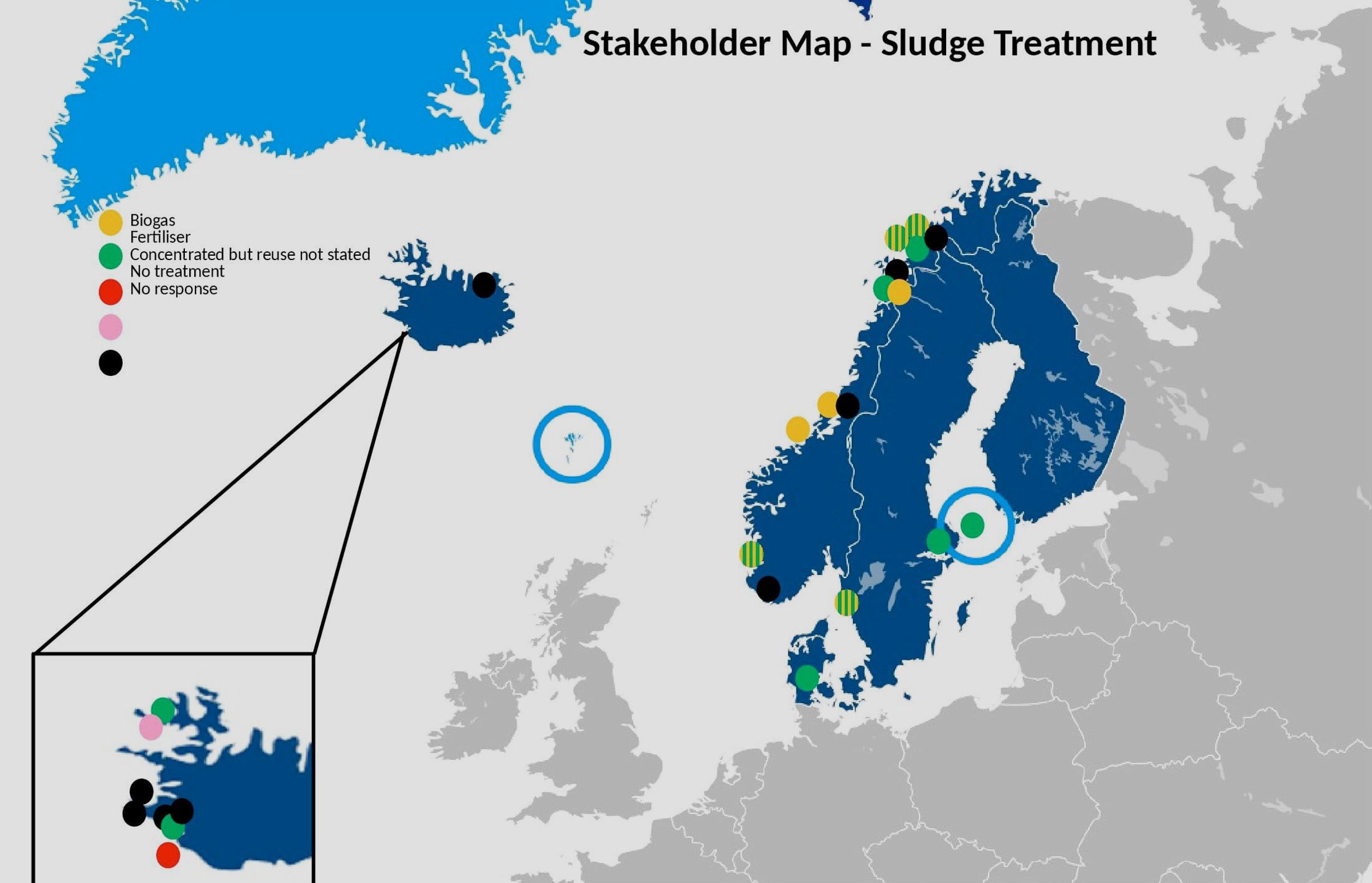
Figure 18. Location of fish farms and the method of sludge treatment employed
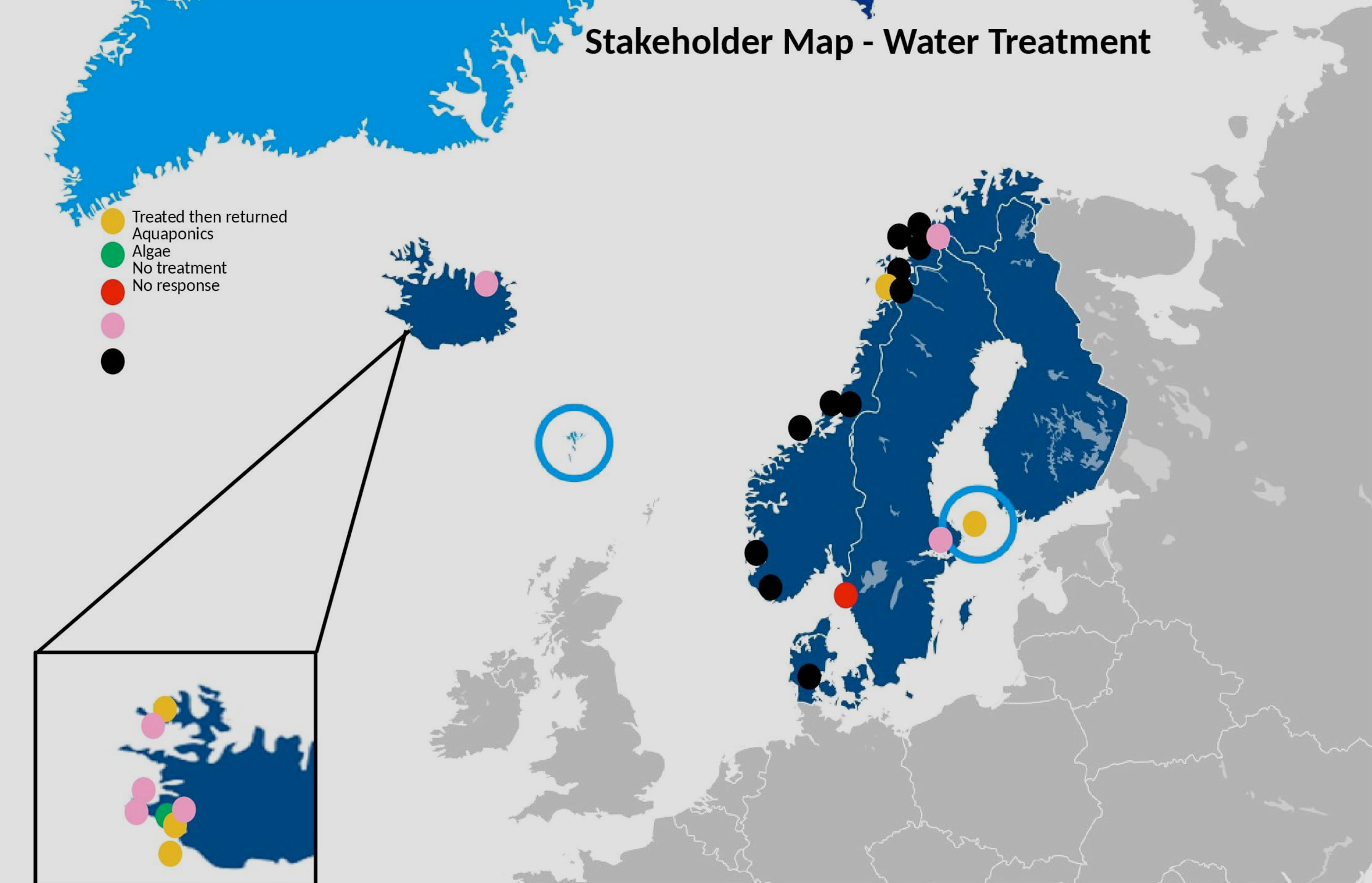
Figure 19. Location of fish farms that responded to the survey and method of water discharge treatment
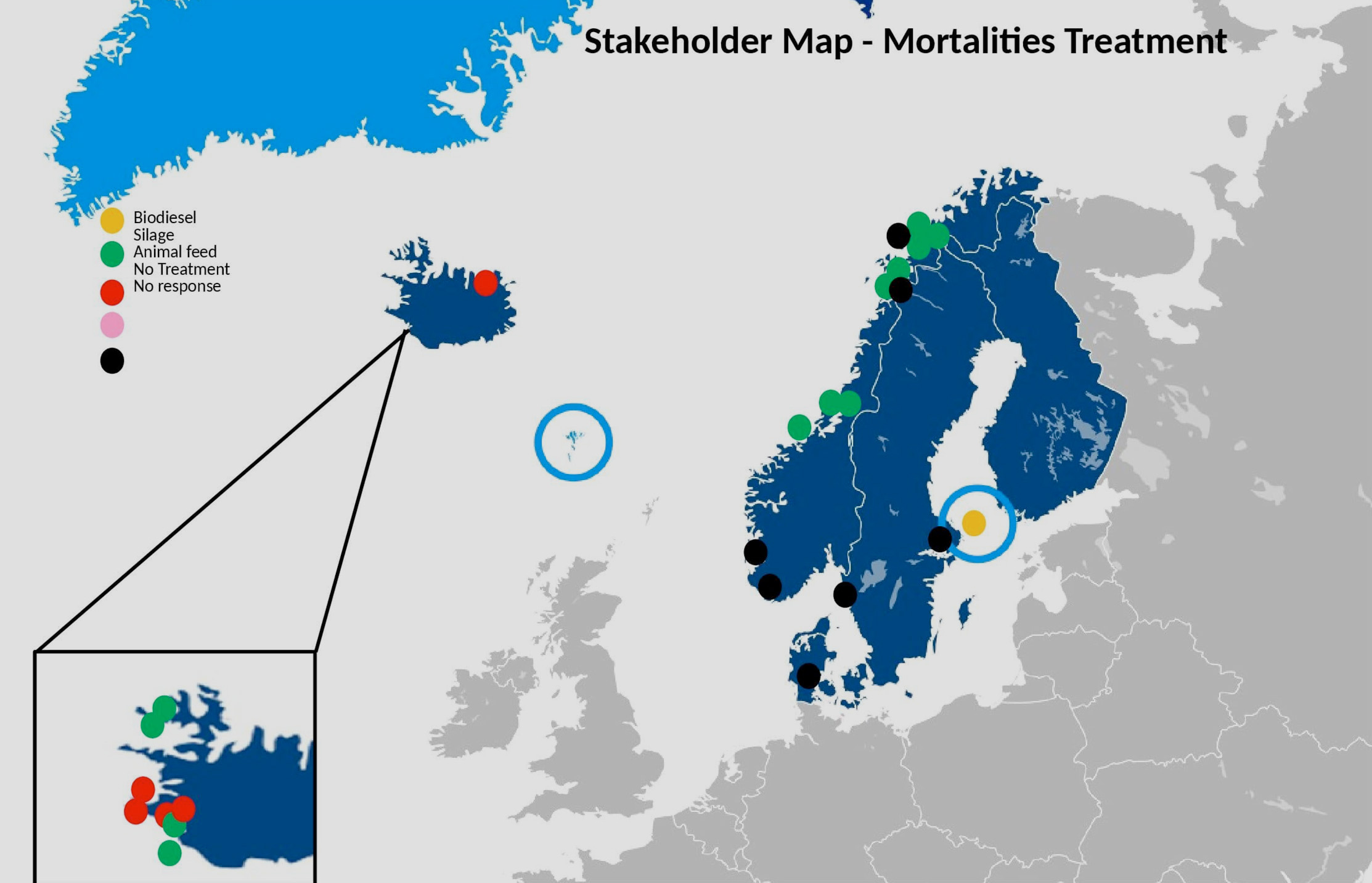
Figure 20. Location of fish farms and the method of mortality treatment employed
7. Recommendations and considerations
Section 5 highlights multiple approaches for the management of waste streams from land-based aquaculture. For each form of waste (e.g., sludge, water, mortalities) there are several methods of waste reduction and reuse to choose from. Each of these methods has benefits and restrictions and no single method presents the best solution in every scenario. Even limited to the Nordics, land-based aquaculture occurs in multiple forms (pond, flow-through, raceway, and RAS), with different species being cultured in facilities ranging in size from less than a hundred tonnes to tens of thousands of tonnes. These facilities are distributed across the Nordics from remote regions with limited infrastructure or local industry to urban areas around major cities. Most aquaculture farms are bespoke constructions making use of the best available system technologies at the time and being designed to fit the unique requirements of the site and farm operator. All these factors combine to make choosing the best available technology for a specific site more difficult than in a more standardised or homogenous industry.
One of the major restrictors on the method of reuse chosen is farm size, as such, Table 17 lists possible BAT choices and indicates potential feasibility based on farm size. The restriction column goes into detail on factors that can limit the viability of the technology such as location, local industry or farm type. Most of the technologies are readily available from commercial suppliers or easily implementable on farm. Others are only recently being developed or tested, require legislative change to become feasible, or require adapting to the aquaculture industry. Key points to consider when defining BATs for the treatment and reuse of waste from land-based aquaculture are described in Table 18.
Table 17. Potential techniques that can be applied as BATs for the treatment and reuse of waste from Nordic land-based aquaculture
| BAT | Potentially feasible at farm size (tonne) | Benefit | Restrictions | Availability | |||
| <100 | 100-1000 | 1000-10.000 | >10.000 | ||||
| Separation of Solids and Water | |||||||
| Sedimentation | x | x | x | x | Low energy consumption Used in race-way, pond, and some RAS | Not well demonstrated in large-scale RAS Less easy to scale up than mechanical filtration | Available |
| Mechanical filtration (drum and disk) | x | x | x | Proven efficient solids removal in RAS and raceway systems Easily scalable for increased production or emergency backup | Energy consumption | Available | |
| Thickening de-watering, and drying | x | x | x | Decreasing water content decreases transport cost per tkm Decreasing volume decreases disposal fees Multiple companies offer different methods to thicken, dewater, and dry sludge Valorisation options increase with reduced water content Collaborative hubs can share costs between multiple farms | Energy costs increase with de-creasing water content May add cost and complexity to farming operations Viability depends on electricity costs | Available | |
| Adsorptive bubble separation | x | x | x | Removal of particles and oils from wa-ter | Benefits limited to RAS | Available | |
| Removal of Dissolved Components | |||||||
| Nitrification (bio-filtration) | x | x | x | x | Proven in RAS to remove ammonia from water A large number of designs and media depending on requirements | Not common in flow-through or ponds Bacteria sensitive to changes in water chemistry and production volume | Available |
| Denitrification (biofiltration) | x | x | x | Converts nitrate in water to nitrogen gas May reduce the need for water ex-change | Requires anaerobic reactor and supplementary carbon source CO2 and N2O emissions Mostly limited to RAS | Available | |
| Degassing | x | x | x | x | Removes CO2 and dissolved gases | CO2 emissions | Available |
| Reuse of Freshwater Sludge | |||||||
| Fertiliser | x | x | x | x | Sludge of varying moisture content can be used Simple Potential local application | Seasonal variability of demand Nitrogen and phosphorous leaching Heavy metal content Limit scope for profitability | Available |
| Biogas (offsite) | x | x | x | x | Reuse energy stored inside of sludge Source of low-carbon energy for local communities Sludge of variable moisture content can be used | A limited number of biogas facilities Gate fees may be limiting Limited chance of revenue for sludge producer | Available |
| Biogas (onsite) | x | x | No sludge transport fees; only requires digestate Energy for farm operations Suitable for wet sludge Recent solutions for use of 100% fish sludge (without mixing with other substrates) | Increases complexity of farming operations Trained staff required to maintain microbial community Areal footprint | Available | ||
| Pyrolysis (on-site) | x | x | Produces by-products and energy The ratio of by-products is adjustable according to market conditions Footprint smaller than biogas reactor | CAPEX Sludge must be dewatered | Available | ||
| Incineration for energy (offsite) | x | x | x | x | Alternative to fossil fuel for other industries | Sludge must be dried The level of phosphorus can limit use in the cement industry Substantial transport to incineration plants or cement works can negate benefits | Available |
| Food for Insects | x | Example of circular economy | Heavy metals require mitigation Not currently permitted Lack of value chain of development | Feasible but legislatively restricted | |||
| Reuse of Saline Sludge | |||||||
| Desalting | x | x | x | Different methods of desalting are available Allows saline sludge to be used as freshwater sludge Simple desalination option | Freshwater consumption | Available | |
| Feed for polychaetes | x | x | Polychaetes have potential use as animal feed | Not demonstrated at commercial scale The market for polychaetes is currently limited | Requires significant development | ||
| Pyrolysis (on-site) | x | x | Produces by-products and energy The ratio of by-products is adjustable according to market conditions Footprint smaller than biogas reactor | Limited market for biochar from saline sludge CAPEX Sludge must be dewatered | Available | ||
| Incineration for energy (offsite) | x | x | x | x | Can produce energy for local communities | Substantial transport to incineration plant may offset benefits Sludge must be dried Cannot be used in the cement industry due to salt | Available |
| Fertiliser for halophytes | x | x | x | x | Potentially offers local and simple reuse option Halophyte plants for animal feed | Limited proof of concept at scale Limited market for halophyte Halophytes must be mixed with other feed or processed | Breakthrough technology |
| Discharge Water Treatment | |||||||
| Membrane filtration | x | x | x | Filtration can reduce particles in discharge water | CAPEX and OPEX increase as filtration pore size decreases High a filtration rate may increase OPEX | Available | |
| Wetlands | x | x | x | A simple method of suspended and dissolved nutrient removal Can also remove pathogens, pharmaceuticals, and heavy metals Projects underway to treat saline discharge water | Land use (footprint) Removal of dissolved TAN and phosphorous is limited Present use is restricted to freshwater | Available | |
| Reuse of Discharge Water | |||||||
| Fertigation | x | x | x | x | Fertigation established practice in some agricultural sectors Reduces freshwater and fertiliser usage Run-off reduced | Limited proof of concept at scale (for fertigation with wastewater) Potential suitability of nutrient profile Only suitable for local application Lack of demand in the Nordics | Requires significant devel-opment |
| Algae | x | x | x | Algae cultivation is well established globally Established market options for algae | Not well established in the Nordics Costs may be prohibitive Large areas and artificial lighting required Only suitable for local application Possible lack of suitability and consistency in wastewater nutrient profile | Requires significant devel-opment | |
| Heat/hydraulic energy recovery | x | x | x | x | Proven technology A simple method for reducing energy costs | Not suitable for all farms Hydraulic energy recovery is potentially less feasible than heat recovery Can increase operational complexity and risks | Available |
| Mortalities | |||||||
| Ensiling | x | x | x | x | Well-established value chain and protocols Reuse possible | Environmental risks if spillage and health risks Transport costs | Available |
| Drying | x | x | x | Opens further reuse options Reduces costs of transporting mortality per tkm May reduce labour costs compared to ensiling in some cases Technology may be deployed at different scales Avoids risks associated with ensiling | The technology is available but is not yet tested on the largest farms Price of electricity | Available | |
| Gas Emissions | |||||||
| Carbon capture and protein production | x | Carbon could be captured from degassing and above tanks Possible reduces of onsite CO2 emissions Source of protein | Lack of proof of concept at scale Hydrogen is an essential component of protein production, and requires a source of green energy to be sustainable and affordable | Currently un-proven | |||
| N2O reduction | x | x | x | Simple practices can help increase Anammox processesReduces emission of N2O during nitrification and denitrification | Protocols are not well established Anammox process sensitive to changing water quality Specific reactors not commercially available | Requires significant development | |
| Other Forms of Waste | |||||||
| Reduction and recycling | x | x | x | x | Many other wastes can be reduced and reused using established processes | Some chemicals and plastics used are not possible to recycle | Available |
| Reduction Before Reuse | |||||||
| Reduction | x | x | x | x | Simple practices can reduce emissions and waste | Some reduction methods add complexity and costs that may be limiting | Available |
Table 18. Points to consider when defining BATs for the treatment and reuse of waste from land-based aquaculture
| BAT selection and adoption | Context. BATs may vary with location, farm type and practices, local market conditions, availability of service providers, and relevant regional/national legislation BATs must be affordable and cost-effective. Some BATs may become unviable due to changes in market prices (such as the cost of electricity). The financial feasibility of BATs may be de-termined by economy of scale (size of the farm) Central BAT hubs. BATs not viable for individual farm sites may become feasible if offered as a service (either through co-operatives or independent service providers) to multiple farms The potential for environmental problem shifting should be considered. Reductions of emission or waste achieved through a BAT may be offset by increases in waste and other emissions elsewhere along the value chain (e.g., technology for nutrient emission reduction may in-crease carbon footprint due to electricity use) Research and Development. Facilities (either privately or publicly funded) for developing, testing, and optimising techniques and technologies may support and facilitate the adoption of BATs. |
| Legislation | Level playing field. Regulatory requirements should be inclusive across economies of scale and business sizes. They should not unfairly exclude smaller enterprises by enforcing the adoption of BATs with disproportionate financial costs or technological and operational complexity. Stakeholder engagement. Legislative development should include a process of stakeholder consultation. Legislation should emphasise/respect the importance of the aquaculture sector in determining the need and choice of BATs. |
| Reduction | Best management and operating practices.Wastes and emissions can be reduced by suitably designed protocols. Basic, practical measures are often sufficient for this end. |
References
Afewerki, S., Asche, F., Misund, B., Thorvaldsen, T. and Tveteras, R., (2022) Innovation in the Norwegian aquaculture industry. Reviews in Aquaculture.
von Ahnen, M., Pedersen, P.B. and Dalsgaard, J., (2020) Improving denitrification in an aquaculture wetland using fish waste-a case study. Ecological Engineering, 143.
Alfiko, Y., Xie, D., Astuti, R.T., Wong, J. and Wang, L., (2022) Insects as a feed ingredient for fish culture: Status and trends. Aquaculture and Fisheries, 72, pp.166–178.
Angelidaki, I., Karakashev, D., Batstone, D.J., Plugge, C.M. and Stams, A.J.M., (2011) Biomethanation and its potential. Methods in Enzymology.
Ayipio, E., (2021) Utilizing Aquaculture Effluent Efficiently in Cucumber Production through Substrate Choice and Fertigation Management. Auburn University.
Baarset, H. and Johansen, J., (2019) Innovative processes for mortality disposal in aquaculture.
Banerjee, S., Prasad, N. and Selvaraju, S., (2022) Reactor Design for Biogas Production-A Short Review. Journal of Energy and Power Technology, 41, p.1.
Bechmann, M., (2014) The effect of phosphorus application and balance on concentrations in streams from agricultural-dominated catchments in Norway. Acta Agriculturae Scandinavica, Section B—Soil & Plant Science, 632, pp.162–171.
Bergheim, A., Drengstig, A., Ulgenes, Y. and Fivelstad, S., (2009) Production of Atlantic salmon smolts in Europe—current characteristics and future trends. Aquacultural Engineering, 412, pp.46–52.
Brod, E. and Øgaard, A.F., (2021) Closing global P cycles: The effect of dewatered fish sludge and manure solids as P fertiliser. Waste Management, 135, pp.190–198.
Brod, E., Oppen, J., Kristoffersen, A.Ø., Haraldsen, T.K. and Krogstad, T., (2017) Drying or anaerobic digestion of fish sludge: Nitrogen fertilisation effects and logistics. Ambio, 468, pp.852–864.
Brodie, G., Duan, A., Doronila, A., Antunes, E. and Jacob, M., (2018) Bio-oil from microwave-assisted pyrolysis of sewage biosolid. AMPERE Newsletter, 96, pp.1–7.
Buss, W., Bogush, A., Ignatyev, K. and Masek, O., (2020) Unlocking the fertilizer potential of waste-derived biochar. ACS Sustainable Chemistry & Engineering, 832, pp.12295–12303.
Carey, D.E., McNamara, P.J. and Zitomer, D.H., (2015) Biochar from pyrolysis of biosolids for nutrient adsorption and turfgrass cultivation. Water Environment Research, 8712, pp.2098–2106.
Celis, J. and Sandoval, M., (2010) Agricultural potential of salmon wastes used as organic fertilizer on two Chilean degraded soils. Ratio, 1009.3, pp.13–14.
Cho, S., Kambey, C. and Nguyen, V.K., (2019) Performance of anammox processes for wastewater treatment: a critical review on effects of operational conditions and environmental stresses. Water, 121, p.20.
Cristiano, S., Baarset, H., Bruckner, C., Johansen, J. and Pastres, R., (2022) Innovative options for the reuse and valorisation of aquaculture sludge and fish mortalities: Sustainability evaluation through Life-Cycle Assessment. Journal of Cleaner Production, 352, p.131613.
Dalsgaard, J., von Ahnen, M. and Pedersen, P.B., (2021) Nutrient removal in a slow-flowing constructed wetland treating aquaculture effluent. Aquaculture Environment Interactions, 13, pp.363–376.
Diaz, M.R., Araneda, J., Osses, A., Orellana, J. and Gallardo, J.A., (2020) Efficiency of Salicornia neei to treat aquaculture effluent from a hypersaline and artificial wetland. Agriculture, 1012, p.621.
Ebrahiem, E.E., Noaman, A.A., Mansour, M.I. and Almutairi, M.S., (2021) Produced Water Treatment Design Methods in the Gas Plant: Optimization and Controlling. Egyptian Journal of Chemistry, 647, pp.3597–3603.
Egloff, S., Tschudi, F., Schmautz, Z. and Refardt, D., (2018) High-density cultivation of microalgae continuously fed with unfiltered water from a recirculating aquaculture system. Algal Research, 34, pp.68–74.
Elkhalifa, S., Mackey, H.R., Al-Ansari, T. and McKay, G., (2022) Pyrolysis of Biosolids to Produce Biochars: A Review. Sustainability, 1415, p.9626.
Espinal, C.A. and Matulić, D., (2019) Recirculating aquaculture technologies. Aquaponics food production systems, pp.35–76.
EUMOFA, (2021) Freshwater aquaculture in the EU.
FAO, (2021) World Food and Agriculture - Statistical Yearbook 2021. Rome.
Figueiredo, C.C. de, Wickert, É.G., Vieira Neves, H.C., Coser, T.R. and Paz-Ferreiro, J., (2021) Sewage sludge biochar increases nitrogen fertilizer recovery: Evidence from a 15N tracer field study. Soil Use and Management, 374, pp.689–697.
Fonts, I., Gea, G., Azuara, M., Ábrego, J. and Arauzo, J., (2012) Sewage sludge pyrolysis for liquid production: a review. Renewable and sustainable energy reviews, 165, pp.2781–2805.
Gåsnes Siri, Oliveira Victor, Gismervik Kristine, Ahimbisibwe Ashley and Tørud Brit, Jensen Britt, (2021) Mortality patterns during the freshwater production phase of salmonids in Norway. Journal of Fish Diseases, 4412, pp.2083–2096.
Gebauer, R., (2004) Mesophilic anaerobic treatment of sludge from saline fish farm effluents with biogas production. Bioresource Technology, 932, pp.155–167.
Gómez, S., Hurtado, C.F. and Orellana, J., (2019) Bioremediation of organic sludge from a marine recirculating aquaculture system using the polychaete Abarenicola pusilla. Aquaculture, 507, pp.377–384.
Groenveld, T., Kohn, Y.Y., Gross, A. and Lazarovitch, N., (2019) Optimization of nitrogen use efficiency by means of fertigation management in an integrated aquaculture-agriculture system. Journal of cleaner production, 212, pp.401–408.
Gupta, S., Mondal, P., Borugadda, V.B. and Dalai, A.K., (2021) Advances in upgradation of pyrolysis bio-oil and biochar towards improvement in bio-refinery economics: A comprehensive review. Environmental Technology & Innovation, 21, p.101276.
Gwenzi, W., Chaukura, N., Noubactep, C. and Mukome, F.N.D., (2017) Biochar-based water treatment systems as a potential low-cost and sustainable technology for clean water provision. Journal of environmental management, 197, pp.732–749.
Heiderscheidt, E., Tesfamariam, A., Pulkkinen, J., Vielma, J. and Ronkanen, A., (2020) Solids management in freshwater-recirculating aquaculture systems: Effectivity of inorganic and organic coagulants and the impact of operating parameters. Science of The Total Environment, 742, p.140398.
Heldbo, J., Rasmussen, R.S., Løvstad, S.H., (2013) Bat for fiskeopdræt i Norden, TemaNord, 2013:529
HELCOM, (2021) Baltic Sea Action Plan Update (2021).
Hellsten, S., Dalgaard, T., Rankinen, K., Tørseth, K., Bakken, L., Bechmann, M., Kulmala, A., Moldan, F., Olofsson, S., Piil, K. and others, (2019) Abating N in Nordic agriculture-Policy, measures and way forward. Journal of environmental management, 236, pp.674–686.
Hossain, M.K., Strezov, V., Chan, K.Y., Ziolkowski, A. and Nelson, P.F., (2011) Influence of pyrolysis temperature on production and nutrient properties of wastewater sludge biochar. Journal of environmental management, 921, pp.223–228.
Hu, Z., Lee, J.W., Chandran, K., Kim, S. and Khanal, S.K., (2012) Nitrous oxide (N2O) emission from aquaculture: a review. Environmental Science & Technology, 4612, pp.6470–6480.
de Ilurdoz, M.S., Sadhwani, J.J. and Reboso, J.V., (2022) Antibiotic removal processes from water & wastewater for the protection of the aquatic environment-a review. Journal of Water Process Engineering, 45, p.102474.
Incrocci, L., Massa, D. and Pardossi, A., (2017) New trends in the fertigation management of irrigated vegetable crops. Horticulturae, 32, p.37.
Jain, M., (2018) Anaerobic membrane bioreactor as highly efficient and reliable technology for wastewater treatment—a review. Advances in Chemical Engineering and Science, 802, p.82.
Jones, A.R., Alleway, H.K., McAfee, D., Reis-Santos, P., Theuerkauf, S.J. and Jones, R.C., (2022) Climate-friendly seafood: the potential for emissions reduction and carbon capture in marine aquaculture. BioScience, 722, pp.123–143.
Kirchmann, H., Börjesson, G., Kätterer, T. and Cohen, Y., (2017) From agricultural use of sewage sludge to nutrient extraction: A soil science outlook. Ambio, 462, pp.143–154.
Kjos-Hanssen, H., (2021) Recirculating aquacultural system (RAS) wastewater treatment using microalgae. Norwegian University of Science and Technology.
Klas, S., Mozes, N. and Lahav, O., (2006) Development of a single-sludge denitrification method for nitrate removal from RAS effluents: lab-scale results vs. model prediction. Aquaculture, 2591–4, pp.342–353.
Kurniawan, S.B., Abdullah, S.R.S., Imron, M.F., Said, N.S.M., Ismail, N. ‘Izzati, Hasan, H.A., Othman, A.R. and Purwanti, I.F., (2020) Challenges and opportunities of biocoagulant/bioflocculant application for drinking water and wastewater treatment and its potential for sludge recovery. International journal of environmental research and public health, 1724, p.9312.
Kyrönviita, J., Langlet, D., Soininen, N., Belinskij, A., Kymenvaara, S. and Basse, E.M., (2021) Achieving Blue Growth Post-Weser: a Study of Aquaculture Regulation in the Nordic Region. Journal for European Environmental & Planning Law, 183, pp.256–274.
Lahav, O., Massada, I.B., Yackoubov, D., Zelikson, R., Mozes, N., Tal, Y. and Tarre, S., (2009) Quantification of anammox activity in a denitrification reactor for a recirculating aquaculture system. Aquaculture, 2881–2, pp.76–82.
Laird, D.A., Brown, R.C., Amonette, J.E. and Lehmann, J., (2009) Review of the pyrolysis platform for coproducing bio-oil and biochar. Biofuels, bioproducts and biorefining, 35, pp.547–562.
Lee, J., Kim, K.-H. and Kwon, E.E., (2017) Biochar as a catalyst. Renewable and Sustainable Energy Reviews, 77, pp.70–79.
Lekang, O.-I. and others, (2007) Aquaculture engineering. Wiley Online Library.
Letelier-Gordo, C.O., Mancini, E., Pedersen, P.B., Angelidaki, I. and Fotidis, I.A., (2020) Saline fish wastewater in biogas plants-biomethanation toxicity and safe use. Journal of Environmental Management, 275, p.111233.
Li, S., Zhang, S., Ye, C., Lin, W., Zhang, M., Chen, L., Li, J. and Yu, X., (2017) Biofilm processes in treating mariculture wastewater may be a reservoir of antibiotic resistance genes. Marine pollution bulletin, 1181–2, pp.289–296.
Lin, K.-H., Lai, N., Zeng, J.-Y. and Chiang, H.-L., (2017) Temperature influence on product distribution and characteristics of derived residue and oil in wet sludge pyrolysis using microwave heating. Science of The Total Environment, 584, pp.1248–1255.
Liu, Q., Fang, Z., Liu, Y., Liu, Y., Xu, Y., Ruan, X., Zhang, X. and Cao, W., (2019) Phosphorus speciation and bioavailability of sewage sludge derived biochar amended with CaO. Waste Management, 87, pp.71–77.
Liu, Y., Rosten, T.W., Henriksen, K., Hognes, E.S., Summerfelt, S. and Vinci, B., (2016) Comparative economic performance and carbon footprint of two farming models for producing Atlantic salmon (Salmo salar): Land-based closed containment system in freshwater and open net pen in seawater. Aquacultural Engineering, 71, pp.1–12.
Lugo, L.A., Thorarinsdottir, R.I., Bjornsson, S., Palsson, O.P., Skulason, H., Johannsson, S. and Brynjolfsson, S., (2020) Remediation of aquaculture wastewater using the microalga Chlorella sorokiniana. Water, 1211, p.3144.
Luo, G., Ma, N., Li, P., Tan, H. and Liu, W., (2015) Enhancement of anaerobic digestion to treat saline sludge from recirculating aquaculture systems. The Scientific World Journal, 2015.
Maguire, R.O., Chardon, W.J. and Simard, R.R., (2005) Assessing potential environmental impacts of soil phosphorus by soil testing. Phosphorus: agriculture and the environment, 46, pp.145–180.
Martins, C.I.M., Eding, E.H., Verdegem, M.C.J., Heinsbroek, L.T.N., Schneider, O., Blancheton, J.-P., d’Orbcastel, E.R. and Verreth, J.A.J., (2010) New developments in recirculating aquaculture systems in Europe: A perspective on environmental sustainability. Aquacultural engineering, 433, pp.83–93.
Massara, T.M., Malamis, S., Guisasola, A., Baeza, J.A., Noutsopoulos, C. and Katsou, E., (2017) A review on nitrous oxide (N2O) emissions during biological nutrient removal from municipal wastewater and sludge reject water. Science of the Total Environment, 596, pp.106–123.
Mohan, D., Pittman Jr, C.U. and Steele, P.H., (2006) Pyrolysis of wood/biomass for bio-oil: a critical review. Energy & Fuels, 203, pp.848–889.
Pattillo, D.A., Foshee, W.G., Blythe, E.K., Pickens, J., Wells, D., Monday, T.A. and Hanson, T.R., (2020) Performance of aquaculture effluent for tomato production in outdoor raised beds. HortTechnology, 305, pp.624–631.
Paz-Ferreiro, J., Nieto, A., Méndez, A., Askeland, M.P.J. and Gascó, G., (2018) Biochar from biosolids pyrolysis: a review. International Journal of Environmental Research and Public Health, 155, p.956.
Pedersen, L.-F., Pedersen, P.B., Nielsen, J.L. and Nielsen, P.H., (2010) Long-term/low dose formalin exposure to small-scale recirculation aquaculture systems. Aquacultural Engineering, 421, pp.1–7.
Peñarubia, O.R., Toppe, J. and James, D., (2020) Fish Waste Management: Turning Waste into Healthy Feed with Antimicrobial Properties. Asian Fisheries Society, 33S1, pp.11–15.
Reetz, I., Izquierdo, F., Fischer, C., Segura, R., Mähner, P. and Drexler, J., (2012) Fatliquoring from a Viewpoint of Sustainability. Pulcra Chemicals GmbH, Geretsried, German, journal of aqeic, 634.
Reid, D. and Ulrich, C., (2018) Discardless-Strategies for the Gradual Elimination of Discards in European Fisheries. In: 148th Annual Meeting of the American Fisheries Society.
Skov, P.V., (2019) CO2 in aquaculture. In: Fish physiology. Elsevier, pp.287–321.
Snyder, H., (2017) Fishery and Aquaculture Country Profiles. Greenland (2016).
Suhr, K.I., Pedersen, P.B. and Arvin, E., (2013) End-of-pipe denitrification using RAS effluent waste streams: Effect of C/N-ratio and hydraulic retention time. Aquacultural Engineering, 53, pp.57–64.
Sun, G., Liu, Y., Qiu, D., Yi, M., Li, X. and Li, Y., (2016) Effects of feeding rate and frequency on growth performance, digestion and nutrients balances of Atlantic salmon (Salmo salar) in recirculating aquaculture systems (RAS). Aquaculture Research, 471, pp.176–188.
Tal, Y., Watts, J.E.M., Schreier, S.B., Sowers, K.R. and Schreier, H.J., (2003) Characterization of the microbial community and nitrogen transformation processes associated with moving bed bioreactors in a closed recirculated mariculture system. Aquaculture, 2151–4, pp.187–202.
Tepe, Y. and Temel, F.A., (2018) Treatment of effluents from fish and shrimp aquaculture in constructed wetlands. Constructed Wetlands for Industrial Wastewater Treatment, pp.105–125.
Tilley, E., (2014) Compendium of sanitation systems and technologies. Eawag.
Tirano Marta, Kreiss Cornelia, Abelleira Leticia Regueiro, Agostini Marisa, Baarset Hallstein, Bruckner Christian, Brüning Simone, Burgia Iris, Conceição Luis, Cristiano Silvio, Edebohls Imke, Ferreira Joao G., Herve Jean‐François, Marcon Carlo, Mauracher Christine, Micallef Giulia, Novio Martiña Ferreira, Panicz Remigiusz, Pastres Roberto, Peljasik Piotr and Vázquez Xosé Antón, (2021) Report of the valorisation of secondary products in the aquaculture and biobased industries.
Tom, A.P., Jayakumar, J.S., Biju, M., Somarajan, J. and Ibrahim, M.A., (2021) Aquaculture wastewater treatment technologies and their sustainability: A review. Energy Nexus, 4, p.100022.
Toppe, J., Olsen, R.L., Peñarubia, O.R. and James, D.G., (2018) Production and Utilization of Fish Silage: a manual on how to turn fish waste into profit and a valuable feed ingredient or fertilizer. Food and Agriculture Organization of the United Nations.
Tossavainen, M., Lahti, K., Edelmann, M., Eskola, R., Lampi, A.-M., Piironen, V., Korvonen, P., Ojala, A. and Romantschuk, M., (2019) Integrated utilization of microalgae cultured in aquaculture wastewater: wastewater treatment and production of valuable fatty acids and tocopherols. Journal of Applied Phycology, 313, pp.1753–1763.
Viegas, C., Gouveia, L. and Gonçalves, M., (2021) Aquaculture wastewater treatment through microalgal. Biomass potential applications on animal feed, agriculture, and energy. Journal of Environmental Management, 286, p.112187.
Villar-Navarro Elena, Garrido-Pérez Carmen and Perales José, (2021) The potential of different marine microalgae species to recycle nutrients from recirculating aquaculture systems (RAS) fish farms and produce feed additives. Algal Research, 58, p.102389.
Ward, A.J. and Løes, A.-K., (2011) The potential of fish and fish oil waste for bioenergy generation: Norway and beyond. Biofuels, 24, pp.375–387.
Webb, J.M., Quintã, R., Papadimitriou, S., Norman, L., Rigby, M., Thomas, D.N. and le Vay, L., (2012) Halophyte filter beds for treatment of saline wastewater from aquaculture. Water Research, 4616, pp.5102–5114.
Yogev, U., Atari, A. and Gross, A., (2018) Nitrous oxide emissions from near-zero water exchange brackish recirculating aquaculture systems. Science of the Total Environment, 628, pp.603–610.
Yogev, U., Sowers, K.R., Mozes, N. and Gross, A., (2017) Nitrogen and carbon balance in a novel near-zero water exchange saline recirculating aquaculture system. Aquaculture, 467, pp.118–126.
Ytrestøyl, T., Aas, T.S., Nerdal, K.S. and Berge, G.M., (2016) Karakterisering av slam fra tre kommersielle settefiskanlegg gjennom ett produksjonsår. Hovednæringsstoff, mineraler og tungmetaller.
Yuvaraj, D., Bharathiraja, B., Rithika, J., Dhanasree, S., Ezhilarasi, V., Lavanya, A. and Praveenkumar, R., (2019) Production of biofuels from fish wastes: an overview. Biofuels, 103, pp.301–307.
Websites and databases
Allied Market Research. (2022). Fertilizer Market Size, Trend and Industry Forecast 2030. Available at: https://www.alliedmarketresearch.com/fertilizer-market-A16556. [accessed: 08.10.2022].
FAO (2022) Fishstat—FAO Fishery and Aquaculture Global Statistics. Available at:
http://www.fao.org/fishery/statistics/software/fishstatj/en. [accessed: 16.12.2022]
Government of the Åland Islands, Office of Fisheries (2022). Fish culture 2000-2022. Available at: https://www.asub.ax/en/statistics/agriculture-forestry-and-fishing [accessed: 04.05.2023]
Ministry of Food, Agriculture and Fisheries, Government of Iceland. (2018) Aquaculture. Available at: https://www.government.is/topics/business-and-industry/fisheries-in-iceland/aquaculture/. [accessed: 13.12.2022].
National Resources Institute Finland (2021), Statistics database. Available at:
http://statdb.luke.fi/ [accessed: 16.12.2022]
Norwegian Directorate of fisheries (2021a). Akvakulturstatistikk: matfiskproduksjon av laks, regnbueørret og ørret. Available at: https://www.fiskeridir.no/Akvakultur/Tall-og-analyse/Akvakulturstatistikk-tidsserier/Laks-regnbueoerret-og-oerret/Matfiskproduksjon [accessed: 16.12.2022]
Norwegian Directorate of fisheries (2021b). Laks, regnbueørret og ørret - matfiskproduksjon. Available at: https://www.fiskeridir.no/English/Aquaculture/Statistics/Atlantic-salmon-and-rainbow-trout [accessed: 16.12.2022]
Norwegian Directorate of Fisheries (2021c). Arbeidsinnsats i akvakulturnæringen. Available at https://www.fiskeridir.no/English/Aquaculture/Statistics/Total [accessed: 16.12.2022].
OECD (2020) Employment in fisheries, aquaculture and processing. Available at: https://stats.oecd.org/. [accessed: 16.12.2022]
Statistics Denmark (2022) AKREGN: Accounts statistics for aquaculture by unit, farm type and items. Available at: https://www.statbank.dk/AKREGN [accessed: 16.12.2022]
Statistics Sweden (2021) Aquaculture production rose slightly. Available at: https://www.scb.se/en/finding-statistics/statistics-by-subject-area/agriculture-forestry-and-fishery/aquaculture/aquaculture-in-sweden/pong/statistical-news/aquaculture-2020/. [accessed: 16.12.2022]
Personal communication – Case studies
- Blue Ocean Technology – Hans Runshaug (CEO) and Jan Henning Legreid (Development/Sales manager)
- Danish Aquaculture Association – Lisbeth Plesner (Chief Advisor)
- Drying Matter – Jonas Christensen (Director/co-owner) and Thomas Eilkær (Director/co-owner)
- Fjell – Roy Olav Hovlid (CCO)
- Norcem – Annika Steien (Process and Environmental manager)
- Sterner – Robert Eliassen (project manager) and Dr Arne Hjalmar Knap (Co-founder/R&D)
- Storfjärdens fisk - Sixten Sjöblom (CEO)
- Waister – Hallstein Baarset (CEO)
Appendix 1
Aquaculture guidelines
Water Framework Directive, Environmental Quality Standards Directive, and other relevant water-related EU legislation
Industrial Emissions Directive and the European Pollutant Release and Transfer Register
Waste Framework Directive and the European List of Waste
i. prevention of waste generation
Under Article 4, it is the responsibility of Member States to integrate the hierarchy into their national waste management policy and legislation. Further obligations of Member States regarding waste prevention, recycling and preparing for reuse, recovery, and disposal, are given in Articles 9, 10, 11, and 12, respectively.
Article 5 gives conditions by which a ‘subject or object’ is to be considered a by-product rather than a waste:
- Its further use is certain.
- It can be used directly without any further processing other than normal industrial practice.
- It is produced as an integral part of a production process.
- Its further use is lawful, i.e., the substance or object fulfils all relevant product environmental and health protection requirements for the specific use and will not lead to overall adverse environmental or human health impacts.
Footnotes
- ^ Waters beyond this distance are covered by Directive 2008/56/EC (Marine Strategy Framework Directive), which has relevance to aquaculture but is not within the scope of this report. The waters to which the provisions in the WFD apply are defined as being part of the ‘river basin.’
- ^ Emission Limit Values.
- ^ Production of fishmeal and fish oil is included in a BREF document for slaughterhouses and animal by-product industries, currently under review.
- ^ Preparing for re-use is defined by Article 3 of the WFD as ‘checking, cleaning or repairing recovery operations, by which products or components of products that have become waste are prepared so that they can be re-used without any other pre-processing’. This is apparently ambiguous within the context of the waste hierarchy outlined in Article 4.
Appendix 2
Aquaculture guidelines
Water Framework Directive, Environmental Quality Standards Directive, and other relevant water-related EU legislation
Industrial Emissions Directive and the European Pollutant Release and Transfer Register
Waste Framework Directive and the European List of Waste
i. prevention of waste generation
Under Article 4, it is the responsibility of Member States to integrate the hierarchy into their national waste management policy and legislation. Further obligations of Member States regarding waste prevention, recycling and preparing for reuse, recovery, and disposal, are given in Articles 9, 10, 11, and 12, respectively.
Article 5 gives conditions by which a ‘subject or object’ is to be considered a by-product rather than a waste:
- Its further use is certain.
- It can be used directly without any further processing other than normal industrial practice.
- It is produced as an integral part of a production process.
- Its further use is lawful, i.e., the substance or object fulfils all relevant product environmental and health protection requirements for the specific use and will not lead to overall adverse environmental or human health impacts.
Footnotes
- ^ Waters beyond this distance are covered by Directive 2008/56/EC (Marine Strategy Framework Directive), which has relevance to aquaculture but is not within the scope of this report. The waters to which the provisions in the WFD apply are defined as being part of the ‘river basin.’
- ^ Emission Limit Values.
- ^ Production of fishmeal and fish oil is included in a BREF document for slaughterhouses and animal by-product industries, currently under review.
- ^ Preparing for re-use is defined by Article 3 of the WFD as ‘checking, cleaning or repairing recovery operations, by which products or components of products that have become waste are prepared so that they can be re-used without any other pre-processing’. This is apparently ambiguous within the context of the waste hierarchy outlined in Article 4.
About this publication
BAT for Reduction and Reuse of Emissions in Nordic Land-based Aquaculture
Callum Howard, Dr. Steven Prescott, Kristoffer Spigseth, Dr. Ragnhild Inderberg Vestrum, Svein Martinsen, Iselin Evje, Dr. Adrian Love, Finn Skjennum, Davide Sorella, Tamás Eisenbeck, Dr. Adrian Hartley, Freya Robinson
ISBN 978-92-893-7591-7 (PDF)
ISBN 978-92-893-7592-4 (ONLINE)
http://dx.doi.org/10.6027/temanord2023-514
TemaNord 2023:514
ISSN 0908-6692
© Nordic Council of Ministers 2023
Cover photo: AquaBioTech Group
Published: 22/6/2023
Disclaimer
This publication was funded by the Nordic Council of Ministers. However, the content does not necessarily reflect the Nordic Council of Ministers’ views, opinions, attitudes or recommendations.
Rights and permissions
This work is made available under the Creative Commons Attribution 4.0 International license (CC BY 4.0) https://creativecommons.org/licenses/by/4.0.
Translations: If you translate this work, please include the following disclaimer: This translation was not produced by the Nordic Council of Ministers and should not be construed as official. The Nordic Council of Ministers cannot be held responsible for the translation or any errors in it.
Adaptations: If you adapt this work, please include the following disclaimer along with the attribution: This is an adaptation of an original work by the Nordic Council of Ministers. Responsibility for the views and opinions expressed in the adaptation rests solely with its author(s). The views and opinions in this adaptation have not been approved by the Nordic Council of Ministers.
Third-party content: The Nordic Council of Ministers does not necessarily own every single part of this work. The Nordic Council of Ministers cannot, therefore, guarantee that the reuse of third-party content does not infringe the copyright of the third party. If you wish to reuse any third-party content, you bear the risks associated with any such rights violations. You are responsible for determining whether there is a need to obtain permission for the use of third-party content, and if so, for obtaining the relevant permission from the copyright holder. Examples of third-party content may include, but are not limited to, tables, figures or images.
Photo rights (further permission required for reuse):
Any queries regarding rights and licences should be addressed to:
Nordic Council of Ministers/Publication Unit
Ved Stranden 18
DK-1061 Copenhagen
Denmark
pub@norden.org
Nordic co-operation
Nordic co-operation is one of the world’s most extensive forms of regional collaboration, involving Denmark, Finland, Iceland, Norway, Sweden, and the Faroe Islands, Greenland and Åland.
Nordic co-operation has firm traditions in politics, economics and culture and plays an important role in European and international forums. The Nordic community strives for a strong Nordic Region in a strong Europe.
Nordic co-operation promotes regional interests and values in a global world. The values shared by the Nordic countries help make the region one of the most innovative and competitive in the world.
The Nordic Council of Ministers
Nordens Hus
Ved Stranden 18
DK-1061 Copenhagen
pub@norden.org
Read more Nordic publications on www.norden.org/publications