

- Front page
- Contents
- Our Vision 2030
- Foreword
- Introduction
- Initiatives and results
- A green Nordic Region
- 1: Carbon neutrality
- 2: Biodiversity
- 3: Circular and bio-based economy
- 4: Sustainable consumption
- 5: International co-operation on the environment and climate
- A competitive Nordic Region
- 6: Knowledge and innovation
- 7: Well-functioning labour markets
- 8: Digitalisation and education
- A socially sustainable Nordic Region
- 9: Health and welfare
- 10: Inclusive transformation
- 11: Civil society and children and young people
- 12: Cohesion
- Governance methods and tools
- Recommendations
- Appendix 1. The 12 objectives of the Nordic Council of Ministers’ action plan for the period 2021 to 2024 for Our Vision 2030
- Appendix 2. Nordic institutions, co-operation bodies, and offices
- Appendix 3. Statement from the Nordic Council on the mid-point evaluation
- Appendix 4. Statement from the Nordic civil society network on the mid-point evaluation
- About this publication
MENU
Foreword
At their summer meeting in Reykjavik, Iceland in 2019, the Nordic prime ministers set out their vision for the Nordic Region in the year 2030 – to be the most sustainable and integrated region in the world. Although the Nordic Region is well placed to realise this vision, there’s still a long way to go. Our unsustainable consumption and production habits in the current climate and biodiversity crisis pose a challenge to the vision of being a green Nordic Region.
The roadmap for the Nordic Council of Ministers consists of the action plan adopted by the Ministers for Nordic Co-operation in September 2020. The plan sets forth 12 objectives for the Nordic Council of Ministers’ efforts in the period 2021 to 2024 on the basis of contributing to a green, competitive, and socially sustainable Nordic Region. This report is an initial evaluation of how far we have come in fulfilling the objectives of the action plan during the first two years.
The journey has not been without its surprises, challenges, and setbacks. We have, to some extent, broken new ground and carved new paths. It is also gratifying to see that we’ve achieved concrete results and made inroads in the 12 objectives of the vision. The Nordic Council of Ministers has delivered:
- Nordic political solutions, including a joint system for sustainability reporting for small and medium-sized businesses, and the abolition of eight Nordic obstacles to freedom of movement thanks to the work of the Freedom of Movement Council;
- highly relevant reports and analyses, such as on how to expand offshore wind power without burdening marine biodiversity, and an analysis tool that will monitor the rollout of 5G in the Nordic-Baltic region; and
- platforms for Nordic collaboration, such as the Nordic network which identified the requirements for electric flight infrastructure in the Nordic Region, and Nordjobb, which mobilised more than 1,000 young seasonal workers between the Nordic countries.
The action plan has been successful as a unifying force for the Nordic Council of Ministers. The entire organisation – the individual councils of ministers, the committees of senior officials, the institutions, the co-operation body, and the offices – is steering its operations towards the same goal. In terms of budget, we have redistributed nearly one-sixth of our funds to efforts in support of the environment and climate with the aim of increasing the pace of the green transition.
The vision, and its objective of contributing to a sustainable society, both today and tomorrow, is just as relevant as when it was adopted, if not more so. I hope this report not only sheds light on what we’ve achieved but also provides inspiration for what we need to do going forwards to ensure that the Nordic Region becomes the most sustainable and integrated region in the world.
Jonas Wendel
Acting Secretary General of the Nordic Council of Ministers
 Jonas
Wendel
Jonas
Wendel Photo: Ricky John Molloy/norden.org
Introduction
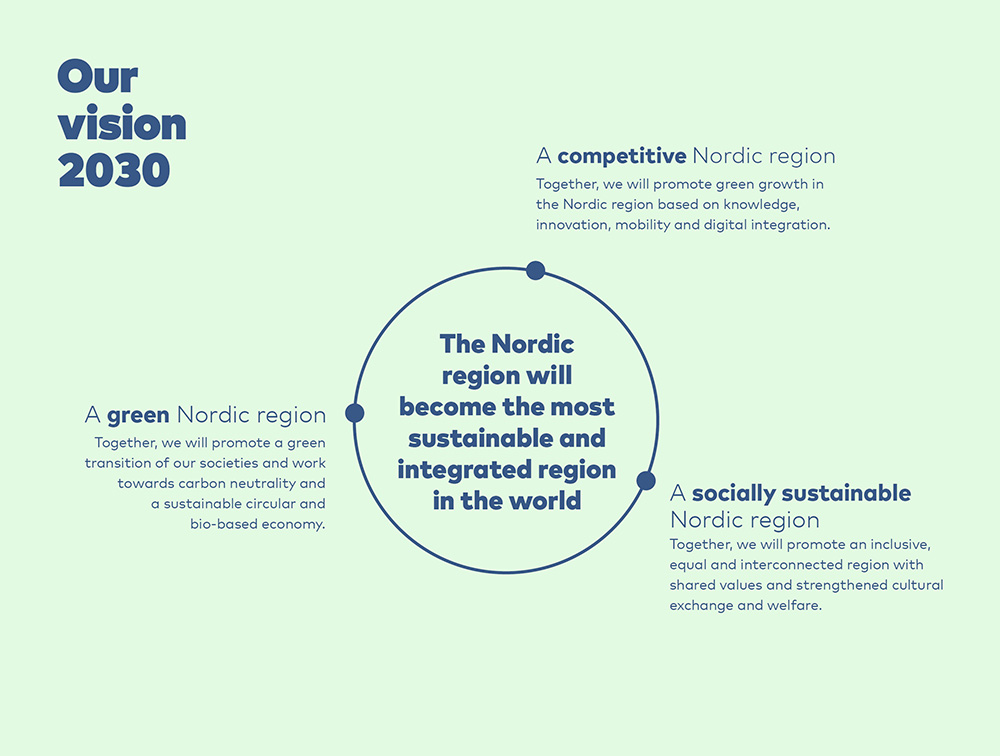
In August 2019, the Nordic prime ministers adopted a vision for the Nordic Region to be the most sustainable and integrated region in the world by the year 2030. The aim is to prioritise leveraging the strengths of the Nordic Region for the good of the climate and society. Although the Paris Agreement and Agenda 2030, on which the vision is based, show the way, the Nordic Region must proceed even more ambitiously and quickly than the rest of the world. In terms of the operational work, there are three strategic priorities for the period 2021 to 2024: a green Nordic Region, a competitive Nordic Region, and a socially sustainable Nordic Region (Figure 1).
Based on these strategic priorities, efforts commenced in the latter part of 2019 to further specify the areas in which the Nordic Council of Ministers should focus its efforts. This work involved all of the individual councils of ministers and committees of senior officials, the pan-Nordic institutions, the Nordic Council, business and industry, and civil society.
A study was carried out to get an idea of where the Nordic Region stood in relation to the vision. The Nordic Council of Ministers’ initial status report for Our Vision 2030 showed that, although the Nordic Region has come a long way towards becoming a sustainable and integrated region, it faces challenges primarily in its quest to be a green region. This corresponds with other national and international reports that have been carried out on the Nordic countries’ progress towards achieving the UN’s 17 sustainable development goals (SDGs), in that it is primarily relative to the green goals that we are facing major challenges (i.e. SDGs 12, 13, 14, and 15).
In February 2020, the Ministers for Nordic Co-operation adopted 12 objectives under the strategic priorities (Appendix 1) and a budgetary redistribution to support efforts relating to the green transition. In the autumn of the same year, the Ministers for Nordic Co-operation adopted an action plan for the Nordic Council of Ministers’ work with Our Vision 2030 for the period 2021 to 2024 based on the 12 objectives as a tool to steer, develop, and communicate the Nordic Council of Ministers’ most important activities in relation to the vision. The Ministers for Nordic Co-operation also adopted a new policy for integrating the cross-sectoral perspectives of sustainable development, gender equality, and a children’s rights and youth perspective in all activities, as well as guidelines for involving civil society in the work on Our Vision 2030.
The purpose of this report is to outline how far the Nordic Council of Ministers has come in its efforts on the action plan during the first two years. The report shall serve as the basis for any adjustments to efforts in the current action plan period and make recommendations to the Nordic Council of Ministers on how efforts to accomplish the vision can be bolstered. The report has been commissioned by the Ministers for Nordic Co-operation and drafted by the Secretariat to the Nordic Council of Ministers in the first half of 2022, before being approved by the Ministers for Nordic Co-operation in September 2022. The focus of the report is on describing the efforts and results of the Nordic Council of Ministers in this work, as well as its contribution to achieving a sustainable and integrated Nordic Region. In addition, the report reflects changes – methodological, budgetary, and organisational – that were initiated as part of the efforts to realise the vision and the Nordic prime ministers’ call for clear goals and follow-ups on results.
The period largely coincides with the COVID-19 pandemic and the subsequent war in Ukraine. As a result, many of our ambitions at the time the plan was being drawn up could not be followed through, although they remain priorities for the near future. The major challenges posed by the introduction of a new economic system have meant that, in many cases, the start of projects was delayed during 2021 and that there were insufficient resources for more extensive development work linked mainly to target and results management, and systems to support the realisation of the vision.
The report has three sections:
- Initiatives and results: This section reports on and evaluates the work linked to the 12 objectives. For each objective there is: an aim – what is to be achieved; a motive – why the objective is relevant; initiatives – what has been done and achieved; and lessons – what we’ve learnt and how we’ll proceed.
- Governance methods and tools: This section outlines and evaluates the changes the Nordic Council of Ministers has implemented in, among other things, the budget, organisation, and working methods in order to deliver on the vision.
- Recommendations: This section reports the Secretary General’s recommendations for the Nordic Council of Ministers’ continued work with the vision.
The section on initiatives and results has been drafted on the basis of an internal report on the initiatives and results delivered by the Nordic Council of Ministers, as well as on the basis of discussions in the three cross-sectoral vision groups, which have broad representation from the Secretariat and the Nordic institutions and offices. The section on governance methods and tools is based on an analysis of the effects and consequences of the budgetary redistribution measures, and on a survey that was sent out to the Secretariat, the Nordic institutions and the Nordic committees of senior officials, as well as on the ongoing dialogue in the cross-sectoral vision groups. The section on recommendations consists of the Secretary General’s conclusions based on the information in the previous sections.
The Secretariat has maintained ongoing dialogue with the Nordic Committee for Co-operation (NSK) and the Nordic expert group for sustainable development in the drafting of the mid-point evaluation. During the summer of 2022, a draft of the mid-point evaluation was sent to the Nordic committees of senior officials for consideration, while the Nordic Council and the Nordic civil society network were given the opportunity to submit an opinion on the mid-point evaluation (Appendices 3 and 4).
Nordic Council of Ministers
The Nordic Council of Ministers consists of eleven constellations of ministerial councils, as well as a council of ministers for the Ministers for Nordic Co-operation. Much of Nordic co-operation takes place through the 12 institutions and 20 co-operation bodies located in the various Nordic countries, as well as the three Nordic offices located in the Baltic countries (Appendix 2). The institutions’ activities are centred on areas such as research, innovation, regional development, culture, and welfare. There is also a considerable degree of Nordic co-operation between the various authorities, ministries, and departments in the Nordic countries.
A starting point for Nordic co-operation is that it should contribute to a Nordic advantage, in that it should add value to the co-operation between the Nordic countries, and that the result of this co-operation should benefit the Nordic countries. The Secretariat to the Nordic Council of Ministers is responsible for the day-to-day work of implementing the decisions made by the Nordic countries. The mandate for the Secretariat makes it clear that it is a tool for:
- initiating, setting in motion, and following up on political decisions;
- developing knowledge that will serve as the basis for joint solutions; and
- establishing networks in order to exchange experiences and ideas.
Initiatives and results
This section takes a closer look at the initiatives undertaken and the results delivered by the Nordic Council of Ministers between 2021 and 2024 in relation to the 12 objectives of the action plan.
The section is structured according to the 12 objectives. For each objective, we expand on the following:
- The political decision of the Ministers for Nordic Co-operation in respect of the objective and why Nordic co-operation in this field is important.
- Work undertaken by the Nordic Council of Ministers that has contributed to the achievement of the objective. This is conveyed by picking out three or four specific results, with a description of the initiatives made, as well as a summary of the lessons learnt.
In summary, the review shows that the work of the Nordic Council of Ministers contributes to, promotes, and strengthens efforts to achieve the objectives and thereby contribute to the realisation of Agenda 2030. Several concrete results relating to the 12 objectives can already be seen from the Nordic Council of Ministers’ initiatives, even though work has been underway for only a little under two years. The initiatives of the Nordic Council of Ministers add Nordic value in areas where the Nordic countries can achieve more together than on their own.
This does not mean that there is no room for improvement in efforts to ensure that we achieve the objectives and have the greatest possible impact on the vision.
It’s important that the Nordic advantage leads the way in all the work that is carried out. Initiatives can be tailored by actively anchoring the Nordic countries’ national and international work in a global context in order to identify where the Nordic Council of Ministers can make the greatest impact.
The goal of a green Nordic Region continues to pose the biggest challenge. Consequently, it is important to continue to step up efforts relating to the green transition, not only under the banner of a green Nordic Region but across all three strategic priorities. Although this area has been bolstered thanks to efforts relating to the vision, further new efforts can take time to establish.
The Nordic Council of Ministers is developing a sizeable knowledge base that is important for the transition, but concrete action is needed here and now in order to achieve the objectives. The Nordic Council of Ministers can play an important role by stimulating, scaling up, and disseminating joint Nordic solutions.
The activities of the Nordic Council of Ministers are still very fragmented, with a large number of separate projects. Going forwards, it will be important to prioritise in order to get the most out of a limited budget. There is a need to further simplify and hone our work, as well as to reduce the number of projects in order to deliver powerful results and reduce the risk of fragmentation. The focus must be on the change we want to bring about and how we can build up our efforts in order to do so.
A green Nordic Region
| 1: Carbon neutrality |
| 2: Biodiversity |
| 3: Circular and bio-based economy |
| 4: Sustainable consumption |
| 5: International co-operation on the environment and climate |
What has the Nordic Council of Ministers achieved?
Creation of a forum for the exchange of experience on the green transition in the Nordic Region
Through the project Climate Transition in the Nordic Region, the Nordic Council of Ministers has contributed to the sharing of knowledge on and dissemination of solutions for how the countries can work together with their roadmaps towards becoming carbon-neutral societies in accordance with the goal in the Paris Agreement of becoming carbon-neutral by 2050. This is part of the follow-up to the prime ministers’ declaration on Nordic carbon neutrality adopted in 2019.
The Nordic Council of Ministers has initiated closer Nordic co-operation between the business sector, civil society, politics, officials, and academia, which will help the Nordic countries with their national measures and roadmaps for becoming carbon-neutral societies. The report Nordic CEO’s view of raised climate ambitions in the Nordic countries was published in January 2022 and shows that the Nordic business leaders are calling for, among other things, tougher climate requirements for public procurement and the phasing out of subsidies for fossil fuels.
The Nordic finance ministries and related research institutions have shared their experience with fiscal policy models that integrate climate considerations into long-term budget planning in order to achieve the climate goals more cost-effectively. Nordic experiences connect into international efforts under the auspices of the OECD and the Coalition of Finance Ministers for Climate Action.
Improved knowledge and dissemination of solutions for the green transition of the energy sector
The Nordic Council of Ministers has reacted to the current geopolitical challenges in the energy sector, where the cessation of gas supplies from Russia has increased energy prices throughout Europe. Among other things, an analysis has been initiated of the Nordic countries’ situation regarding energy supply and prices. This will look at what the countries can do and the potential for stronger co-operation. The first results will be on the desks of the Nordic ministers for energy in November 2022.
Co-operation in the Nordic electricity market has been stepped up with the goal of a more rapid increase in the share of renewable energy in the Nordic electricity system. This, in turn, requires adaptations and new knowledge. On the basis of this year’s Nordic electricity market forum, the Nordic electricity market group has been bolstered in order to support the industry and the countries with analyses and knowledge development.
Stimulation of Nordic solutions for the green transition of the transport sector
The Nordic Council of Ministers has accelerated the development of electric aviation in the Nordic Region. The Nordic Network for Electric Aviation has brought together key players to jointly identify the technical and legislative hurdles that must be overcome in order to develop Nordic infrastructure for electric aviation. Nordic co-operation has also generated investments for technical development within the sector.
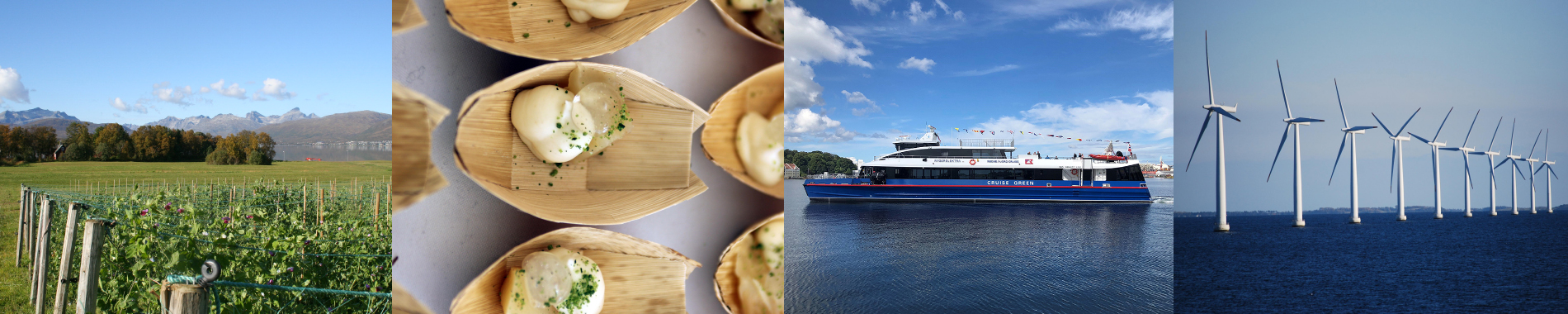
Fossil-free sea traffic is being pursued within the Nordic shipping industry and is supported by Nordic policies. The Nordic governments have promised six emission-free shipping corridors as a direct result of the COP26 climate meeting in Glasgow in 2021. The Nordic Green Ammonia Powered Ships project is paving the way for the world’s first ammonia-powered ship. The project Nordic Roadmap for the Introduction of Carbon-neutral Fuel in Shipping is accelerating the introduction of alternative green fuels in the Nordic Region and influencing negotiations at the EU and IMO level.
Nordic co-operation has promoted the transformation of road transport in the Nordic Region. Studies have been carried out which can lay the foundation for a common Nordic payment system for EV charging points. A toolbox has been developed to get the infrastructure in place for the first hydrogen-powered trucks in the Nordic Region, which is important in order for heavier transport, such as buses and trucks, to use zero-emission fuels. Efforts have been made to use existing sustainable forms of freight transport more efficiently in the Nordic Region – by road, rail, and sea.
Lessons learnt
The Nordic Council of Ministers should step up efforts to stimulate climate-friendly solutions across sectors in accordance with the extensive knowledge base developed at the Nordic level. The climate is receiving a lot of political attention at the national level and is one area where people in the region are requesting deeper Nordic co-operation. The Nordic Council of Ministers needs to ensure that the solutions developed at the Nordic level really hit the ground and are implemented in the countries.
What has the Nordic Council of Ministers achieved?
Pursuance of sustainable and resilient agriculture and forestry in the Nordic Region
NordGen has expanded the Nordic priority list for wild cultural plant species with 19 new species, including wild relatives of wheat, corn, and potatoes. These species can be used to help today’s crops overcome challenges such as climate change or for environmentally friendly agriculture.
One project pursued by NordGen has shown that peas can be grown as far north as Tromsö. This gives us hope that the Nordic Region can become more self-sufficient in alternative protein sources. The results are discussed in a research article and in the book Nordiska ärter – 50 traditionella sorter, for example.
The project Networking and Knowledge Exchange in Seed Production of Medicinal and Aromatic Plants has developed a cultivation manual for medicinal plants in the Baltic Sea area. This is contributing to the secure preservation of medicinal plants, which are an important resource for, among other things, the pharmaceutical industry, especially considering that many species within this group are under threat.
Development of knowledge about nature-based solutions and a sustainable marine environment
The Nordic countries have received good guidance on how nature-based solutions[1]Nature-based solutions refer to solutions that are inspired and supported by nature, that are cost-effective, that have environmental, social, and economic benefits, and that help to build resilience against the effects of climate change. can counteract climate change by mapping methods for sequestering carbon dioxide in the ground and sea both regionally and nationally in the Nordic Region. In addition, the Nordic countries have been given policy recommendations for how they can undertake to implement the guidelines contained in international UN biodiversity and climate conventions.
The Nordic Council of Ministers has initiated several major projects that contribute to a more sustainable marine environment in the Nordic Region. The Marine Management and Climate project is improving knowledge about how to achieve ecosystem-based management of Nordic sea areas that takes climate change and ocean acidification into account. The project The Nordic Region as a Motor in Efforts to Combat Plastic Pollution shall help to bring about a concrete reduction in the amount of plastic in the oceans, among other things by refining the methods for collecting microplastics, as well as by providing knowledge in support of the development of a new global agreement on plastic pollution. The Nordic Baltic Marine Spatial Management Tool project is contributing to the development of indicators and a knowledge base for measuring, promoting, and collaborating on a more sustainable marine environment
Footnotes
- ^ Nature-based solutions refer to solutions that are inspired and supported by nature, that are cost-effective, that have environmental, social, and economic benefits, and that help to build resilience against the effects of climate change.
Lessons learnt
The Nordic Council of Ministers should step up the co-ordination of efforts relating to biodiversity and the sustainable use of natural resources across sectors. This is an area where the Nordic countries are facing a major common challenge and an issue that is expected to be the subject of increased attention internationally in the years to come

What has the Nordic Council of Ministers achieved?
Support for corporate efforts relating to sustainability and the circular economy in the Nordic Region
Nordic Innovation has developed the Nordic Circular Economy Playbook, a tool that will help companies to transition to circular business models and develop their own plans for this. Nordic Circular Arena is a new platform that will promote knowledge-sharing and the exchange of experience related to the circular economy in the Nordic Region at the international level.
Nordic auditors’ associations have developed a joint system for sustainability reporting for small and medium-sized companies in the Nordic Region with support from Nordic co-operation. The Nordic Sustainability Reporting Standard builds on international reporting frameworks and contributes to improving green and responsible corporate reporting in the Nordic Region.
The Nordic Sustainable Construction programme is helping to make the entire Nordic construction sector more circular and sustainable. This involves, among other things, harmonising regulations and collating best practices in the Nordic countries, as well as building capacity to increase the reuse of building materials. Support has been provided to businesses by way of the hosting of training sessions in circular business models aimed at companies in the construction industry, as well as debate events on sustainable building materials and the role of architects in sustainable construction. Furthermore, support has been provided to the Nordic civil services through the creation of a platform for ongoing knowledge-sharing and the formulation of common research topics, which will better allow for the harmonisation of future regulations in the construction sector.
The Nordic Testbed Network is supporting the digital transformation of the bioeconomy in the Nordic and Baltic regions. The network serves as a cutting-edge platform on which its 21 members create digital knowledge and technology together to bolster the bioeconomy.
Development of new knowledge on how we can bring about a circular and sustainable economy in the Nordic Region
A circular economy can have major benefits in several areas. The report Low-Carbon Circular Transition in the Nordics provides insight into not only the economic potential of the circular economy but also its potential within the climate and biodiversity crisis.
Public procurement is increasingly being used as a tool to achieve political goals for sustainable development. The project Circular and Climate-friendly Procurement has organised a dialogue conference on circular furniture and published the report Climate Accounting in Public Procurement, which reports on how the Nordic countries are reducing greenhouse gas emissions through public procurement.
Sharing data about products can accelerate the circular transition in the Nordic Region. The report Data Sharing for a Circular Economy in the Nordics shows that the Nordic Region is already at the forefront of the development of digital opportunities and that, with the right incentives and underpinned by data, Nordic companies can accelerate the global transition to a circular economy.
Batteries for electric cars, solar cells, and mobile phones contain cobalt, graphite, and rare earth elements – minerals which are necessary for the green transition. The report The Nordic Supply Potential of Critical Metals and Minerals for a Green Energy Transition outlines how environmental and climate footprints can be reduced in Nordic mineral production.
The forestry and agricultural sectors are key elements in the Nordic bioeconomy and are also two of the most gender-segregated industries in the Nordic Region. However, digitalisation and the greater automation of heavy work should benefit gender equality within the sectors. The method handbook Gender and Digitalization in the Bioeconomy has provided a deeper understanding of how the gender equality perspective can be integrated within the sector.
Lessons learnt
The Nordic Council of Ministers should step up efforts relating to sustainable production and the circular economy through increased co-operation with businesses and by co-ordinating ambitious legislation at the EU level. This is an area where the Nordic Council of Ministers has the potential to have a major positive impact on the green transition in the Nordic Region and beyond.
What has the Nordic Council of Ministers achieved?
Stronger environmental, climate, and energy labels in the Nordic Region and the EU
The Swan ecolabel has been further developed to function better as a guide for choosing environmentally and climate-friendly options. This has led to new criteria linked to the climate and to the expansion of labelling to cover several product groups such as e-commerce, building products, and office buildings.
The EU energy label has been further developed to better function as a guide for choosing energy-efficient products. The Nordic working group Nordsyn has undertaken to develop more ambitious criteria and rules for the energy label. These efforts helped to make the new energy classes that were launched in 2021 more understandable for consumers, while placing more stringent requirements on producers.
The Nordic ministers responsible for food policy wrote a joint letter to the EU stating that the new European food label must be based on scientific research and not driven by commercial interests. The Nordic ministers hope that the Nordic labelling system can inspire the European one.
Helping to make recycling easier in the Nordic Region
The report Common Waste Sorting Symbols in Nordic Countries showed that there is great potential for developing packaging that is more sustainable and easier to recycle in the Nordic Region. The national waste organisations in Denmark, Finland, Sweden, and Iceland have joined forces in an association for implementing a system of common waste symbols. The project has promoted the development of a harmonised system for waste handling and the circular economy in the Nordic Region and beyond. These efforts have attracted significant interest from, among others, the Baltic countries, the EU, China, South Africa, and Brazil.
A comprehensive approach to building up knowledge and expertise on sustainable lifestyles
The programme Sustainable Lifestyles in the Nordic Region has built up knowledge and expertise on how we can make it easier to live sustainably in the Nordic Region. A conference on the future of teaching as a profession has been arranged with the aim of supporting primary school teaching on sustainable development. A roadmap for green cultural experiences has been developed with the aim of improving knowledge about how to organise sustainable cultural events. A debate event on the food industry and antibiotic resistance was organised during Stockholm +50. A report on gender equality and sustainable lifestyles has been published with the aim of improving and disseminating knowledge about gender differences in consumption and lifestyles.
Lessons learnt
The Nordic Council of Ministers should step up efforts relating to sustainable consumption, such as by strengthening existing initiatives or starting new ones. This ambitious objective has been formulated by pointing out that the Nordic Council of Ministers is an important actor when it comes to enabling Nordic consumers to live sustainably. Joint Nordic policy in this area can create the conditions for a rapid transition to sustainable consumption.
What has the Nordic Council of Ministers achieved?
Raised the bar in international co-operation on the environment and climate
Nordic co-operation has contributed to the success of negotiations on a new agreement on plastics under UNEA 5.2 when, in March 2022, the UN Environment Assembly made the historic decision to initiate negotiations on a global agreement on plastic pollution.
Nordic reports and analyses have served as a knowledge base for negotiations on several global agreements in the field of the environment and climate, including international sustainability criteria for plastic products. The Nordic Region is also making recommendations to the UN Convention on Biological Diversity and the UN Climate Convention, as well as for efforts relating to the implementation of the Paris Agreement.
With the declaration A Green and Gender-equal Nordic Region, the Nordic Council of Ministers has also stepped up Nordic leadership in gender equality in climate action, not only in the Nordic sphere, but also on international platforms such as CSW66 and COP27 – the UN summits for gender equality and climate.
Stronger voice for civil society in international environment and climate negotiations
The Nordic pavilion at the UN climate summits is one of the strongest international platforms for giving visibility to Nordic positions and solutions. Here, Nordic researchers, politicians, businesses, youth representatives and non-governmental organisations engage in dialogue with international decision-makers and opinion-shapers.
With the support of Nordic co-operation, environmentally engaged young people from all over the Nordic Region have organised themselves as the Nordic Youth Biodiversity Network. More than 2,000 young people in the Nordic Region have formulated their demands for negotiations on a global agreement on biodiversity in the form of the Nordic Youth Position Paper on Biodiversity. Several of the young people’s demands are reflected in a declaration made by the Nordic ministers for the environment and climate on the conclusion of the global agreement on biodiversity in May 2022.
The Nordic Council of Ministers was an important partner in terms of both financial and political support for greater youth engagement before and during Stockholm +50, such as by way of a meeting between Nordic youth representatives and Nordic ministers for the environment and climate where the recommendations in the Nordic-Baltic Policy Paper were presented and discussed.
Co-ordinated and closer co-operation at the EU level and with neighbouring areas
The Nordic countries have spoken with a strong, unified voice in efforts relating to the environment, climate, and energy at the EU/EEA level. This has related to influencing the European Commission’s requirements for ecodesign and energy labelling, EU directives linked to the European Green Deal, the Fit for 55 package, and the EU’s chemicals regulations (e.g. REACH, CLP, BPR, and PPPR). Having influence at the EU level, which benefits consumers throughout Europe, has a significantly greater effect than achieving results only within the Nordic Region.
The Baltic Carbon Forum was held in October 2021 and 2022 with the aim of strengthening Nordic-Baltic co-operation on carbon dioxide absorption and storage by bringing together experts and decision-makers from across the region.
Lessons learnt
The Nordic Council of Ministers should clarify its focus and direction in international work amidst changing conditions. The Nordic Council of Ministers is a platform for EU and international collaboration to promote the high level of ambition and global impact in environmental and climate efforts. In order to step up these efforts, a broader strategy is needed that clearly specifies how Nordic green solutions can be promoted in the rest of the world.

A competitive Nordic Region
| 6: Knowledge and innovation |
| 7: Well-functioning labour markets |
| 8: Digitalisation and education |
What has the Nordic Council of Ministers achieved?
Development of knowledge on the transition to a green, competitive, and socially sustainable Nordic Region
NordForsk has funded research and research infrastructure in several sectors. So far 136 projects have been carried out, resulting in 2,320 publications and 142 instances of political influence. The overall impact of its efforts in the period is described in the NordForsk Impact Report 2022.
The Nordic-Baltic 5G Monitoring tool is an analysis tool that will follow the rollout of 5G in the region. The tool addresses common challenges and opportunities and bolsters innovation in the field. 5G technology is an important component of the next phase of digital development and will help to stimulate the development of new products and services, as well as the development of new solutions for social and climate-related challenges. This is part of the follow-up to the prime ministers’ declaration on the development of 5G in the region, which was adopted in 2018.
Improved opportunities for companies to come up with new innovations and disseminate existing ones
Nordic Innovation is working to improve opportunities for companies to come up with new innovations and disseminate existing ones. The AI & Data programme is making government data more easily accessible to Nordic companies that develop digital services featuring artificial intelligence. The Nordic Smart Connectivity programme is making it easier for Nordic companies in the field of mobility to share data with each other in order to optimise their operations and contribute to a more profitable and climate-friendly mobility sector.
The Nordic Smart Government and Business project is helping to improve digital integration in the region. The aim is to make financial data available to and usable by small and medium-sized companies across the Nordic Region. The result is that small and medium-sized companies are able to use things like e-invoices and e-orders throughout the Nordic countries.
Profiling the Nordic Region internationally as a knowledge-rich and innovative region
The cultural initiative Nordic Bridges is presenting the works of Nordic artists and cultural practitioners at 22 festivals, theatres, museums, and other cultural institutions in twelve cities across Canada over the course of a year. A total of around 675 activities are planned. The initiative will help to profile Nordic culture and the Nordic Region as innovative and creative, which is in turn expected to raise interest in the Nordic Region in other areas of society and thereby boost Nordic competitiveness. The initiative is also contributing to Nordic-Canadian political exchanges on things such as green solutions in creative industries and the prevention of misinformation on the internet.
The funding programme for Nordic embassies awards funding for promoting Nordic solutions, values, and knowledge related to sustainable development around the world. The programme is helping to profile the Nordic Region as knowledge-rich and innovative, to inspire the countries in question by way of Nordic examples, and to bolster the co-operation of Nordic representations in countries outside the Nordic Region.
Lessons learnt
The Nordic Council of Ministers should sharpen its focus on stimulating green solutions, such as by further supporting the involvement of and co-operation with business in efforts concerning the green transition. This is an area where the Nordic Council of Ministers is already pursuing a number of key initiatives and where there is the potential to expand efforts to make a significant impact in the Nordic Region.

What has the Nordic Council of Ministers achieved?
Promotion of the freedom of movement and exchanges between students, employees, and companies in the Nordic countries
Info Norden has answered 5,000 questions from people in the Nordic Region about how they can work, study, or run a business in another Nordic country. The three border-region information services Grensetjänsten Norge-Sverige, Gränstjänst Finland-Sverige-Norge, and Øresunddirekt, which are partly funded by the Nordic Council of Ministers, have answered questions from 46,770 people about cross-border work, study, or business.
In 2021 Nordjobb, the Nordic mobility programme for young workers, placed 434 young people in seasonal work in another Nordic country, and aim to reach up to 760 young people in 2022. The Nordic-Baltic Mobility Programme for Culture has helped to promote the mobility of artists and cultural practitioners in the region. The focus of the programme is on stepping up the exchange of knowledge and contacts, as well as the presence of and interest in Nordic and Baltic art and culture. In the same way, the Sami Council’s culture funding improves cross-border mobility and collaboration in Sápmi.
The Nordic countries must recognise each other’s education automatically and without undue delay so that people in the Nordic Region who want to study in a neighbouring country can easily apply for higher education there. This is the essence of a tightening of the Reykjavik Declaration, which came into force in May 2022. In 2021/22, a joint initiative between the field of education and the labour market has been pursued in order to overcome selected industry-regulated barriers to freedom of movement.
The Freedom of Movement Council, which seeks to break down barriers that hinder individuals’ freedom of movement and companies’ opportunities to work across borders and between the Nordic countries, has helped to remove eight obstacles to freedom of movement in the Nordic Region and to label four obstacles as non-resolvable. The Nordic freedom of movement database contains more than a hundred obstacles to freedom of movement, 38 of which are a priority in the Freedom of Movement Council.
Key role in lifting obstacles to freedom of movement that arose in connection with national restrictions during the coronavirus pandemic
In close co-operation with Info Norden and the three border-region information services, the Freedom of Movement Council has focused on the disruptions caused by national travel restrictions and measures to reduce the spread of COVID-19. Its efforts have resulted in 22 compilations identifying more than 121 disruptions. The compilations have been used to inform decision-makers and authorities about the specific problems that the pandemic created for freedom of movement in the Nordic Region. An example is the project New Post-COVID Labour Markets in Relation to the Nordic Tax Agreement, which is based on the increase in people working from home in relation to the Nordic tax agreement.
Development of knowledge and policy tools for the current and future Nordic labour market
Knowledge has been developed on how we can safeguard a well-functioning future labour market in the Nordic Region. The results from the project The Future of Working Life have been important in the development of national policy in the Nordic countries and in international efforts, including in collaboration with the ILO.
The Nordic Resilience project, which was started in collaboration with the OECD, provides information about the impact of the coronavirus pandemic and suggestions on how we can step up crisis preparedness in the Nordic labour market. The analysis and suggestions will serve as the basis for a ministerial discussion in November 2022.
The Nordic regional ministers have commenced a strong partnership on remote working and multilocality in order to take a closer look at how this can bolster the attractiveness of towns, villages, and regions in the Nordic Region. The report Local and Regional Experiences of Remote Work and Multilocality helps to improve our understanding of how changes in moving and commuting patterns coupled with increased remote working are affecting Nordic municipalities and regions.
The Nordic Institute for Advanced Training in Occupational Health (NIVA) has developed and held digital courses, conferences, and webinars for pan-Nordic further education in the field of the work environment. Thanks to their digital format, which was developed as a result of the coronavirus pandemic, it has been possible to reach more people and to triple the participation rate. The Nordic Network for Adult Learning (NVL) has facilitated the exchange of experience and expertise in and for the labour market during the coronavirus pandemic, as well as the transition to a greener labour market.
Lessons learnt
The Nordic Council of Ministers should improve the freedom of movement of people in the Nordic Region across Nordic borders by increasing the number of participants in exchange programmes for education, culture, and employment, for example. The Nordic Council of Ministers already plays an important role here, despite the challenges posed by the coronavirus pandemic, and there is a clear interest in increasing participation in exchange programmes.

What has the Nordic Council of Ministers achieved?
Increased investment for digital services to be used throughout the Nordic Region
The Nordic Council of Ministers is working on a long-term basis to ensure that all digital services that are developed nationally can also be used across borders. Within the framework of the programme Cross Border Digital Services, projects are being pursued to simplify cross-border communication with the public sector for those who live and run businesses in the Nordic and Baltic countries. The digitalisation authorities of the Nordic and Baltic countries co-operate within the framework of The Nordic-Baltic eID Project (NOBID) to, among other things, have their national eID solutions approved at the EU level, which would then make them available across national borders.
Promotion of exchanges across the Nordic Region in the field of education
The Nordplus programme promotes Nordic co-operation and exchanges in the field of education. Every year around 2,000 educational organisations are involved and around 9,000 mobility activities receive funding (pre-pandemic). Such activities include class exchanges and teacher exchanges between schools, as well as student and teacher exchanges between vocational schools, colleges, and adult education and free education institutions. An evaluation has shown that this collaboration has helped participants to develop their skills and bolstered innovation and quality among the participating educational institutions. A total of 196 projects at all education levels have received funding from Nordplus under the theme “the green transition”. One example is Global Teaching for Sustainable Society (GLOSS), which is a collaboration between 13 Nordic colleges and universities. Within Nordplus Junior, in 2022 alone funding was granted to 47 projects with the special theme of “an ecologically sustainable future”.
The Nordic Network for Adult Learning (NVL) leverages its underlying network for sustainable development in its innovative work involving motivation, pedagogy, and method development for a sustainable future. The network develops, disseminates, and implements knowledge in support of local communities and citizens in their work with sustainability. In late 2021, the network launched a book to inspire efforts relating to the global sustainable development goals in different areas of adult education, and it is continuing to collect and share inspirational examples throughout 2022.
Lessons learnt
The Nordic Council of Ministers should step up efforts on integration – that is, to tie the Nordic countries closer together – such as by creating the conditions for cross-border digital solutions and exchanges for a more integrated Nordic Region. The Nordic Council of Ministers should review the formulation of this objective, as it is unclear and strays considerably into the other objectives under “a competitive Nordic Region”.

A socially sustainable Nordic Region
| 9: Health and welfare |
| 10: Inclusive transformation |
| 11: Civil society and children and young people |
| 12: Cohesion |

What has the Nordic Council of Ministers achieved?
Boosted efforts to promote mental health
One area of focus has been the improvement of knowledge about social isolation and loneliness as a result of the coronavirus pandemic. Several events have been organised to discuss and disseminate knowledge about mental health. These include a summit on the theme of mental health in November 2021, which brought together politicians, authorities, researchers, and civil society organisations.
A knowledge base has been established for good solutions born out of the consequences of COVID-19, including a project on the opportunities of children and young people to participate and develop after the pandemic. NordForsk has a call worth roughly NOK 80 million for a research project on the long-term consequences of the COVID-19 pandemic on children and young people’s health and welfare. The call will fund a number of projects, with participants from at least three Nordic countries in each project.
Knowledge development for equal health
In the spring of 2022, a report was published on health expertise as a concept and the consequences of a lack of health expertise for both individuals and society, especially immigrants and immigrant women in the risk zone. A Nordic network on health expertise has been established in connection with the project. Knowledge-sharing at the departmental level is also supported, such as through the Nordic public health arena. Indicators for active and healthy ageing have also been mapped, and heterogeneity in the ageing population has been analysed.
A political steering document for the LGBTI area has been drawn up following dialogue and collaboration with civil society actors. A Nordic LGBTI fund was established in 2021 to promote Nordic co-operation in the LGBTI area. During the first year, it supported projects on rights and living conditions for the LGBTI population and on strengthening the Sami LGBTI organisation.
Enhanced efforts for health crisis preparedness to manage future crises
The Nordic countries have agreed to step up Nordic health crisis preparedness in order to stand stronger together in the face of future crises, including through collaboration on crisis management, as well as production preparedness in terms of medicines and security of supply. The Svalbard Group, the Nordic group for health preparedness, has established a burn injury mechanism and is now developing a mechanism for understanding the situation to provide better knowledge and support the exchange of experience in connection with pandemics. Furthermore, a Nordic network for infection control and hygiene in the care sector has been started, as well as a new collaboration on medicines for children, which will result in a report with joint recommendations. This is in line with the 2021 declaration by the Nordic prime ministers to step up co-operation on security of supply.
Knowledge and data for better social care and healthcare services throughout the Nordic Region
The report Essential Rural Services in the Nordic Region takes a closer look at access to public and private social care and healthcare services in rural areas in the Nordic Region. The analysis investigated the services’ importance for the attractiveness of rural areas and for security and trust among residents in these areas. The regional ministers decided to involve young people in the ongoing discussions on public and private social care and healthcare services in rural areas in the Nordic Region to find out what would encourage younger generations to live and work in these areas.
The health authorities of the Nordic countries are working together on the common challenges that exist in order to ensure secure access to Nordic health data for the countries’ authorities, researchers, and businesses. The Nordic Commons project will test and develop solutions that will enable the sharing of health data across borders. This will give researchers, businesses, and authorities a unique opportunity to further develop the Nordic countries’ healthcare systems and provide good health services for the population.
Lessons learnt
The Nordic Council of Ministers should clarify its role in connection with crisis preparedness and continue the work that has been started, including studies on the consequences of the pandemic on children and young people’s mental health. This is a new area where the Nordic Council of Ministers needs to take its time to learn from the experiences of the pandemic and look forwards.

What has the Nordic Council of Ministers achieved?
Development of shared knowledge for a fair green transition
The project Not “Just” a Green Transition has published two reports exploring the concept of a fair green transition and how policies for the green transition affect vulnerable groups in society. These groups include children and young people, people with disabilities, the elderly, and people who may be at risk of losing their job as a consequence of the transition. This and further knowledge bases, as well as a large Nordic survey, will result in proposals for policy solutions that can reduce the potential negative consequences of the green transition.
Co-operation with the Baltic countries on digital inclusion
The report Monitoring Digital Inclusion in the Nordic-Baltic region from January 2022 states that the region’s countries are among the most digitalised in the world, that all the countries have groups that are at risk of being excluded from the digital transition, and that there is currently no comprehensive picture of digital inclusion in the Nordic-Baltic region sufficient for the basis of decision-making. Efforts related to digital inclusion are a priority among the Nordic-Baltic ministers and will help to improve knowledge about problems and measures linked to groups that are at risk of being excluded from digitalisation.
Enhanced efforts to develop remote healthcare and social care
The Integrated Healthcare and Care (iHAC) project is helping to improve knowledge about how remote solutions in healthcare and social care can benefit the population and local and regional welfare organisations, primarily in sparsely populated areas. Within the framework of the project, efforts are underway to concretely demonstrate how solutions for remote healthcare and social care can be invented, implemented, further developed, and accepted in healthcare and social care and contribute to a sustainable society.
Lessons learnt
The Nordic prime ministers have, on several occasions, stressed the importance of achieving a socially sustainable green transition, and it is expected that several national initiatives will be implemented in this area in the coming years. This is a new area of Nordic co-operation with great potential for delivering a Nordic advantage. The Nordic Council of Ministers should step up its efforts to involve every person in the Nordic Region in the green transition, such as by bolstering existing initiatives.

What has the Nordic Council of Ministers achieved?
Increased involvement of and support for civil society in Nordic co-operation
Nordic Civ, the Nordic civil society network for Our Vision 2030, aims to make the voice of civil society more audible in Nordic co-operation. The network was set up by the Ministers for Nordic Co-operation in June 2021 and consists of 40 representatives from national and pan-Nordic civil society organisations. The network has been given the opportunity to comment on various governing documents through public consultations, discussion meetings, and even this mid-point evaluation.
The Nordic Summit for Civil Society on Social Sustainability was held in November 2021 in order to share knowledge and discuss the role of civil society in the realisation of a socially sustainable Nordic Region. The summit was attended by 150 representatives from civil society organisations and a large number of Nordic ministers, politicians, and decision-makers. The summit was based on a Nordic survey of the topic and saw the proposal of a number of recommendations for work going forwards.
Nordic funding programmes for civil society are helping to strengthen co-operation within civil society in the Nordic countries. Funding is granted to all types of civil society organisations through the Demos funding programme, to child and youth organisations for those up to the age of 30 through the Norden 0–30 funding programme, and to disability organisations through the Nordic funding programme for disability issues.
Improved knowledge and skills relating to the languages and culture of neighbouring Nordic countries
In order to support Sami culture and unity across national borders in the Nordic Region, the cultural sector supports the civil society organisations Sami Artist Council and Sami Council. Thanks to things such as their cultural funding programme, art and culture projects are established that help to revitalise and preserve Sami language, cultural heritage, and the special knowledge of the Sami community linked to the sustainable use of natural resources. Two conferences have been arranged on the protection of traditional Sami knowledge and intangible Sami cultural heritage, which are helping to strengthen Nordic networks with regard to these issues among Sami cultural practitioners and experts and at the policy level.
In 2022, 24 courses in Nordic languages were conducted for university students, student teachers, and teachers. A further 32 courses are planned for 2022, for a total of around 1,100 to 1,400 participants over the two years. The participants have improved their knowledge and understanding of the other Nordic languages, as well as gaining the tools and motivation they need to pass this on to their own students and others.
The understanding of Nordic languages and Nordic culture among children and young people is being supported by way of several Nordic initiatives. The Nordic Bookworm is an initiative that promotes reading and aims to lower the threshold for adults to read picture books from other Nordic countries using pedagogical support material. Volt is a language and culture programme that supports projects that raise interest in the art, culture, and languages of other Nordic countries and areas for children and young people up to the age of 25. The Federation of the Norden Associations is receiving funding to operate the Norden i skolan web portal, which is aimed at students and teachers in the Nordic Region. In 2021, Norden i skolan launched two new educational packages for upper secondary schools consisting of four topics and four short films.
Lessons learnt
The Nordic Council of Ministers should develop initiatives to give civil society a louder voice and greater participation in Nordic co-operation, as well as increase understanding of the languages and cultures of neighbouring countries. It is essential that Nordic co-operation involves civil society to ensure transparency and relevance. Furthermore, this is vital for the improvement of language skills, given that surveys show a downward trend in this regard.

What has the Nordic Council of Ministers achieved?
Funding for the creation and dissemination of Nordic art and culture
Nordic funding programmes for art and culture are contributing to the development, production, dissemination, and availability of high-quality and relevant Nordic, Baltic, and international cultural and art projects. The Culture and Art Programme has granted funding to 100 projects of high artistic and cultural quality that promote diversity and sustainability in the Nordic Region. Nordisk Film & TV Fond has given funding to 154 Nordic audiovisual projects. Nordic funding for translation has enabled quality Nordic literature to be read in other Nordic languages than the original. The Nordic Council’s culture prizes (that is, the literature prize, the children and young people’s literature prize, the music prize, and the film prize) are awarded each year to promote and raise awareness of high-quality Nordic art and culture.
Fostering knowledge on how to strengthen the field of culture and the media in the Nordic Region
Nordicom and Kulturanalys Norden are centres for knowledge, research, analysis, and comparable statistics in the field of culture and the media. Among other things, the reports Covid-19-pandemins effekter på kultursektorn i de nordiska länderna (“The impact of the COVID-19 pandemic on the cultural sector in the Nordic countries”) and Konsten och kulturens frihet i Norden (“The freedom of art and culture in the Nordic Region”) were published in April 2021 and March 2022 respectively and have since served as a basis for developing national and Nordic policies. Furthermore, a report will be published in the autumn of 2022 on the influence of tech giants on the Nordic countries’ conditions for pursuing news journalism. As a complement to this, in the summer of 2022 the Nordic Council of Ministers established a Nordic think tank on the influence of tech giants on democratic discourse.
Fostering new knowledge on how we can increase integration among refugees and immigrants in the Nordic Region
The Nordic Clearing Centre serves as a knowledge portal for Nordic experiences of and knowledge about integration and inclusion. The portal is designed for authorities and civil society stakeholders. It had a total of 19,806 unique visitors in 2021. Among other things, the portal collates news and statistics on the Nordic countries’ reception of refugees from Ukraine.
The Nordic Migrant Expert Forum has been set up to improve the involvement of the target group in the development of the Nordic integration programme. The forum consists of 16 experts in gender equality, democracy, and inclusion who have all migrated to a Nordic country.
Efforts have been made to strengthen democracy, inclusion, and cohesion, with an emphasis on the education sector. Nordic school pilots have been conducted with the aim of developing a democratic operational culture in schools through collaboration with teacher training programmes, in addition to a conference on freedom of expression and the understanding of democracy in education. These efforts will help make the Nordic education sector better placed to tackle societal challenges using democratic means.
Lessons learnt
The Nordic Council of Ministers should continue to strengthen cohesion in the Nordic Region, such as by enhancing its focus on democratic opportunities and rights. Current geopolitical conditions make this a highly relevant area, one where the Nordic Region has an important role to play in bolstering democratic development.
Governance methods and tools
This section provides a description and evaluation of the governance methods and tools used so far in the Nordic Council of Ministers’ work with the vision and sheds light on the changes that it needs to make in order to deliver on the vision.
The section is structured into three areas as follows:
- Governance of objectives and results: implementation of the vision objectives throughout the Nordic Council of Ministers’ operations and enhanced governance of results and their impact.
- Budgetary governance: the budget as a tool for implementing Our Vision 2030.
- Organisational governance: organisational changes that are undertaken to support the implementation of the vision.
In summary, the review shows that, although the governance methods and tools used by the Secretariat are steering the organisation’s operations towards making a better contribution to the vision and the 12 objectives of the action plan, there is a great need to hone these further in order to deliver better results.
The action plan has had an impact as a cohesive force in the Nordic Council of Ministers’ activities through its use as an umbrella document to focus the entire organisation on the 12 objectives. The redistribution of the budget has provided a better balance between the three strategic priorities by, above all, strengthening the strategic priority of a green Nordic Region. Following a review of the organisation, the Secretariat can better support efforts relating to the vision.
There is a need for the continued specification of what type of governing document the action plan is, especially in relation to the sectors’ co-operation programmes. There is a need to develop the governance methods and tools. In the next action plan, the objectives need to be even more clear, concrete, and measurable. The organisation must, to a greater extent, promote efforts across sectors and areas and, to a greater extent, anchor efforts relating to the vision in the Nordic Council, in civil society, and among other stakeholders.
Governance of objectives and results
The objectives of the vision govern all activities
Since the vision was adopted, the Secretariat to the Nordic Council of Ministers has strived to ensure that the action plan for the period 2021 to 2024 for Our Vision 2030 is reflected in all of the Nordic Council of Ministers’ operations. This has involved a review of all governing and supporting documents. A clear hierarchy and precision in the governing instruments are a prerequisite for the vision to have a horizontal impact on the work of the Nordic Council of Ministers. The action plan is the overall governing document, followed by the co-operation programmes for the councils of ministers and the presidency programme.
The action plan has gained traction as a cohesive force in the Nordic Council of Ministers by way of the entire organisation being committed to the three strategic priorities and 12 objectives. It is clear, however, that the impact of the action plan has not been equal in all sectors. Consequently, it is important that efforts relating to internal anchoring continue.
The co-operation programmes, which are the councils of ministers’ programme statements for the next three to four years, must seek to describe how the sector is expected to work towards achieving the vision. A review of current co-operation programmes shows that the vision is linked to in very different ways. Some sectors concretise and operationalise the 12 objectives for their own sector. Others link their own focus areas to the three strategic priorities without relating to the 12 objectives. And some lack a connection to the vision completely. Certain co-operation programmes were drafted before the vision was adopted and so have not yet been adapted to the vision. Clearer co-ordination and anchoring are required to ensure that all councils of ministers are working on a goal-oriented basis towards delivering the vision and that attention is being paid to what is underway in other sectors to ensure synergies and avoid duplication. It is important to establish a holistic approach to efforts relating to the vision in order to more easily prioritise initiatives and identify what additional efforts are required.
The presidency programme, which is the presiding country’s programme statement on the work for the year of the presidency, must seek to describe how efforts relating to the vision will be politically prioritised and carried forwards. The presidency programmes for 2021 and 2022 have been closely linked to the vision’s three strategic priorities, but not so much to the 12 objectives. There is, however, potential for including clearer political priorities in presidency programmes, for example by raising two or three objectives in the action plan that will be the subject of particular focus across sectors in the Nordic Council of Ministers during the presidency year, as well as potential for describing the plans for implementing these during the year.
Grant letters to the Nordic institutions, which regulate the funding for and duties of the Nordic institutions, have been revised so that they clearly relate to the vision. In the grant letters, the duties are formulated based on the needs of the action plan while the guidelines for project selection are based on delivering a Nordic advantage and Nordic added value in relation to the vision. There is a need to develop this according to the logic of the governance of objectives and results, where the task is to deliver a politically pre-determined result and impact, but designing projects to best achieve this is left to the practitioner.
Overall, governing documents require a uniform structure and orientation to ensure that the vision and action plan acts as the basis for all activities under the auspices of the Nordic Council of Ministers. There is still room for improvement to ensure that the entire organisation works with the vision in a targeted manner.
Enhanced methodology for efforts relating to the governance of objectives and results
In order to respond to the prime ministers’ desire for clear objectives and monitoring of results, the ability of the Nordic Council of Ministers to describe and measure the impact of initiatives needs to be developed. The Nordic Council of Ministers must start working more closely with the governance of objectives and results, focusing on the change we want to bring about and how we can build up our efforts in order to do so.
Although this has not been an integral part of the operation so far, the Secretariat has started work to improve understanding of what this involves and what is required for the whole operation to work pursuant to this going forwards. The preparation of the mid-point evaluation has been a learning process for the organisation with regard to the governance of objectives and results. A skills development session on the governance of objectives and results was held at the Secretariat in the spring of 2022.
The action plan, as the overarching governing document for the Nordic Council of Ministers, has stepped up governance of objectives and results by applying the same 12 objectives throughout the organisation. However, there is also a need to continue anchoring the vision and action plan throughout the organisation. It is important that the vision pervades all of the Nordic Council of Ministers’ activities, from governing documents and case reports to grant letters and project descriptions, among other things.
The governance of objectives and results should become an integral part of the development and implementation of the next action plan. Although the current action plan contains both objectives and a description of specific activities, the next action plan should be based more heavily on the logic of the governance of objectives and results and establish more clearly the impact and results you are striving to achieve. In other words, a clear political mandate is required for the work, and an objective should be politically formulated for the impact one wants to achieve by way of Nordic co-operation.
The vision addresses complex issues, and the Nordic Council of Ministers is one of the many pieces in the larger ecosystem puzzle. The objectives are therefore formulated as the Nordic Council of Ministers contributing to, promoting, or working towards them. The objectives are broad and depend on the Nordic Council of Ministers working together with many other stakeholders to be achieved. However, several of the objectives in the current action plan are vaguely formulated and have significant overlap. To ensure that we deliver even better results and have a greater impact in our efforts to achieve the vision going forwards, we need to focus more clearly on the objectives so that they can serve as a clearer tool for prioritising.
Although the action plan requires long-term goals and commitments, this does not reduce the need for the Nordic Council of Ministers to continue assessing the relevance of the objectives and how we can best contribute. In the initial status report produced in 2021 for Our Vision 2030, the greatest challenges and opportunities were found in the strategic priority of a green Nordic Region. In the current action plan, the Nordic Council of Ministers has allocated additional resources to efforts relating to the environment and climate, although data must be continually updated in order to steer activities so as to generate the greatest Nordic advantage.
Budgetary governance
Long-term perspective and redistribution to step up efforts relating to a green Nordic Region
In order to establish predictability in efforts relating to the action plan, in February 2020 the Ministers for Nordic Co-operation adopted four-year indicative frameworks for the sectors’ budgets for the period 2021 to 2024. Framework distribution decisions were made on the basis of the sectors’ own input into efforts relating to the vision and in accordance with dialogue with the Nordic Council.
The four-year frameworks require a redistribution of nearly one-sixth of the budget, corresponding to DKK 170 million, primarily from education and culture to initiatives for the environment and climate. This is in response to the prime ministers’ call to accord the environment and climate the highest priority by equalising the distribution of the funds allocated to the three strategic priorities, where “a green Nordic Region” has been under-prioritised. The redistribution will take place in stages and be completed by 2024. Efforts relating to the green transition will see an additional DKK 100 million in the period 2021 to 2024.
| (DKK million, 2020 levels) | 2020 | 2021 | 2022 | 2023 | 2024 |
| Nordic Council of Ministers for Nordic Co-operation | 251,625 | 227,445 | 220,320 | 215,195 | 203,070 |
| Nordic Council of Ministers for Digitalisation | 15,458 | 15,926 | 17,051 | 18,176 | 19,301 |
| Nordic Council of Ministers for Education and Research | 224,723 | 211,666 | 204,416 | 197,166 | 189,916 |
| Nordic Council of Ministers for Health and Social Affairs | 42,331 | 40,737 | 40,237 | 39,737 | 39,237 |
| Nordic Council of Ministers for Culture | 180,255 | 161,858 | 154,608 | 147,358 | 140,108 |
| Nordic Council of Ministers for Fisheries, Aquaculture, Agriculture, Food and Forestry | 43,926 | 44,841 | 46,591 | 47,341 | 49,091 |
| Nordic Council of Ministers for Gender Equality and LGBTI | 11,671 | 11,369 | 11,369 | 11,369 | 11,369 |
| Nordic Council of Ministers for Sustainable Growth (Business and Industry) | 86,241 | 88,313 | 91,313 | 94,313 | 98,313 |
| Nordic Council of Ministers for Sustainable Growth (Energy) | 12,832 | 16,000 | 19,000 | 22,000 | 26,000 |
| Nordic Council of Ministers for Sustainable Growth (Regional) | 32,848 | 32,499 | 32,999 | 33,499 | 33,999 |
| Nordic Council of Ministers for the Environment and Climate | 47,555 | 59,776 | 73,026 | 85,276 | 101,526 |
| Nordic Council of Ministers for Labour | 15,223 | 14,330 | 13,830 | 13,330 | 12,830 |
| Nordic Council of Ministers for Finance | 1,634 | 1,592 | 1,592 | 1,592 | 1,592 |
| Nordic Council of Ministers for Justice Affairs | 1,225 | 1,193 | 1,193 | 1,193 | 1,193 |
| Reserve pool | 40,000 | 40,000 | 40,000 | 40,000 | |
| Total | 967,547 | 967,547 | 967,547 | 967,547 | 967,547 |
Impact and consequences of changes to the budget
The reprioritisation involves an increase primarily in the budgets for the Nordic Council of Ministers for the Environment and Climate, Sustainable Growth (energy and business and industry), Digitalisation, and Fisheries, Aquaculture, Agriculture, Food and Forestry (Table 1). There is a reduction primarily in the budgets for the Nordic Council of Ministers for Nordic Co-operation, Education and Research, and Culture. In relation to the Nordic budget as a whole, smaller redistributions are also being made for the Nordic Council of Ministers for Health and Social Affairs and Labour.
The budget for 2023, including the budget for administration, is estimated to be relatively evenly distributed between the three strategic priorities, with 38 percent allocated to a green Nordic Region, 28 percent to a competitive Nordic Region, and 34 percent to a socially sustainable Nordic Region (Figure 1). It should be noted that the distribution is an estimate made sector by sector in the Secretariat to the Nordic Council of Ministers according to an assessment of how each sector’s various budget items contribute to each objective in the vision in the budget proposal for 2023. The estimate should be seen only as an indicator of the real distribution of the budget for the three strategic priorities.
The redistribution of the budget has made it possible to invest more, primarily in the green transition. For example, efforts to promote solutions for green transport, sustainable energy, and construction are being stepped up. Increased investment in a green Nordic Region has led to concrete measures and positive results, including initiatives to reduce emissions from shipping in the Nordic Region. Investments in the green transition are being made throughout the organisation and not just within the Nordic Council of Ministers for the Environment and Climate. This shows that the prime ministers’ call to give the environment and climate the highest priority has been carried through the various councils of ministers. This must be adhered to going forwards as well, since the greatest challenges will continue to be faced in achieving the strategic priority of being a green Nordic Region. As previously mentioned, the initial status report for Our Vision 2030 indicated that we face significant challenges in the fight against climate change, the loss of biodiversity, and in sustainable consumption and production.
The budget redistribution has consequences primarily for the Nordic Councils of Ministers for Education and Research and for Culture, which will see the greatest reductions to their budgets. However, they remain the largest councils of ministers in terms of budget, which enables major initiatives and programmes in the fields of culture and education to be pursued, which contributes to a competitive Nordic Region and a socially sustainable Nordic Region.[1]It should also be noted that an individual sector framework does not reflect the sum of the efforts made in one area. In addition to the dedicated resources for the education and culture sectors, pan-Nordic initiatives in other areas also help to strengthen language comprehension and mutual knowledge about the Nordic countries. The redistribution of the budget has led to a need to prioritise and thereby phase out the funding of certain activities in the period 2021 to 2024. It should be noted, however, that the budget compromises with the Nordic Council in 2022 and 2023 have meant that the Nordic Councils of Ministers for Education and Research and for Culture have received additional allocations beyond the original framework allocation.
The redistribution between the councils of ministers is compensated for to some extent by a cross-sectoral pot within the budget of the Nordic Council of Ministers for Nordic Co-operation. Here, all sectors, in connection with the adoption of the action plan, had the opportunity to provide their input to support cross-sectoral work and strengthen the implementation of the vision.
It should be noted that the budget changes are being implemented gradually. The implementation of the reprioritisation requires a long-term perspective, clear goals, and the political will to prioritise. The summary made of the consequences and impact of the budget changes shows that some sectors that had to downgrade their priorities used the “cheese grater principle” to some extent in order to implement them.
Challenges with the finance system
The Secretariat faced challenges with the introduction of a new finance system, and a contract freeze was in place between 29 April and 14 September 2021. Several initiatives received their contracts more than eight months later than planned, which delayed the start of work on the action plan. Another consequence was a lack of resources for more extensive development work, mainly linked to the governance of objectives and results and a system to support efforts relating to the vision.
One observation is that, although investments under the strategic priority of a green Nordic Region were started during 2021 and 2022, in most cases there was insufficient time for these to deliver concrete results and make an impact. This is due partly to the contract freeze but also to the fact that new types of initiative such as these take longer to start up.
Footnotes
- ^ It should also be noted that an individual sector framework does not reflect the sum of the efforts made in one area. In addition to the dedicated resources for the education and culture sectors, pan-Nordic initiatives in other areas also help to strengthen language comprehension and mutual knowledge about the Nordic countries.
Organisational governance
Updated organisational model to strengthen efforts relating to the vision
In 2022, the Secretariat established a new management structure whereby the Secretary General is flanked by a chief of staff responsible for the governance of the vision and by the head of administration, a newly established role with responsibility for operational governance. This trio constitutes the Secretariat’s executive board and will provide a basis for clearer management so as to better co-ordinate efforts relating to the vision.
To strengthen inter-sectoral co-operation, three cross-sector groups have been created, one for each of the vision’s strategic priorities, with representatives from the various secretariats as well as the Nordic institutions and offices. During the spring of 2022, the groups played an important role in the development of the mid-point evaluation. Going forwards, the groups will play an equally important role in the drafting of a new action plan to come into effect from 2025. Although the groups have served as a platform for knowledge-sharing and co-creation in efforts relating to the vision, there is the potential to develop a more flexible cross-sectoral exchange as an integral part of the organisation.
In general, the Secretariat needs to work further on strengthening group-like thinking in the organisation. We must adopt a holistic approach in our work and refine the roles and distribution of responsibilities between the Secretariat, the Nordic institutions and offices, and the committees of senior officials to deliver better efficiency and ensure the best use of our respective skills.
Higher degree of cross-sectoral co-operation to achieve the vision
The action plan and its 12 objectives are based not on individual policy areas but rather on what the Nordic Council of Ministers’ activities should achieve as a whole. The Ministers for Nordic Co-operation have been clear that the sectors must work together to achieve the vision, since the 12 objectives concern broad and complex issues that require a systematic approach. What has been described as a silo-like way of working in the various councils of ministers has, in some cases, resulted in duplication and risks undermining the effectiveness of efforts towards achieving the objectives of the vision.
During the last two years, there has been an increase in the number of cross-sectoral projects in the Nordic Council of Ministers. This can be explained by, among other things, the clear call by the Ministers for Nordic Co-operation to the other councils of ministers to take a cross-sectoral approach. The Ministers for Nordic Co-operation have set aside DKK 40 million each year in the period 2021 to 2024 to stimulate cross-sectoral work. This money is funding 18 cross-sectoral projects. Furthermore, the Secretariat has implemented several measures to organisationally bolster cross-sectoral work in the Nordic Council of Ministers. This includes the cross-sectoral vision groups mentioned earlier, which will hopefully result in less duplication in the sectors and more proposals for cross-sectoral initiatives or projects.
Although cross-sectoral co-operation is needed to implement the vision, it does not mean that all work must involve multiple sectors if working together will not achieve a better result. There is, however, a need for knowledge and an understanding of the work carried out in other sectors as a very minimum so as not to risk duplication or even obstruction in fulfilling the objectives. Here, the Secretariat plays an important role in promoting cross-sectoral work and ensuring that duplication does not occur. Politically, this may also require increased horizontal co-ordination by the Ministers for Nordic Co-operation and the Nordic Committee for Co-operation vis-à-vis other councils of ministers to ensure that the vision as a whole becomes a top priority for all sectors. In the work of the senior officials, there is a need for better co-ordination between the Secretariat and the national ministries to ensure that the work in the individual countries is better anchored.
Communication and the sharing of information are needed to fulfil the objectives of the vision
The sharing of information throughout the organisation is the key to interdisciplinary co-operation and to achieving the vision and its 12 objectives. As part of efforts relating to the vision, work is underway to develop internal communication by creating more surfaces for internal co-operation. This development should continue to ensure that the organisation has the best conditions for working cross-sectorally and with a holistic approach.
Externally, the benefits that the Nordic Council of Ministers delivers for the Nordic Region and its inhabitants must permeate communication. All major communication ventures and projects conducted within the framework of the Nordic Council of Ministers must contribute to the strategic priorities and thus to achieving the objectives of co-operation and realising the vision. Communication must demonstrate consistency and logic in co-operation and that we practise what we preach, i.e. that our actions conform to our policies. Outward communication must reflect Our Vision 2030 and its objectives, as well as signal sustainability in terms of both content and form. In addition, it must take into account gender equality, accessibility, gender sensitivity, and a children and young people’s perspective. The Nordic Council of Ministers’ external communication strategy was revised in 2021 to better cater for the objectives and requirements of the vision. This includes a development project for Nordic co-operation’s website, norden.org. The project is underway and it will result in new opportunities for highlighting efforts across the different sectors.
Recommen|dations
On the basis of its review, the Secretariat has made a number of recommendations to the Nordic Council of Ministers on how efforts relating to the vision can be bolstered to ensure that we achieve the greatest possible impact from the vision.
The Secretary General recommends that the Nordic Council of Ministers:
- upholds the continuity of further efforts. The course of the current action plan for Our Vision 2030 should remain fixed and be given additional time to work. Even after the end of the current action plan, the three strategic priorities – a green Nordic Region, a competitive Nordic Region, and a socially sustainable Nordic Region, as well as the 12 objectives in the action plan, should continue to be used as a starting point.
- prioritises policy initiatives that are current and relevant. There is a need for active monitoring of the wider context in order to identify where the Nordic Council of Ministers can do the most good in relation to what the individual countries are doing nationally or internationally. There is also a need to take concrete action to a greater extent by stimulating, scaling up, and disseminating joint Nordic solutions. Strong political leadership that establishes priorities is important in order to get the most out of a limited budget. Fewer but broader initiatives can have a more significant impact in the areas we choose to focus on.
- continues to step up efforts relating to the green transition throughout the organisation. The green transition remains our biggest challenge and the Nordic Council of Ministers should, in line with the prime ministerial declaration on Our Vision 2030, accord the environment and climate the highest priority. Efforts relating to the green transition touch on all of the strategic priorities. In this way, we can boost Nordic competitiveness and create more green jobs while ensuring that no one is left out.
- further steps up efforts relating to the governance of objectives and results. The governance of objectives and results should pervade all of the Nordic Council of Ministers’ activities. The focus must be on the change we want to bring about and how we can build up our efforts in order to do so. A clear political mandate should be given to Nordic co-operation through clear and measurable political objectives in order for the desired impact to be achieved, which can be followed up on and resources allocated to within the framework of the Nordic Council of Ministers’ budget.
- develops a group mindset within the organisation. Holistic thinking must systematically pervade our work in the Nordic Council of Ministers. The impact of our work will be greater when we pursue common goals. This does not mean that everyone should do everything; rather, there is a need to refine roles and the distribution of responsibilities between the Secretariat, the institutions, and the committees of senior officials so as to deliver better efficiency and ensure the best use of our respective skills. This also means that those administering, participating in, or affected by the Nordic Council of Ministers’ projects are taken into account in development processes so that everyone involved works towards fulfilling common goals.
- anchors work relating to the vision broadly in the Nordic Region. The vision is about a journey of change for the entire region towards sustainability and integration. Well-rooted political ownership and a commitment to the vision are fundamental for fulfilling the objectives. Beyond that, however, it is essential that the work be anchored among businesses, civil society, and citizens. The Nordic Council and the Nordic civil society network should be given the opportunity to be progressive partners in continued efforts relating to the vision and the drafting of the new action plan.
- steps up communication on efforts relating to the vision. Communication must reflect the three strategic priorities and 12 objectives of the vision and must highlight concrete results and the impact achieved to demonstrate that action follows policy. The Nordic Council of Ministers must ensure that every stakeholder in the region that is involved in or affected by Nordic co-operation is informed, involved, and engaged in efforts relating to the vision. It could be an advantage to link efforts more clearly to Agenda 2030 and the 17 sustainable development goals, since it is this framework that is known both nationally and internationally.
Appendix 1.
The 12 objectives of the Nordic Council of Ministers’ action plan for the period 2021 to 2024 for Our Vision 2030
A green Nordic Region
- The Nordic Council of Ministers will strengthen research and development and the promotion of solutions that support carbon neutrality and climate adaptation, including in relation to transport, construction, food, and energy.
- The Nordic Council of Ministers will contribute to ensuring biodiversity and the sustainable use of the Nordic Region’s nature and seas.
- The Nordic Council of Ministers will promote a circular and bio-based economy, sustainable and competitive production, sustainable food systems, and resource-efficient and non-toxic cycles in the Nordic Region.
- The Nordic Council of Ministers will make it much easier and more attractive for Nordic consumers to prioritise healthy, environmentally- and climate-friendly choices, with a joint investment in sustainable consumption.
- The Nordic Council of Ministers shall contribute to the positive development of international co-operation on the environment and climate, such as by promoting Nordic green solutions in the rest of the world.
A competitive Nordic Region
- The Nordic Council of Ministers will support knowledge and innovation and make it easier for companies throughout the Nordic Region to take full advantage of the development opportunities created by the green, technological, and digital transformation and the growing bioeconomy.
- The Nordic Council of Ministers will develop skills and well-functioning labour markets that match the requirements of the green transition and digital development and that support freedom of movement in the Nordic Region.
- The Nordic Council of Ministers will leverage digitalisation and education to bind the Nordic countries even closer together.
A socially sustainable Nordic Region
- The Nordic Council of Ministers will contribute to good, equal, and secure health and welfare for all.
- The Nordic Council of Ministers will strive to involve everyone living in the Nordic Region in the green transition and digital development, utilise the potential of this transition, and counteract the widening of gaps in society as a result of this transition.
- The Nordic Council of Ministers will give Nordic civil society, especially children and young people, a louder voice and greater participation in Nordic co-operation, as well as increase their knowledge of the languages and cultures of neighbouring countries.
- The Nordic Council of Ministers will maintain trust and cohesion in the Nordic Region, its shared values, and the Nordic community, with an emphasis on culture, democracy, gender equality, inclusion, non-discrimination, and freedom of expression.
Appendix 2.
Nordic institutions, co-operation bodies, and offices
Nordic institutions
- Nordic Innovation initiates and funds activities that bolster innovation in the Nordic Region and undertakes to make it easier for companies to develop new innovations and disseminate existing ones.
- Nordic Energy Research (NEF) collaborates on energy research and policy development at the Nordic level and helps to improve knowledge about sustainable energy and new competitive energy solutions.
- The Nordic Genetic Resource Centre (NordGen) is the Nordic countries’ joint gene bank and knowledge centre for genetic resources and is tasked with preserving and promoting the sustainable use of this diversity. NordGen’s tasks include the preservation of the Nordic collection of approximately 33,000 unique seed samples, their distribution to users, working with Svalbard’s global seed vault, developing protection plans for threatened domesticated breeds, and networking activities for stakeholders working with forests.
- NordForsk is the co-operation body for funders of Nordic research. It promotes and funds Nordic co-operation in research and research infrastructure and strives to make the Nordic Region a world leader in research and innovation.
- Nordregio is a Nordic regional research institution that develops knowledge about how the green transition can be accelerated by leveraging regional strengths and smart specialisation.
- Nordic House in Reykjavik is a Nordic venue for art, culture, language, and societal discussion with a programme of talks, seminars, projects, festivals, and other Nordic arts and culture events. The institution promotes access to, interest in, and knowledge of Nordic culture, language, and society in Iceland and vice versa.
- Nordic House in the Faroe Islands is a Nordic cultural centre and creative venue with a diverse programme that includes music and performing arts, literature, visual arts and film, societal debates, conferences, and school programmes. The institution promotes access to, interest in, and knowledge of Nordic culture, language, and society in the Faroe Islands and vice versa and also supports the Faroese cultural scene.
- The Nordic Institute in Greenland (NAPA) supports, stimulates, and contributes to the development of the Greenlandic and Nordic cultural scene, with a special emphasis on children and young people, through things such as a programme of public activities, collaboration with stakeholders in Greenland and beyond, and the distribution of project funding. NAPA promotes an Arctic perspective in the Nordic Region.
- The Nordic Institute in Åland (NIPÅ) supports, stimulates, and contributes to the development of the Ålandic and Nordic cultural scene through a programme of public activities and collaboration with stakeholders in Åland and beyond.
- Nordic Culture Point (NKK) seeks to promote and strengthen Nordic co-operation and mobility within the Nordic and Nordic-international cultural field, as well as to improve knowledge of Nordic culture in Finland. The organisation has three arms: the administration of funding programmes in the fields of culture and young people, public cultural events, and library operations.
- The Nordic Welfare Centre (NVC) is a platform for co-operation between the Nordic countries and stakeholders in the Faroe Islands, Greenland, and Åland in the field of social and public health. The Nordic Welfare Centre contributes to national development efforts by supporting knowledge-sharing and development and collaboration between public authorities and research environments in the Nordic Region.
- The Nordic Institute for Advanced Training in Occupational Health (NIVA) serves as a forum for the dissemination of knowledge in the field of occupational health and the work environment. NIVA establishes dialogue on important innovative work environment priorities that contribute to a better working life in the Nordic Region.
Nordic co-operation bodies
- The Nordic Culture Fund contributes to the positive development of art and culture in the Nordic Region by promoting cultural co-operation between Denmark, Finland, Iceland, Norway, Sweden, and the Faroe Islands, Greenland, and Åland. The fund does this by providing financial support, promoting professional networks, and developing and disseminating knowledge about art and culture.
- Nordic Atlantic Co-operation (NORA) is a co-operation body under the Nordic Council of Ministers’ co-operation programme for regional policy and functions as an intergovernmental collaborative agency. Operating within the Nordic framework and utilising a project-based platform, NORA is well positioned to stimulate and facilitate transnational co-operation based on Nordic objectives and values.
- The Nordic Information Centre for Media and Communication Research (Nordicom) offers a comprehensive Nordic perspective on questions relating to the media, journalism, and media communication by producing science-based knowledge about the media and communication for decision-makers, professional groups, and citizens.
- Nordisk Film & TV Fond promotes Nordic audiovisual productions by funding the production of films, series, and documentaries in the Nordic countries.
- Nordic Information on Gender (NIKK) contributes to the fulfilment of the objectives of the Nordic co-operation programme for gender equality and its extension to the area of LGBTI rights. This is mainly accomplished through the collection and strategic dissemination of research, policy, knowledge, and best practice from a Nordic and cross-sectoral perspective.
- The Nordic Institute for Theoretical Physics (Nordita) is a joint Nordic institute for theoretical physics.
- The Nordic Medico-Statistical Committee and the Nordic Social Statistical Committee (NOMESCO and NOSOSCO) seek to ensure that health and social statistics are comparable between the Nordic countries. The committees also collect statistics within the two areas, present them, and ensure that they are publicly available.
- The Nordic Vulcanological Center (Nordvulk) is a Nordic research centre specialising in volcanology and related fields. The centre is co-funded by the Nordic Council of Ministers and the Government of Iceland.
Nordic offices
- The Nordic Council of Ministers’ offices in Estonia, Latvia, and Lithuania seek to pick up on new trends and look for new opportunities for joint Nordic-Baltic co-operation in dialogue with the Nordic embassies, with which the offices have a very close working relationship. The offices also work broadly as an advocate for Nordic values and to promote Nordic co-operation in the Baltic countries.
Appendix 3.
Statement from the Nordic Council on the mid-point evaluation
The Nordic Council thanks you for the opportunity to make a statement on the Nordic Council of Ministers’ mid-point evaluation of the action plan for the period 2021 to 2024 for Our Vision 2030.
The mid-point evaluation has been considered by all of the Nordic Council’s committees and this statement therefore reflects the Nordic Council’s opinion on the mid-point evaluation for the period 2021 to 2024 for Our Vision 2030.
- The Committee for a Sustainable Nordic Region is part of the many initiatives and projects that have been set in motion, such as within the climate, environment, and energy sector, and is looking at this work with great interest. At the same time, the committee seeks to be a progressive partner that can support efforts going forwards.
- The Committee for Knowledge and Culture in the Nordic Region points out the clear negative consequences in its field. The committee believes that a more detailed impact assessment of cuts to its field is necessary.
- The Committee for Growth and Development in the Nordic Region generally believes that the basis presented by the Nordic Council of Ministers in the mid-point evaluation cannot be considered an evaluation. Rather, the committee believes that it is an unsubstantiated statement of current activities and initiatives.
- The Committee for Welfare in the Nordic Region also finds that the mid-point evaluation is more of a report in nature than a true evaluation and also considers it problematic that the Nordic Council of Ministers has undertaken the evaluation itself. Furthermore, the committee believes that there is a lack of concrete initiatives for the commitment to a socially sustainable Nordic Region.
The Nordic Council refers to the statements in their entirety, which have been forwarded to the Nordic Council of Ministers together with the statement itself.
In addition, the Nordic Council would like to highlight the following points, which are also reproduced in the consultation response and are the consistent opinion of the Nordic Council in respect of the action plan for the period 2021 to 2024:
- The Nordic Council of Ministers’ action plan for the period 2021 to 2024 and the historically large re-prioritisation of funds are not anchored well enough within the Nordic Council, which has resulted in challenges for Nordic co-operation, such as in connection with the budget work, as well as in a lack of “ownership” of Our Vision 2030 and the associated action plan.
- It is very positive that the Nordic Council of Ministers and the Nordic Council concluded an agreement in 2022 that the Nordic Council and the Nordic Council of Ministers should, as far as possible, reach an agreement on the Nordic Council of Ministers’ forthcoming multi-year budget framework and the principles for this, and thus also on the funds for a subsequent action plan.
- The fixed four-year framework does not correspond to the “rolling” four-to-five-year budget frameworks that the Nordic parliaments and governments generally work with, whereby the framework is reassessed annually in relation to the current societal situation. The fixed framework has, among other things, not provided an opportunity to adapt to changes and the current situation, such as in connection with a global pandemic. In general, an annual revision of the forthcoming multi-year budget framework is considered to be natural and better suited to political and international co-operation such as that of the Nordic Council and the Nordic Council of Ministers.
- The Nordic Council continues to have a clear role during the evaluation process. Deadlines must take into account the meeting calendar of both the Nordic Council and the Nordic Council of Ministers to ensure adequate political anchoring and consideration.
The Nordic Council has previously expressed that it is extremely important that it be involved early on and be given a clear role in the preparation of the new action plan starting in 2025.
Consequently, the Nordic Council finds it positive that the Nordic Council of Ministers has already started the process for the formulation of the next action plan, which sees the early-stage involvement of the Nordic Council and where emphasis has been placed on the ongoing involvement of the Nordic Council, Nordic civil society, and other affected stakeholders.
The Nordic Council therefore looks forward to continuing good co-operation in preserving and further developing our politically, economically, and culturally rooted co-operation in the Nordic Region, with a focus on sustainable development and gender equality.
Erkki Tuomioja
President of the Nordic Council
Kristina Háfoss
Secretary General of the Nordic Council
Appendix 4.
Statement from the Nordic civil society network on the mid-point evaluation
This is a statement from the civil society network Nordic Civ addressing the role and inclusion of civil society in the work of the Nordic Council of Ministers. The text is a commentary on the mid-point evaluation of the Nordic Council of Ministers’ action plan for the period 2021 to 2024 for Our Vision 2030.
The role of civil society in the implementation of Our Vision 2030
An active, transparent, and resource-secure collaboration with Nordic civil society is essential for the implementation of the Nordic Council of Ministers’ Our Vision 2030. Civil society is a mouthpiece for the Nordic population and collates experiences that must be prioritised in the implementation of the vision of the Nordic Region as the most sustainable and integrated region in the world by 2030.
We, the organisations in Nordic Civ, invite you to develop new forms of co-operation in which we can learn from each other and join hands to deliver a green, competitive, and socially sustainable Nordic Region.
Priorities going forwards:
- Economic resources should be set aside so that Nordic civil society can contribute to efforts relating to the vision regardless of economic conditions
Civil society organisations often lack the financial security and freedom needed to participate in unpaid activities and development processes that help to deliver on the vision. In the continued work with the action plan, civil society organisations must be given financial means to contribute. Special resources should be made available for identifying synergies between the objectives and for individual projects. This would strengthen the position of civil society in Nordic work and improve the ability of several organisations to work at the intersection of challenges and play an active role in delivering on the vision. - Review of methods to ensure the continued meaningful inclusion of civil society
There is reason to question what the inclusion of civil society in the work of the Nordic Council of Ministers looks like in practice, as processes such as the mid-point evaluation and other input are not adapted to the conditions of civil society. Civil society organisations, especially the smaller organisations, are often non-profit entities run by volunteers with few or no employees. It is therefore very difficult to obtain input that is anchored in the respective organisation during the summer holidays, for example. In the continued work on the action plan, civil society organisations must be given more time and better opportunities to contribute early on in the consultations and development processes so that their input and commentary can be considered by the Nordic Council of Ministers and thus influence the final product. - Broader anchoring of efforts relating to the vision in the Nordic countries will increase trust
The communication in connection with the Nordic Council of Ministers’ work with Our Vision 2030 must be made clearer and more visible in order to achieve the desired impact of a strong civic anchoring and understanding. Defining the vision’s objectives, target groups, impact, and connection to Agenda 2030 can make its implementation and societal benefits visible to the public. As a mouthpiece for the Nordic population, and especially for vulnerable groups, civil society is an important resource for anchoring the vision at the grassroots level in Nordic societies. In the continued work with the action plan, the impact of the programme and societal benefits must be further clarified and anchored on a broader front within both civil society and Nordic and national policies. The meaningful inclusion of civil society in the development of the next action plan is pivotal to its success.
Recommendations:
- That Nordic Civ’s members and/or other representatives from civil society participate from the outset in the development of the next action plan for the period 2025 onwards.
- That Nordic Civ’s members and/or other representatives from civil society participate in the cross-sectoral work within the Nordic Council of Ministers and be invited to co-operate with all the councils of ministers.
- That there be strategic co-operation between the Nordic Council of Ministers and other stakeholders, including civil society and the business community, in connection with themes that can deliver concrete added value to Nordic co-operation and strengthen the Nordic Region.
- That Nordic civil society be given greater influence and resources to ensure long-term sustainable development for all groups in the Nordic countries.
- That the link between the objectives of Our Vision 2030 and Agenda 2030 be more clearly emphasised.
Nordic Civ’s statement on a green Nordic Region
Nature in the Nordic Region is unique, and it is not only an important resource but also in need of protection. Our water areas are of great importance from an ecological, social, and economic perspective. Nordic nature has intrinsic value that must be protected. Today, the Nordic countries have the highest material consumption and waste volumes per capita in the world. However, the region has all the conditions to safeguard nature for future generations. With good technical capacity, strong welfare systems, and a high level of education, we are particularly well-equipped for the urgent transition to more sustainable societies in which we manage our resources and protect our biodiversity. Nordic Civ acknowledges that the Nordic Region’s well-established civil society is a strength and an important partner in efforts to promote Nordic co-operation and make the Nordic Region more resilient.
Priorities going forwards:
- The role of civil society in accelerating the green transition through the anchoring and dissemination of knowledge
Efforts to deliver a green transition require co-operation and broad involvement. The knowledge and expertise that civil society gathers should be used more actively to shape policies and incentives. Civil society also has an important duty to implement and disseminate strategies at different levels and to reach out to vulnerable groups. - An inclusive transition with a clear division of responsibilities
Responsibility for climate change is shared. The individual has a responsibility for their decisions and consumption that has an impact on society and the climate. At the same time, much of the transition is determined by the ability to restructure large systems that the individual has little opportunity to influence. The responsibility for pursuing these system changes lies with politicians and public authorities.Furthermore, a clear and inclusive action plan for the transition from fossil fuels to a green and renewable Nordic Region is needed to safeguard the health of our societies and the region’s natural values. - The Nordic Region should take the lead in global efforts for a just green transition
Nordic co-operation should be characterised by strong visions and solutions that safeguard both nature and people’s living conditions as part of a just transition. This should also be reflected in the Nordic relationship with the rest of the global community. The Nordic Region is well positioned to set an international standard for a fair green transition and should take the lead in this.
Recommendations:
- Establish a Nordic strategy and collaboration organisation for the protection of natural areas and a clearer focus on water areas, with a mandate to protect the biodiversity, societies, and culture linked to these.
- Draft an action plan for the Nordic Region’s transition from fossil fuels to green and renewable alternatives.
- Improve incentives and further develop value chains that promote real circularity in closed cycles to minimise waste and ensure the best possible utilisation of resources and wellbeing.
- Step up efforts to protect and promote indigenous peoples’ knowledge of and relationship with nature.
Nordic Civ’s statement on a competitive Nordic Region
Nordic Civ’s starting point is that civil society stakeholders are key players in a competitive Nordic Region and a well-integrated, sustainable region. A highly competitive Nordic Region can be achieved by way of collaboration in education, research, innovation, and entrepreneurship. Healthy growth is key in this. There need to be strong political signals behind Our Vision 2030. Investment and resources from the Nordic governments are also required in efforts going forwards.
Priorities going forwards:
- Digital development is a key component in promoting lifelong learning and an integrated Nordic Region
Investment in education, digitalisation, and the green transition is necessary. It must be easy to restructure the labour market, especially to promote lifelong learning for the individual. The Nordic Region must continue to be a leader in digital development. Going forwards, our digital systems need to transcend borders and be well integrated with each other. - Investment and increased mobility in the Nordic Region benefit its position in the world
The Nordic Region must maintain and refine its strong position and continue to attract new companies and investment to the region. A key factor in this is the Nordic Region becoming a leader in development and sustainability. Access to labour and citizens’ mobility within the Nordic Region need to be strengthened. It is important that Nordic co-operation resolve the issue of obstacles to freedom of movement and that there be joint and co-ordinated crisis preparedness. Future skills supply must be safeguarded through investment in and resources for training and the effective matching and mapping of skills and future needs, not least in relation to efforts towards the green transition. - Harmonised social security system and improved mobility for professionals, as well as contributing to an integrated region
For the Nordic Region to be the most integrated region in the world by 2030, not only is labour market mobility essential but also the harmonisation of the various social security systems. A common basis is required in terms of professional qualifications so that those who choose to pursue vocational training or further education for a profession that requires certification have the opportunity to move and work freely throughout the Nordic Region. Here, the governments of the Nordic countries must break down obstacles to freedom of movement and actively communicate with labour market partners and educational institutions about how we are continuing to address the issue. - Ambitious goals for the labour market
Our Vision 2030 should raise the bar in terms of its goals by including the objective of a gender-equal society with equal pay for all Nordic citizens, regardless of gender, and zero tolerance for sexual harassment in the workplace. There should also be a co-operation model that counteracts the exploitation of foreign labour in the Nordic Region. - Acceleration of the green transition in the Nordic Region
For the Nordic Region to be the most sustainable region in the world, efforts relating to the green transition need to be stepped up. It is important that we see dialogue between the labour market partners and governments within the framework of Nordic co-operation. On a broader level, we can see that the Nordic Council of Ministers needs to act as an arena for this. Forums also need to be established where relevant stakeholders in the Nordic Region can discuss and tackle challenges together, such as those posed by the green transition.
Recommendations:
- That the Nordic Council of Ministers promote a co-operation-oriented labour market in the Nordic Region by developing a Nordic model for vocational qualifications that enables freedom of work and movement in the region, and that it examine the possibility of a co-operation model to counter the exploitation of foreign labour in the region.
- That more resources be targeted at improving knowledge about how digital development can act as a catalyst in the green transition among several social groups, and that co-operation with civil society be strengthened in this regard.
- That more arenas within the framework of Nordic co-operation be established with the aim of bolstering dialogue between the parties on complex issues.
- That the Nordic Council of Ministers draft an active plan to safeguard dialogue and work with the organisations within Nordic Civ beyond 2024.
- That an objective of a gender-equal society with equal pay for all Nordic residents, regardless of gender, be included, as well as the objective of zero tolerance for sexual harassment in the workplace.
Nordic Civ’s statement on a socially sustainable Nordic Region
The Nordic Region is unique in its strong values and traditions of democracy, participation, and involvement of the population in decision-making. For more than a century, not only have these values fostered solidarity and trust between people, they have also generated the strong social capital that built our strong welfare societies and unique Nordic social model.
“Together we will promote an inclusive, gender-equal, and cohesive region” is the overall objective for a socially sustainable Nordic Region by 2030. This requires a democratic, open, and gender-equal Nordic Region where trust and solidarity between people are strong, where welfare is accessible by all, and where no one is left out in the green transition.
Priorities going forwards:
- The residents of the Nordic Region must have opportunities to participate in democratic processes and have their voices heard
A socially sustainable Nordic Region is not just an objective in itself. Strong social capital, a population that is committed and involved, and a vibrant civil society are pivotal to achieving the vision of being the most sustainable, competitive, and integrated region in the world by 2030. If visions are to lead to real change, people need to feel that they can participate and truly get involved in the development of society. - Continued prioritisation of economic efforts for a socially sustainable Nordic Region is essential
A society’s biggest and most important resource is a population that is committed and involved. It is people’s engagement and action that enable the realisation of societal change. The continued funding of social initiatives should be prioritised to ensure that the green transition does not come at the expense of socially and/or economically vulnerable groups, active gender equality work, or the countering of segregation in Nordic society, which are all directly essential for the successful implementation of the vision. - The exchange of experience between those living in the Nordic Region improves understanding between the countries and strengthens trust in the democratic system
The aim of ensuring a Nordic advantage from the efforts made in the region depends on a high level of trust among the population. A socially sustainable Nordic Region presupposes that residents are given the opportunity to organise themselves in democratic ways, that lifelong learning is made possible through public education, and that people of all ages are given the opportunity to exchange their experiences and get to know each other’s languages, cultures, and societies across the region’s borders.
Recommendations:
- That the budget for Nordic co-operation continue to prioritise a socially sustainable Nordic Region.
- More trust needs to be built both between people and between civil society and the state. If we are to deliver a green transition together in the Nordic Region, people must be invited to participate and be properly involved in societal development. New structures need to be designed in order to achieve this.
- Nordic co-operation is not limited to co-operation between departments and public authorities. Civil society, academia, the business community, the population at large, and the public sector need to work together to get through this societal transition.
About this publication
Towards a sustainable and integrated Nordic Region
Mid-point evaluation of the Nordic Council of Ministers’ action plan for the period 2021 to 2024 for Our Vision 2030
PolitikNord 2022:724
ISBN 978-92-893-7383-8 (PDF)
ISBN 978-92-893-7384-5 (ONLINE)
http://doi.org/10.6027/politiknord2022-724
© Nordic Council of Ministers 2022
1st edition, 31.10.2022
Layout: Louise Jeppesen
Photos: NordGen, Norden.org, Nordic Innovation, Visit Iceland, Lise Josdal, Håkon Sandmo Karlsen
Nordic co-operation
Nordic co-operation is one of the world’s most extensive forms of regional collaboration, involving Denmark, Finland, Iceland, Norway, Sweden, the Faroe Islands, Greenland, and Åland.
Nordic co-operation has firm traditions in politics, the economy, and culture. It plays an important role in European and international collaboration, and aims at creating a strong Nordic community in a strong Europe.
Nordic co-operation seeks to safeguard Nordic and regional interests and principles in the global community. Shared Nordic values help the region solidify its position as one of the world’s most innovative and competitive.
Nordens Hus
Ved Stranden 18
DK-1061 Copenhagen
www.norden.org
Read more Nordic publications: www.norden.org/publications